
The Single Worst Day Of A Fifteen-Year-Old's Life Is No Longer Decisive#
For decades, the Indian board examination worked on a brutal premise. One examination, one sitting, one opportunity. A fever on the morning of the mathematics paper, a family bereavement in February, a panic attack in the hall, and a year of work was compressed into a result that would follow the student permanently.
There was a supplementary examination for those who failed outright, but for the much larger group who simply underperformed, there was nothing. You lived with it.
CBSE has restructured the Class 10 examination to address exactly this. There are now two examinations a year, the first compulsory and the second optional, with the better score counting. Alongside it, the question paper itself has been reshaped, with a substantially larger share of questions that test whether you can apply a concept rather than whether you can reproduce it.
Both changes are significant, and both are widely misunderstood. Here is what they actually mean, and, just as importantly, what they do not.
Background: How Board Examination Reform Got Here#
The National Education Policy 2020 argued that Indian board examinations had become high-stakes memory tests, that the pressure they generated was damaging, and that they should be restructured to test core competencies rather than recall, with opportunities for students to improve rather than a single decisive sitting.
That is the policy origin. CBSE then worked through the practical implementation, consulting on draft norms before finalising the scheme.
Some terms you will meet:
Competency-based question. A question requiring you to apply a concept to a situation you have not seen before, rather than reproduce learnt material. A case study giving you a scenario and asking what would happen, or why, is competency-based.
Constructed response question. A question where you write the answer yourself, in short or long form, rather than selecting from options. Traditional short and long answer questions are constructed response.
Select response question. A question where you choose from given options. Multiple choice questions are select response.
Internal assessment. Marks awarded by the school through periodic tests, practical work, projects and portfolios, contributing to the final result alongside the board examination.
How The Two Attempts Work#
The essential structure, as announced by CBSE:
Two examinations a year. The first is held in the earlier part of the year, in the February window, and the second follows in the May window.
The first attempt is compulsory. Every candidate sits it. There is no option to skip it and appear only in the second.
The second attempt is optional. A student who is satisfied with the first result does not need to appear again.
The better score counts. Where a student appears twice, the higher performance is taken for the final result.
Improvement is limited to a defined number of subjects. A student using the second attempt to improve may do so in a limited set of subjects rather than the whole examination, with CBSE specifying the number and the eligible subjects.
The full syllabus applies to both. The second attempt is not a shorter or reduced examination. It covers the same ground.
Internal assessment is conducted once. The school-assessed component is carried out once in the year and applies to both attempts rather than being repeated.
The second attempt absorbs the old supplementary examination. Students who need to clear a subject use the same May window, so there is no longer a separate supplementary process at this stage.
Because details of schemes like this have been revised more than once during implementation, treat the above as the shape of the arrangement and confirm the precise current rules, dates and subject limits in CBSE's own circulars before making any plan that depends on them.
The New Marks Distribution#
The second change is to the paper itself, and it affects how you should study rather than when you sit.
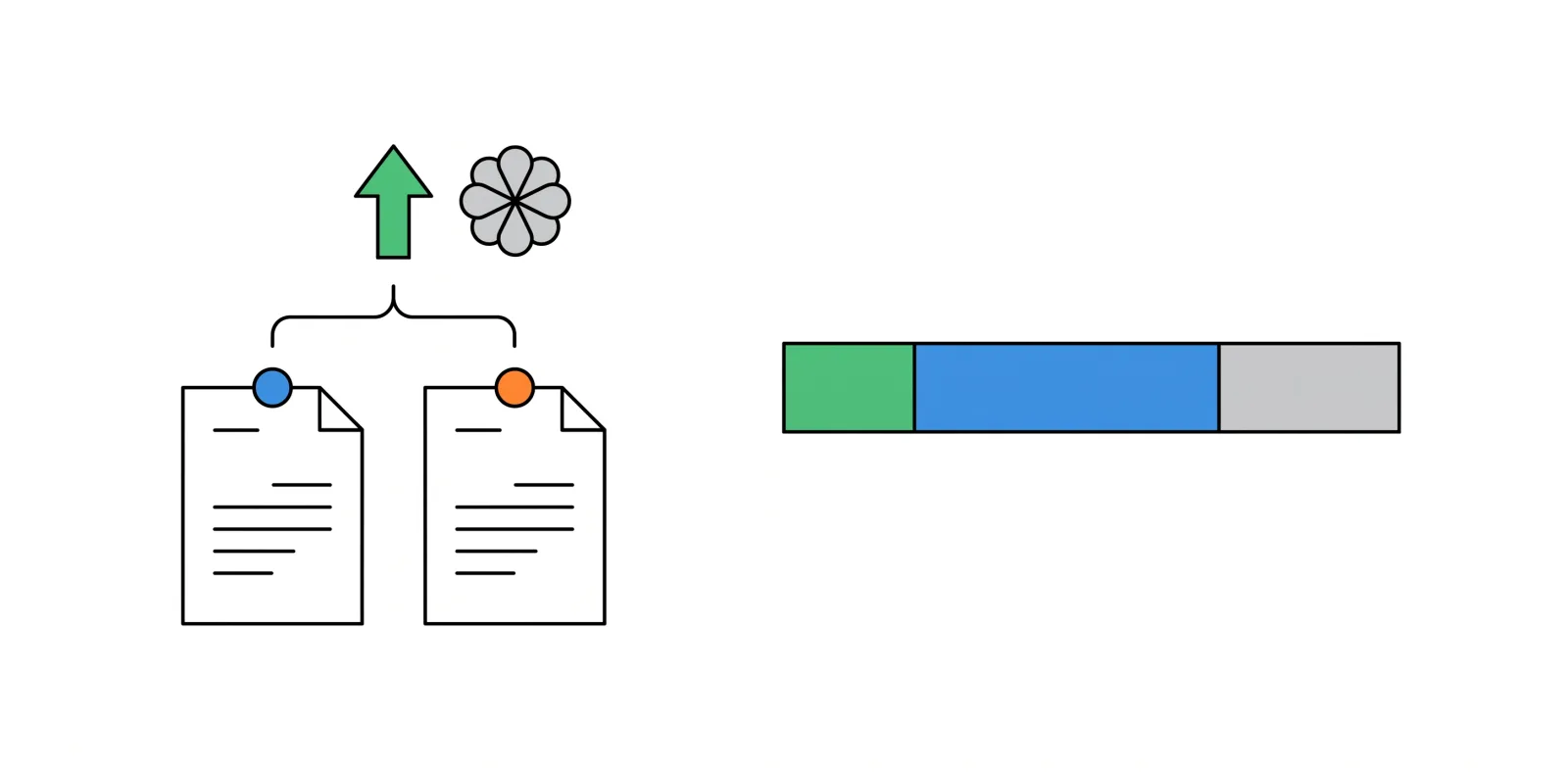
The significance of that first blue block cannot be overstated. Roughly half the paper cannot be answered by remembering. You have to understand the concept well enough to use it somewhere unfamiliar.
This is a genuinely good change and it is also a genuinely difficult one for students trained on a decade of memorisation. The transition is where marks are being lost.
How To Study For Competency-Based Questions#
Memorisation techniques do not transfer. These do.
Ask "why" after every fact. Why does this happen? What causes it? What would change if one condition were different? A student who can answer those questions can handle an unfamiliar scenario. One who has only memorised the statement cannot.
Practise explaining concepts without notes. Explain a topic aloud to someone who does not know it, or to an empty room. The points where you stumble are the points you have memorised rather than understood, and there is no faster diagnostic.
Do case-based questions deliberately, not incidentally. When you solve one, do not stop at the answer. Ask yourself which concept it was testing underneath the scenario dressing. Recognising the concept behind an unfamiliar wrapper is the actual skill being examined.
Connect topics across chapters. Competency questions frequently combine ideas that textbooks separate. Make a page of connections for each subject: which chapters relate, and how.
Use NCERT in-text questions properly. The questions embedded in NCERT chapters, as opposed to the end-of-chapter exercises, are frequently conceptual rather than procedural, and students skip them routinely.
Do not neglect the constructed response portion. Roughly three tenths of the paper still requires you to write full answers, with stepwise marks. Study the marking schemes for these, because students lose marks on answers that are substantively correct but omit the step, unit, formula statement or labelled diagram the scheme allocates a mark to.
What The Two-Attempt System Does Not Mean#
Read this section twice, because it contains the main risk.
It does not mean the first attempt is a practice run. Students who plan to take the first attempt casually and prepare seriously for the second consistently do worse overall. The psychological effect of a poor first result is corrosive, and the weeks between the two attempts are far too short for the transformation such a plan assumes. Prepare fully for February. Treat May as insurance you hope not to claim.
It does not reduce the syllabus. Both attempts cover the full course.
It does not mean unlimited improvement. The number of subjects in which you may improve is limited, and specified by CBSE.
It does not change internal assessment. School-assessed components are conducted once and carry over. A poor internal assessment record is not repaired by a second examination attempt, which is worth knowing in September rather than in April.
It does not remove pressure entirely. It removes the catastrophic single-point-of-failure risk, which is real and valuable. The examination is still an examination, and the preparation it requires has not changed.
And it applies at Class 10. The arrangement for Class 12 is separate and has been discussed independently, so do not assume symmetry. Confirm the current position for Class 12 on CBSE's site.
Who Genuinely Benefits#
Three groups, clearly.
Students who have one bad day. Illness, a family emergency, an anxiety episode, a paper that goes wrong for no identifiable reason. Previously this was unrecoverable for a full year. Now it is recoverable within months. This is the change's main purpose and it is a real humanitarian improvement.
Students with one persistently weak subject. Rather than dragging an entire aggregate down permanently, a single subject can be targeted in the second attempt.
Students who needed the supplementary route. Those who did not clear a subject now have a faster, better-integrated path than the old supplementary process offered.
And one balanced concern worth acknowledging. Some educationists have argued that two examination windows extend the examination season rather than shortening the pressure, keeping students in a state of preparation from February to May rather than releasing them in March. That is a fair point, and it will depend on how students and schools actually behave. A student who prepares properly for the first attempt, does well, and declines the second experiences less pressure than before. A student who treats both as compulsory experiences more. The system gives you the choice; use it deliberately.
Planning Your Year Around Two Windows#
The arrangement changes the shape of the academic year, and a little planning turns that from a source of stress into an advantage.
Work backwards from February, not from May. Your syllabus completion target, your revision schedule and your full-length paper practice should all be built around the first window. If you plan around May, February arrives while you are still mid-preparation, and a weak first result is demoralising in a way that is hard to shake off in ten weeks.
Protect your internal assessment through the year. Because the school-assessed component is conducted once and carries across both attempts, it is the one part of your result that a second examination cannot repair. Periodic tests, practical work, projects and portfolio submissions all feed into it. Students who drift through these in September because the board examination feels distant discover in April that a portion of their marks was decided months ago and is now fixed. Treat every internal assessment as a board mark, because functionally that is what it is.
Decide about the second attempt on evidence, not on feeling. When your first result arrives, do not react immediately. Look at the subject-wise marks against your own realistic expectations. A subject where you scored well below what your practice papers consistently showed is a genuine candidate for a second attempt, because something specific went wrong and can be identified. A subject where you scored roughly what you had been scoring all year is not, because nothing unusual happened and ten weeks is unlikely to change your level materially.
Use the gap productively if you do reappear. Ten weeks is enough to fix a specific, identified problem. It is not enough to relearn a subject from the beginning. Go back to your error log, target the two or three topics that actually cost you marks, and practise the paper format rather than rereading the textbook.
And if you do well in February, stop. There is a temptation to appear again simply because the option exists, on the reasoning that your score cannot fall. That is technically true and practically misleading, because ten weeks spent on a marginal improvement in a subject you already did well in is ten weeks not spent on whatever comes next, including the transition into Class 11 and any entrance preparation attached to it. The option is there for students who need it. Using it without a reason is a cost with no corresponding benefit.
Frequently Asked Questions#
Is the second Class 10 examination compulsory?#
No. The first attempt is compulsory for all candidates. The second is optional, for students who want to improve or who need to clear a subject.
Which score counts if I appear twice?#
The better of the two performances. Appearing a second time cannot reduce your result.
Can I improve in all subjects in the second attempt?#
No. Improvement is limited to a specified number of subjects, and CBSE defines which subjects qualify. Confirm the current limit in CBSE's circulars.
Is the syllabus reduced for the second attempt?#
No. Both examinations cover the full syllabus.
Does internal assessment get repeated?#
No. The school-assessed component is conducted once in the year and applies to both attempts. A weak internal assessment record cannot be repaired by sitting the examination again.
Should I plan to use the second attempt?#
No. Prepare fully for the first and regard the second as protection against illness or one unexpectedly bad paper. Students who plan around the second attempt consistently do worse, and a poor first result is difficult to recover from psychologically.
What are competency-based questions and why do they matter?#
Questions requiring you to apply a concept to an unfamiliar situation rather than reproduce learnt material. They now make up roughly half the paper, which means memorisation alone can no longer produce a strong result.
Does this apply to Class 12 as well?#
The arrangement described here is for Class 10. The position for Class 12 is separate and has been discussed independently, so check CBSE's current circulars rather than assuming the same rules apply.