The App That Said Yes In Four Minutes#
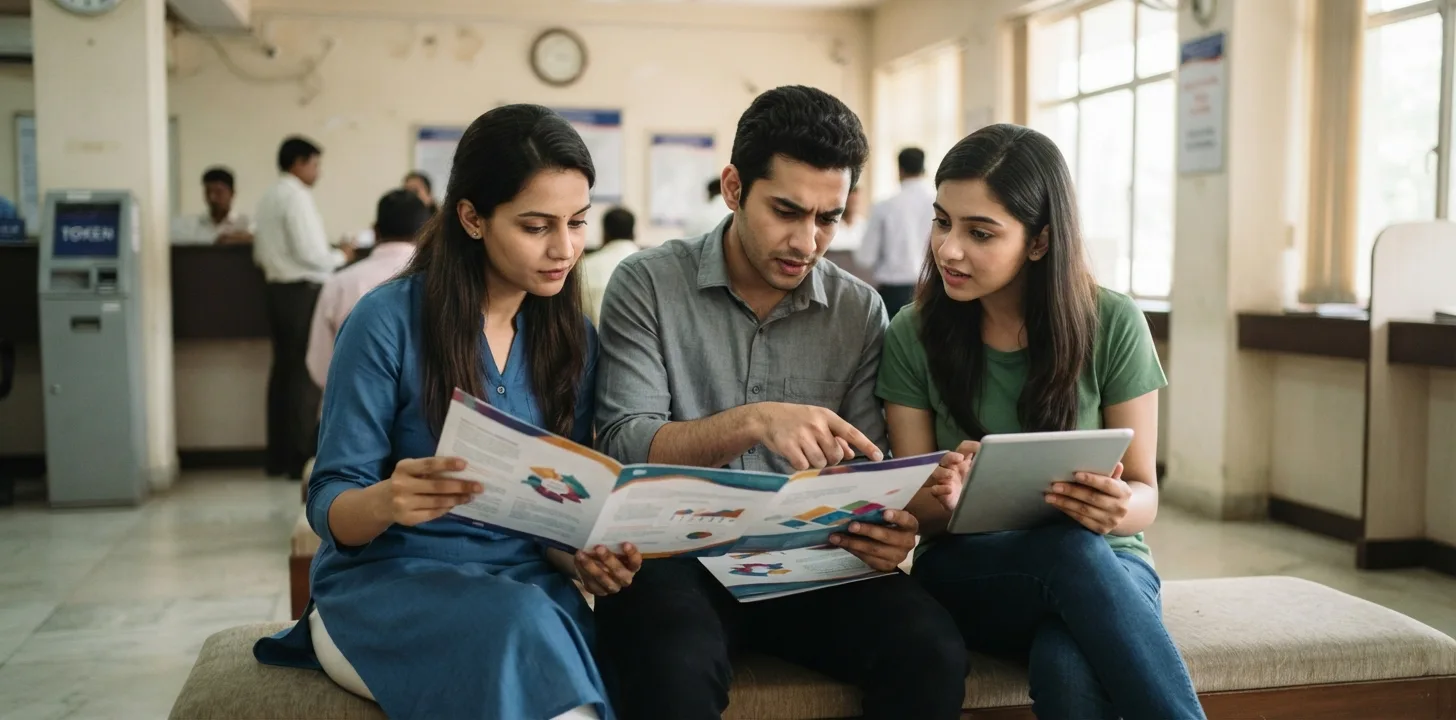
Picture a second-year student, three days before the last date for paying an exam fee. The parents are away, the bank branch is closed for the weekend, and an advert on the phone says: "Student loan in 4 minutes. No documents. No guarantor."
It sounds like rescue. For a small number of apps it may be. For many others it is the first step into a problem that is much harder to leave than to enter: hidden charges, aggressive recovery calls, and in the worst cases, messages sent to everyone in your contact list.
This post is not a lecture about never using an app. Plenty of lending in India now happens on a phone, and some of it is perfectly proper. The useful question is narrower: how do you tell, in about three minutes, whether the app on your screen is a lender you can trust? The RBI has made that easier since mid-2025. Most students simply do not know the tool exists.
Background: Who Is Actually Lending When You Tap "Apply"?#
The single most useful idea in this whole subject is that an app is not a lender. It is a shopfront. Behind every legitimate app stands a regulated institution that owns the loan.
A few terms, in plain language:
Regulated entity (RE). A bank, or a non-banking finance company (NBFC), that is registered with and supervised by the Reserve Bank of India. Only an RE may lend money as a business in India. An NBFC is a lender that behaves like a bank for loans but does not take savings deposits in the same way.
Lending service provider (LSP). A technology company that runs the app, finds borrowers and collects paperwork on behalf of an RE. The LSP can be the friendly face of the app, but the loan must still sit on the RE's books.
Digital lending app (DLA). The app itself, whether it belongs to the RE or to an LSP working for it.
Key Fact Statement (KFS). A one-page summary you must be shown before you commit. It states the total cost of the loan, including the annual percentage rate (APR), which is the yearly cost of borrowing after all fees are included. If an app cannot show you a KFS, that alone is a reason to stop.
Cooling-off period. A short window after you take the loan during which you can change your mind and exit by paying only the proportionate interest and a disclosed processing fee.
The rules that hold all this together are the RBI's Digital Lending Directions, 2025. Among other things, they require that money is paid directly into the borrower's own bank account and never through a third-party account, including the account of the app company, and that repayments go straight back to the lender. That single rule quietly destroys a large share of scam models, which depend on money passing through accounts they control.
There is one more piece of good news. Since 1 July 2025 the RBI has published a public list called the Digital Lending Apps directory on its website. Banks and NBFCs must report every lending app they deploy. A citizen-guide site counted 1,067 unique apps in it on 21 September 2026. Compared with the thousands of loan apps that have appeared over the years, that is a short list, which is exactly what makes it useful.
The Three-Minute Check Before You Install Anything#
Do these in order. Each one takes about a minute.
Step one: find the lender's name inside the app or its Play Store listing. A genuine app names the bank or NBFC that lends the money and shows its registration details. If the only name you can find is a brand you have never heard of, and no regulated entity is mentioned, treat that as a fail.
Step two: look the app up in the RBI's Digital Lending Apps directory. It is on rbi.org.in. If the app is not listed as deployed by a regulated entity, be very cautious. Google has said that from 28 January 2026 personal loan apps in India must appear on the RBI list to stay on Google Play. That helps, but presence on the Play Store is a weak signal by itself, and apps also arrive by links on messaging platforms and social media, where nobody is checking anything.
Step three: confirm the lender exists. Check the NBFC name in the RBI's list of registered NBFCs and make sure the registration is active, not cancelled. You can also cross-check on the RBI's Sachet portal, which carries fraud notices.
One caution from the other direction. A lender being genuine does not make it cheap. Plenty of properly regulated lenders charge high rates for small, short loans. The RBI directory answers "is this legal?" It does not answer "is this a good deal?" For that, you compare the APR on the Key Fact Statement.
Loan Types Students Meet, Compared#
Most of the confusion in this area comes from mixing up very different products. This table separates them.
| Type of borrowing | Who is behind it | What it is meant for | What it usually costs | Watch for |
|---|---|---|---|---|
| Bank education loan, including through the PM-Vidyalaxmi portal | Public and private sector banks | Tuition, hostel, books, laptop, over years | SBI's current rate card runs from 6.90 to 9.90 per cent, depending on scheme | Slow paperwork; a co-applicant is normally needed |
| NBFC education loan | Registered lenders such as Credila and Avanse | Larger or faster education borrowing, often without collateral | Comparison sites report roughly 9.5 to 14.5 per cent, plus fees | Processing fees of around 1 per cent or more |
| Fee-instalment or EMI plan | Usually a regulated NBFC working with the college or platform | Splitting one fee into smaller payments | Ranges from zero-interest offers to standard rates | Read whether "zero interest" hides a fee |
| Short-term personal loan app | An RBI-registered lender, sometimes through an app partner | Small, quick cash needs, repaid in months | Generally far above education loan rates | Not designed for tuition; APR is the number to read |
| Illegal or unregistered loan app | No regulated lender behind it | Nothing you want | Fees deducted upfront, very short repayment windows | Contact-list access, threats, no KFS |
Read down the "who is behind it" column. The first three are institutions you can look up. The last one is precisely the kind of app the directory is meant to expose.
Seven Red Flags That Should End The Conversation#
Any one of these is enough. You do not need to collect several.
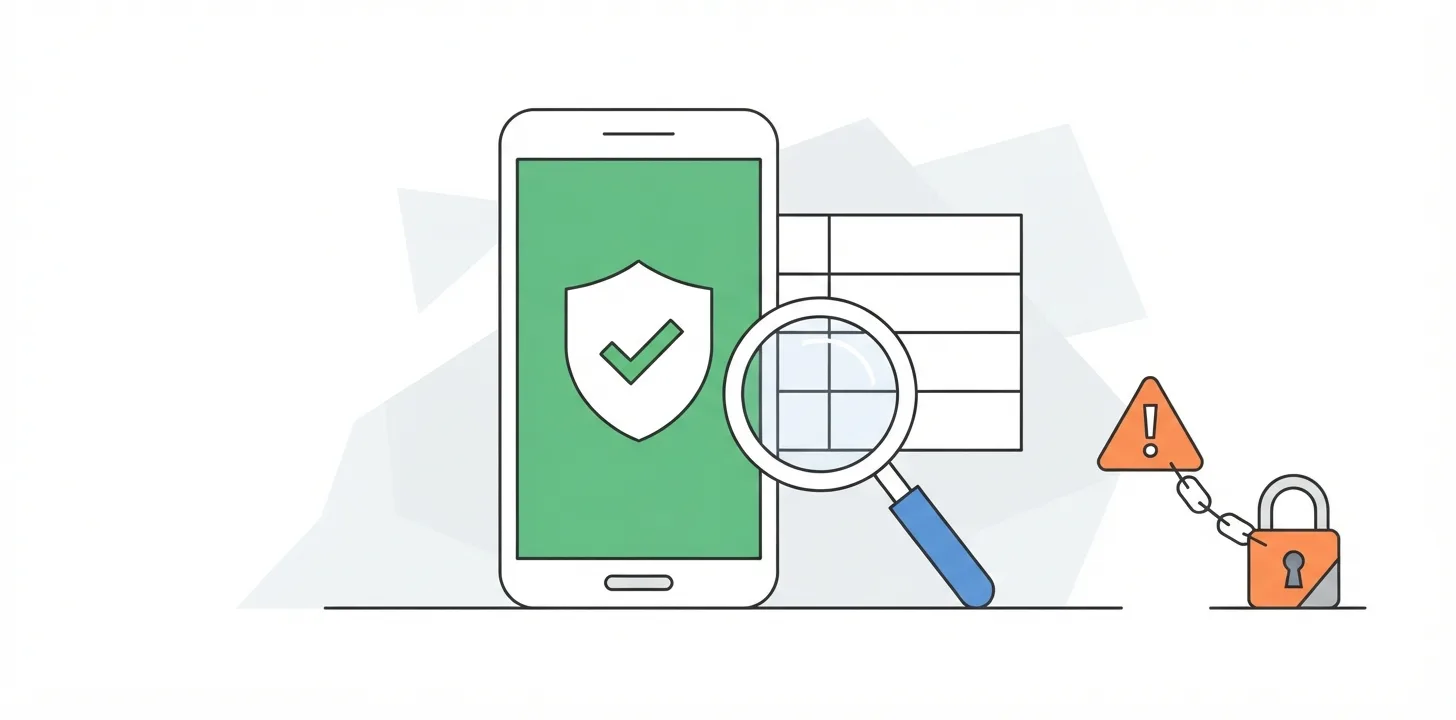
1. A fee before the money arrives. "Processing fee", "GST", "insurance" or "account clearing", paid before disbursal, is the classic sign of a fraud. Regulated lenders deduct disclosed fees from the loan or add them to it. They do not ask you to send money first.
2. Requests to open your contacts, gallery or SMS. A lender needs to verify who you are and check your repayment ability. It does not need your photographs or your friends' phone numbers. Contact access is how harassment campaigns get their ammunition.
3. No named regulated entity. If you cannot find an RE behind the app, there probably is not one.
4. No Key Fact Statement, or a loan cost that changes after approval. The APR should be visible before you accept.
5. Money coming from, or going to, a personal account. The 2025 directions require disbursal to your account and repayment to the lender. Anything routed through an individual's account breaks the rules.
6. Tiny repayment windows. A loan that must be repaid in 7 or 15 days, with a large chunk deducted at the start, is priced to trap. A hypothetical example shows why. Suppose you are approved for ₹10,000 but receive ₹8,500 after a "fee", and must repay ₹10,000 in seven days. You paid ₹1,500 for using ₹8,500 for a week. That is about 17.6 per cent for one week, which works out to roughly 900 per cent a year. The numbers are invented for illustration, but the pattern is widely reported.
7. Pressure and threats. Countdown timers, "last chance" messages and threats to message your family belong to collectors, not lenders. Coercive recovery is prohibited for regulated lenders.
What To Do If You Have Already Borrowed#
Deep breath. The situation is usually more manageable than it feels at 11 p.m.
Know your rights on a proper loan. A regulated lender must show a KFS, disburse into your bank account and give you a cooling-off window, which the RBI's directions say cannot be less than one day and is set by each lender's board. If you exit within it, you pay only the proportionate interest and the disclosed fee.
Do not pay extra to "close" a loan. If someone demands a settlement fee to a personal account, stop and take screenshots.
Revoke permissions and keep evidence. Remove the app's access to contacts, storage and messages in your phone settings. Save chats, call logs and payment receipts before you uninstall anything.
Report it. For cyber fraud and harassment, use the National Cybercrime Reporting Portal (cybercrime.gov.in) or the helpline 1930. You can also lodge complaints through the RBI's Sachet portal. For a genuine lender that behaves badly, complain to its grievance officer first and escalate to the RBI's ombudsman if you do not receive a fair reply.
Tell someone. Shame is the recovery agent's best weapon. A parent, a friend or a college counsellor breaks the spell quickly.
About the law. The government released a draft Banning of Unregulated Lending Activities Bill in December 2024. It proposes prison terms of two to seven years for unauthorised lending, and up to ten years for coercive recovery. I could not find confirmation that it has become law, so do not count on it. The RBI's directions and the existing criminal law are what protect you today.
If You Need Fee Money, Start Here Instead#
Most students who fall for loan apps are not reckless. They are short of time and short of options. So it helps to know the options in the order they usually work.
Ask your college first. Many institutions allow fees in instalments or give a short extension in genuine hardship. A polite email to the accounts office costs nothing.
Look at the PM-Vidyalaxmi portal. It is the government's single window for education loans. Students admitted on merit to listed institutions can get collateral-free, guarantor-free loans, and the portal has sanctioned over 1.1 lakh loans worth ₹15,634 crore since it launched, according to figures reported in July 2026. This is not a weekend solution, since a bank still has to assess you, but it is the right long-term home for tuition borrowing.
Check scholarships. The National Scholarship Portal and state scholarship portals do not carry interest at all.
If a private lender is unavoidable, choose a named institution. An NBFC education lender or a bank gives you a sanction letter, a proper agreement and a grievance process. These are boring documents, and boring is the point.
The pattern is simple. Real education finance tends to be slower, more document-heavy and cheaper. Illegal lending is fast, document-light and very expensive. When a loan feels frictionless, ask who is paying for the friction.
Frequently Asked Questions#
Where do I find the RBI list of digital lending apps?
It is published on the RBI's website (rbi.org.in) as the Digital Lending Apps directory, which has been live since 1 July 2025. It lists apps deployed by banks, NBFCs and other regulated entities. Search for the app's name and confirm the lender behind it.
Is every app on the RBI list safe to use?
No. The list tells you the app is tied to a regulated lender. It does not judge price or service. Some listed lenders charge high rates for short loans, so always read the Key Fact Statement and compare the annual percentage rate.
Are there genuine loan apps for students?
Yes, in the sense that banks and RBI-registered NBFCs run apps and portals where students can apply for education loans or fee finance. The PM-Vidyalaxmi portal is the government's own route. The test is always the same: a named regulated lender, a Key Fact Statement and money paid into your own bank account.
Can a lender charge me a fee before disbursing the loan?
Regulated lenders disclose fees in the Key Fact Statement and usually deduct them from the amount or add them to the loan. Anyone asking you to pay "processing" or "GST" money in advance, to a personal account, is very likely running a scam.
What can I do if a loan app threatens to message my contacts?
Do not pay more. Screenshot everything, remove the app's permissions, and report it on cybercrime.gov.in or by calling 1930. Threats and public shaming are not acceptable recovery methods for a regulated lender, and telling a trusted adult early helps a great deal.
Can I change my mind after taking a digital loan?
Under the RBI's 2025 directions, lenders must give a cooling-off period of at least one day, with the exact length set by the lender's board. If you exit within it, you repay the principal with proportionate interest and a disclosed processing fee, and nothing more.
Is an education loan better than a loan app for tuition?
For tuition, usually yes. Education loans are built for long repayment with a study-time moratorium, and public sector rates start well below what short-term apps charge. A loan app is designed for small, short-term needs, and using one for a large fee can become expensive quickly.
Figures and rules were checked on 26 September 2026 against the RBI's Digital Lending Directions, 2025 (as summarised by legal analysts), the RBI directory announcement, Google Play's personal loan policy, SBI's published rate card and the Department of Higher Education's PM-Vidyalaxmi documents. Rules and rates change, so confirm on the lender's or regulator's own page before you act.