
The Interest Your Loan Accrues While You Are Still Studying#
Here is a feature of education loans that families consistently misunderstand, and it costs them a lot of money.
Your loan starts accruing interest from the day it is disbursed, not from the day you graduate. Repayment of principal is deferred during your course and for a short period afterwards, which is the moratorium. But interest accumulates throughout.
On a four-year professional course, that is four years of interest piling up before you have earned a rupee. Depending on the loan size and rate, it can amount to a substantial sum, and it is added to what you eventually repay.
The Central Sector Interest Subsidy exists to cover exactly that. For eligible students, the government pays the interest accruing during the moratorium period. You graduate owing the principal rather than the principal plus several years of accumulated interest.
The eligibility is narrower than PM Vidyalaxmi's, centred on an income ceiling in the region of ₹4.5 lakh. And a great many students who qualify never claim it, for a reason that is entirely structural: it is claimed through your bank at the point of sanction, and if your bank officer does not raise it, nobody else will.
Background: What The Scheme Is And Where It Sits#
The purpose. To make professional and technical education accessible to students from economically weaker sections by removing the interest burden that accrues while they are studying.
How it works mechanically. Rather than paying you, the government meets the interest liability on your loan for the moratorium period, routed through the banking system. Your outstanding balance at the end of your course is correspondingly lower.
Where it sits relative to other schemes. It is distinct from PM Vidyalaxmi's 3 per cent interest subvention, which has a higher income ceiling of ₹8 lakh and applies to listed Quality Higher Education Institutions. You generally cannot hold both, and you should establish which you qualify for rather than assuming.
The underlying loan framework. The scheme operates in conjunction with the standard education loan framework used by Indian banks, which sets out the common terms for education lending.
Two terms worth defining precisely:
Moratorium. The period during which repayment of principal is deferred, typically covering your course duration plus a further period afterwards, commonly six months to a year, intended to give you time to find employment.
Accredited institution. For this scheme, eligibility is generally tied to institutions holding accreditation from the National Assessment and Accreditation Council or the National Board of Accreditation, or otherwise recognised as meeting the required standard.
Who Qualifies, And The Conditions That Narrow It#
The income ceiling. Annual family income in the region of ₹4.5 lakh, evidenced by an income certificate from the competent authority. This is materially lower than PM Vidyalaxmi's ₹8 lakh ceiling and it is the condition that excludes most applicants.
The course type. Professional and technical courses, rather than general degree programmes. Engineering, medicine, management and comparable professional education.
The institution. Accredited institutions, with accreditation status from the recognised bodies being the usual test. A student at an unaccredited institution is generally outside the scheme, which is one more reason to check a college's accreditation before enrolling.
The loan size. The subsidy applies within a specified loan limit, commonly cited around ₹7.5 lakh. Loans above that may still be sanctioned, with the subsidy applying within the limit rather than to the whole amount.
The lender. The loan must be taken under the standard education loan framework from a scheduled bank participating in the scheme.
And it covers the moratorium only. Once repayment begins, interest is yours. The scheme removes the accumulation during study, not the cost of the loan thereafter.
Verify all of these against current scheme guidelines, since income ceilings, loan limits and accreditation requirements are revised from time to time and the position at the moment you apply is what governs.
Why Eligible Students Do Not Claim It#
This is the part worth acting on.
It is claimed at sanction, through your bank. There is no separate portal, no independent application, and no authority that identifies eligible students and contacts them. The claim is initiated in the branch, as part of your loan documentation.
Which means it depends on your bank officer raising it. Many do. Some do not, particularly at busy branches processing loans quickly. A student who does not know the scheme exists will not ask, and the matter never arises.
The documentation is straightforward but must be timely. An income certificate in the prescribed format, evidence of the course and institution, and the scheme's declaration form. These are documents you are largely assembling anyway.
The practical instruction, and it is the whole point of this article. When you go to the branch for your education loan, ask explicitly: am I eligible for the Central Sector Interest Subsidy, and can we include it in this application? Ask it in those words, at sanction, before the loan is disbursed.
Retrospective claims are difficult. A student who discovers the scheme in their third year is generally in a much weaker position than one who raised it at sanction, because the documentation and the process are designed around the application stage.
And ask about PM Vidyalaxmi in the same conversation. If your income is above the CSIS ceiling but within ₹8 lakh, and your institution is on the Quality Higher Education Institution list, the other scheme may apply instead. One conversation can establish which route is open.
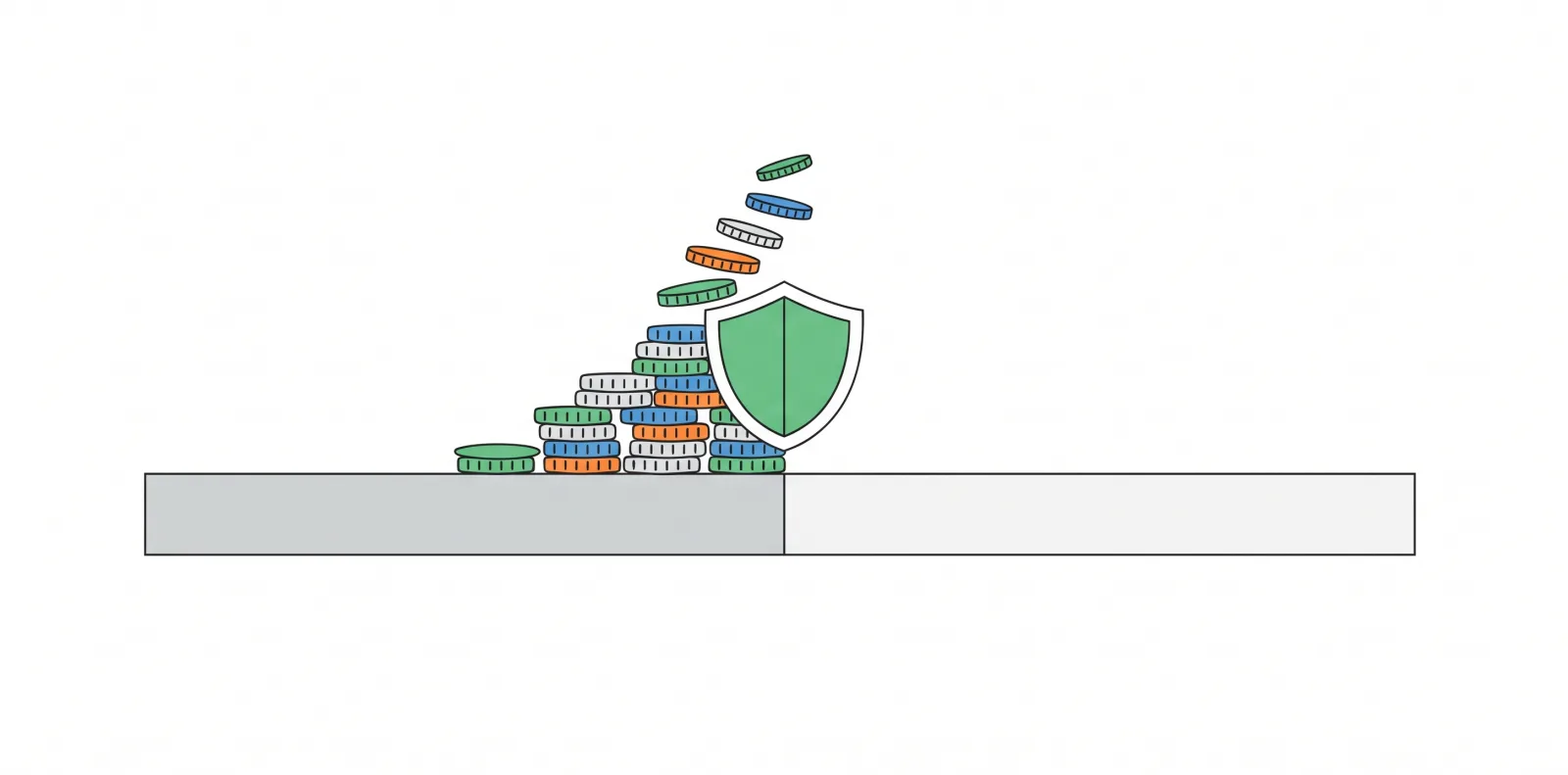
What It Is Actually Worth#
Compute your own figure. Take your expected loan amount, your quoted interest rate, and the length of your moratorium, which is your course duration plus the post-course period. The interest accruing across that period is what the scheme removes.
On a four-year professional course, a loan disbursed progressively across the years accrues interest on an increasing balance. The total by graduation is considerably more than students expect, and it becomes part of the amount you repay with interest thereafter.
The compounding point. Interest accrued during the moratorium is typically capitalised, meaning it is added to the principal and then itself attracts interest during repayment. Removing it does not just save that amount; it removes the interest on that amount across your entire repayment period.
Which is why this scheme is worth more than its headline suggests, and why raising it at the branch is among the highest-value five minutes in the whole education loan process.
The Claim Timeline, Visualised#
The scheme's mechanics make more sense laid out against the life of the loan.
Read the green bands as free money. For an eligible borrower, the interest accruing across the course and the grace period is paid by the government rather than added to the principal. The loan that enters repayment is the loan that was borrowed, not the loan plus several years of compounding.
Read the orange band as your obligation. After the grace period, ordinary repayment begins and the subsidy has no further role. Nothing about the scheme reduces the principal or the interest during repayment.
The gap between those two states is the whole value of the scheme, and it is why an unclaimed subsidy is not a minor administrative oversight. It changes the size of the debt that follows a graduate into their working life.
Common Reasons A Claim Fails#
Eligibility on paper does not guarantee the subsidy reaches your account. These are the failure points worth checking against.
The bank never flagged the account. The claim is initiated by the lending branch, not by you, and branches process education loans in volume. An account that was never tagged to the scheme will accrue interest normally and nobody will tell you. Ask explicitly, at sanction and again each year.
The income certificate is from the wrong authority or the wrong year. Certificates must come from a competent revenue authority and must relate to the correct financial year. A certificate that is out of date at the point of claim is among the commonest causes of rejection, and it takes weeks to replace.
The course or institution falls outside scope. The scheme is directed at professional and technical courses at approved institutions. Assumptions here cause disappointment late, so verify the position for your specific course before planning around the benefit.
The loan exceeds the covered amount. Where a sanction is larger than the scheme's ceiling, the subsidy applies only up to that ceiling and interest on the balance is your own. Families sometimes expect full coverage on a larger loan.
Documentation supplied once, never updated. Some conditions require annual confirmation. An account that was correctly enrolled in the first year can fall out of the scheme in a later year because a renewal step was missed.
The student changed course or institution mid-way. Any material change should be reported to the branch immediately, because it affects both the loan terms and scheme eligibility.
The practical defence is the same in every case. Keep your own file of what was submitted and when, ask the branch for written confirmation that the claim has been lodged, and follow up each academic year rather than assuming continuity.
Frequently Asked Questions#
What does CSIS actually cover?#
The interest accruing on your education loan during the moratorium period, which is your course duration plus a further period afterwards. It does not cover interest during repayment.
What is the income ceiling?#
In the region of ₹4.5 lakh of annual family income, evidenced by an income certificate from the competent authority. This is lower than PM Vidyalaxmi's ₹8 lakh ceiling for its interest subvention.
Can I hold CSIS and PM Vidyalaxmi's subvention together?#
Generally no. These are alternative interest support schemes with different criteria, and holding one typically precludes the other. Establish which you qualify for rather than assuming.
Which courses are covered?#
Professional and technical courses rather than general degree programmes, at institutions holding recognised accreditation. Your institution's accreditation status is part of the eligibility test.
How do I apply?#
Through your bank at the point of loan sanction, as part of your loan documentation. There is no separate portal or independent application, which is precisely why eligible students miss it.
What if my bank does not mention it?#
Ask explicitly, using the scheme's name, before the loan is disbursed. Many eligible students never claim it simply because nobody raised it and they did not know to ask.
Can I claim it retrospectively?#
It is considerably more difficult, since the process is designed around the application stage. A student who discovers the scheme mid-course is in a much weaker position than one who raised it at sanction.
Where do I verify the current conditions?#
With your bank and through the scheme's official guidelines, since income ceilings, loan limits and accreditation requirements are revised periodically. The position at the time you apply is what governs.