The Question Everyone Asks, And The Answer Nobody Gives Honestly#
Every discussion of English proficiency tests among Indian students arrives at the same question. Does the machine penalise my accent?
The answers offered are usually confident and usually unsupported. One forum insists the automated tests are brutal on Indian speakers. Another insists they are fairer than human examiners because an algorithm has no prejudices. Coaching centres assert whichever supports the test they prepare you for.
Here is the honest position. There is no reliable public dataset that isolates the effect of an Indian accent on scores across these four tests. Anyone quoting one is either citing something that does not exist or generalising from a small sample of anecdotes.
What does exist is a research literature on automated speech scoring, and it is more nuanced than either camp allows. Studies document that automated scorers can show bias related to audio quality and to language family groupings, and that speech recognition components generally perform better on speech patterns closer to those they were predominantly trained on. That is a real finding and it is not the same as a blanket claim about any particular test.
This article sets out how each test actually scores speaking, what the evidence supports, and what you can control.
Background: Accent Is Not The Same As Intelligibility#
The single most useful distinction in this entire discussion, and the one most often collapsed.
Accent is how your speech is shaped by the languages you grew up with. Vowel placement, rhythm, stress patterns. Every speaker of every language has one, including speakers who imagine they do not.
Intelligibility is whether a listener can identify the words you said. These are related but separate. A strong, consistent accent can be perfectly intelligible. A weak accent with unclear articulation can be hard to follow.
The published scoring criteria of these tests assess intelligibility, not accent origin. The descriptors describe whether pronunciation impedes understanding, not whether it resembles a particular national standard.
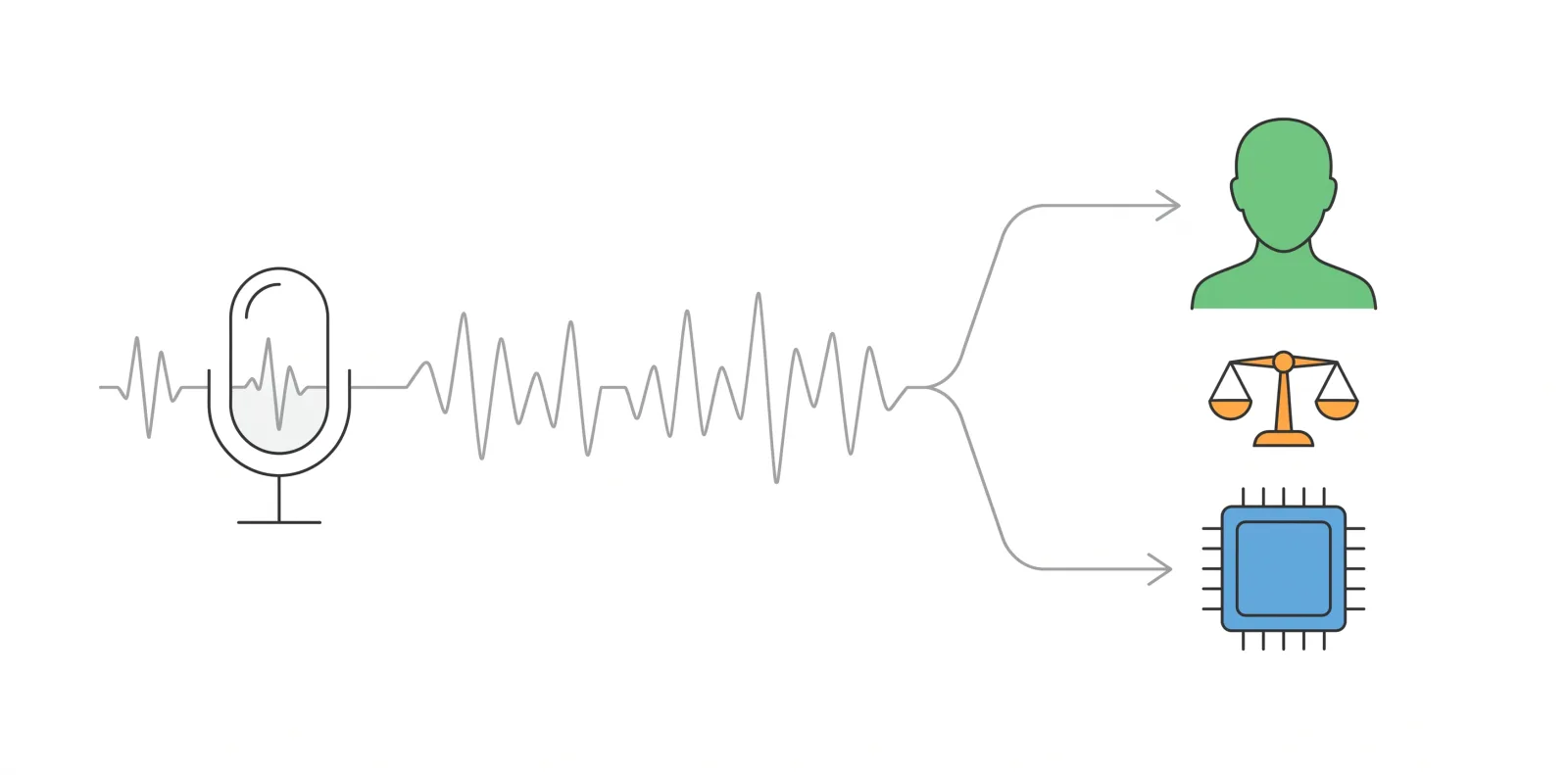
What the research complicates is the assumption that automated systems assess intelligibility neutrally. An automatic speech recognition component trained predominantly on certain speech patterns may transcribe some speakers less accurately than others, and a scoring model built on that transcription inherits the difference. This is a documented concern in the literature rather than a conspiracy theory.
And it is also not a reason to avoid automated tests, because the effect described in research is not the same as the effect claimed in forums.
Two terms worth defining:
Automatic speech recognition. The component that converts your speech into text before any scoring happens. Errors here propagate into everything downstream.
Human rater. A trained examiner applying published descriptors. Consistent within trained tolerances, and subject to the ordinary variability of human judgement.
How Each Test Actually Scores Speaking#
| Test | Who assesses your speaking | What this means in practice |
|---|---|---|
| IELTS | A human examiner, in a face-to-face or live interaction, applying published band descriptors | The examiner can follow an imperfect sentence and infer intent. Rapport is possible. Human variability exists but is managed through training and moderation |
| PTE Academic | AI scores every response instantly, with human reviewers monitoring for memorised or template-based answers under the hybrid model introduced in August 2025 | Highly consistent and unforgiving of hesitation. No inference of intent. What you actually said is what is scored |
| TOEFL iBT | A combination of automated and human scoring | Sits between the two approaches. Section scores are reported on the 1 to 6 band scale adopted on 21 January 2026 |
| Duolingo English Test | Machine scored, which is what enables the forty-eight hour turnaround | Fully automated, computer-adaptive, taken at home. Consistency is high and the format is unlike the others |
The practical difference is not fairness. It is what forgives what. A human examiner forgives a hesitation and follows a half-finished sentence. An automated system forgives a mild accent applied consistently but does not forgive a pause. Both are assessing real things.
Which means the choice is partly about your own profile. A candidate who speaks fluently but with a pronounced accent may do better with automated scoring than they expect. A candidate whose English is excellent but who thinks before speaking may do worse.
What The Evidence Does And Does Not Support#
Supported: automated scoring systems can exhibit bias. The research literature documents bias in automated speech scorers relating to audio quality and to language family groupings, and notes that speech recognition components are generally more accurate on speech patterns closest to their predominant training data.
Supported: audio quality matters materially. This is one of the clearest findings and one of the few entirely within your control. A poor microphone, background noise or a bad recording environment degrades recognition accuracy before any scoring occurs.
Not supported: that any specific test systematically penalises Indian candidates. No public dataset isolates this. Indian candidates score across the full range on every one of these tests.
Not supported: that automated tests are uniformly harsher. Many candidates score higher on automated tests than on human-rated ones, frequently because they perform better without an examiner present.
Not supported: that human raters are free of bias. Human judgement has its own well-documented variability, which is precisely why examiner training and moderation exist.
The fair summary. Both approaches have documented limitations, neither has been shown to disqualify Indian candidates, and the variable with the largest effect on your score is not the scoring method. It is your delivery.
What You Can Actually Control#
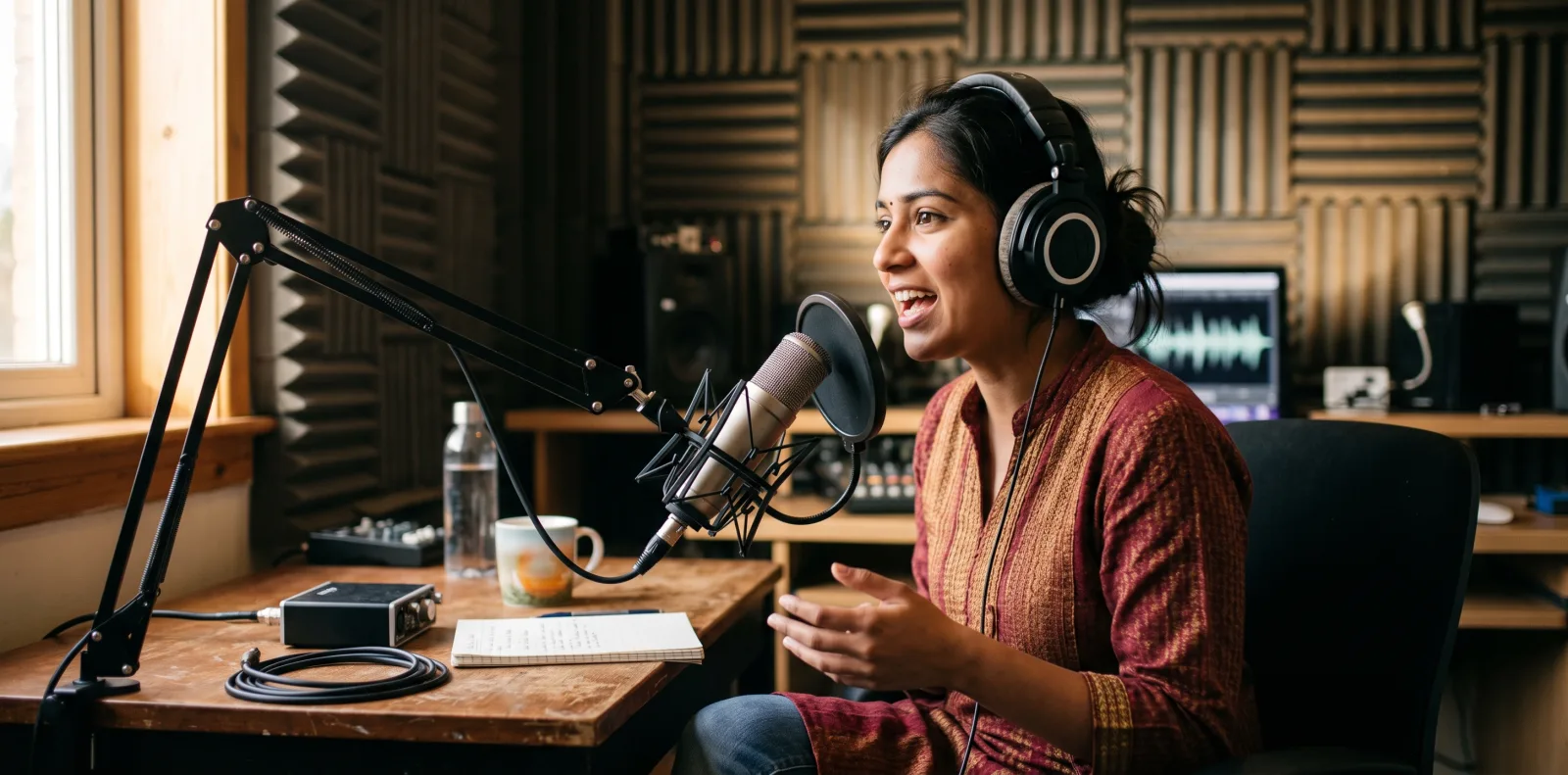
Audio quality, which is the most underrated item on this list. A good headset with a boom microphone positioned consistently, a quiet room, and no background noise. The research identifies audio quality as a real factor in automated scoring accuracy, and it is entirely within your control.
Fluency, meaning continuous delivery. This is what automated systems penalise most heavily and what candidates most often lose marks for. Say the simpler sentence without pausing rather than the better sentence with a search in the middle.
Clarity of individual sounds. Not changing your accent, which is neither necessary nor realistic. Articulating consonants fully, not dropping word endings, and separating words that run together.
Pace. Too fast degrades recognition, too slow reads as disfluent. A steady moderate pace, practised, is what both humans and machines are calibrated against.
Starting immediately. Response windows begin at once on the automated tests, and a thinking pause consumes recorded time.
And recording yourself daily. Ten minutes a day, listened back to. This is free, it is the single most effective preparation for the speaking section, and almost nobody does it because listening to your own voice is unpleasant.
Choosing A Test On This Basis#
If you speak fluently and continuously, automated scoring suits you. Your accent matters less than you fear and your fluency is rewarded consistently.
If you think before speaking, or self-correct frequently, a human examiner suits you better. These habits read as thoughtfulness to a person and as disfluency to an algorithm, and that is a genuine, specific disadvantage worth acting on.
If you are nervous with people, automated scoring removes that pressure entirely, and for some candidates this is worth more than every other consideration.
If your articulation is unclear rather than accented, address it before testing at all, because it will cost you with either kind of assessor.
Take a practice attempt of both kinds before booking. An hour on an official practice test of one automated and one human-rated option will tell you more about your own profile than any article can, including this one.
And do not choose a test to avoid a bias you have not confirmed applies to you. The candidates most affected by these questions are usually the ones who worried instead of practising.
Fixing The Habits That Actually Cost Marks#
Setting the accent question aside, a short list of specific habits accounts for most of the speaking marks Indian candidates lose. All of them are fixable in a fortnight.
Filler sounds. The involuntary noises that fill a pause while you think. A human examiner tolerates a few; an automated fluency measure counts them. The fix is to replace them with silence, which feels worse and scores better, and then to shorten the silence with practice.
Dropping word endings. Final consonants that disappear, particularly past-tense endings and plurals. This affects intelligibility directly and it is the single clearest articulation issue to work on.
Running words together. Common in rapid speech and a direct problem for speech recognition. Slowing slightly and separating words is worth more than any vocabulary work.
Starting too quietly. Speakers frequently begin a response at low volume and rise. The opening words are lost, and on tests where content matching matters, losing your first sentence is expensive.
Rephrasing mid-sentence. Beginning again because you thought of a better construction. It reads as thoughtfulness to a person and as disfluency to a system, and the better construction is rarely worth the cost.
Speaking too fast under pressure. Nerves accelerate delivery, which degrades both articulation and recognition. Practising at a deliberately measured pace builds a habit that survives the test day.
The diagnostic for all six is the same. Record two minutes of yourself answering a prompt, then listen once for each habit in turn. You will hear things you do not notice while speaking, and each one is a specific fixable target rather than a vague sense that your speaking needs work.
Frequently Asked Questions#
Which test penalises an Indian accent?#
No reliable public data isolates that effect for any of these tests, and Indian candidates score across the full range on all of them. The research literature does document bias in automated scoring relating to audio quality and language family groupings, which is a narrower finding than the claim usually made.
Do the tests assess accent or intelligibility?#
The published criteria assess intelligibility, meaning whether pronunciation impedes understanding, rather than whether your accent resembles a particular national standard. A strong consistent accent can be entirely intelligible.
Which tests use human examiners?#
IELTS uses a human examiner for speaking. TOEFL iBT uses a combination of automated and human scoring. PTE Academic scores all responses with AI while human reviewers check for memorised answers. The Duolingo English Test is machine scored.
Is automated scoring harsher?#
Not uniformly. It is less forgiving of hesitation and self-correction, and more consistent in applying the same standard every time. Many candidates score higher on automated tests, often because they perform better without an examiner present.
What matters most for my speaking score?#
Continuous delivery without hesitation, clear articulation of individual sounds, a steady moderate pace, and good audio quality. None of these require changing your accent.
Does my microphone really matter?#
Yes. Audio quality is identified in the research as a real factor in automated scoring accuracy, and it is entirely within your control. A proper headset with a boom microphone in a quiet room is a genuine investment.
Should I try to sound like a native speaker?#
No. It is neither necessary nor realistic, and effort spent on it is better spent on fluency and clear articulation, which are what the criteria actually assess.
How do I decide which test suits me?#
Take an official practice attempt of one automated and one human-rated test. If you speak fluently and continuously, automated scoring suits you. If you pause to think or self-correct, a human examiner will read that more generously.