
Submitting Your Application Is Not The Same As Completing It#
Every year, a large number of students submit an NSP application on time, receive a confirmation, and never receive any money.
The reason is almost always the same. Submission is not the final step. After you submit, your institution must verify your application on the portal, and after that the scheme authority processes it. An application sitting unverified at your college on the closing date is an application that fails, and the student usually does not discover this until months later when nothing has arrived.
For the 2026-27 cycle, the dates are specific. The portal opened on 1 June 2026. Pre-matric schemes closed on 31 August 2026. Post-matric schemes close on 31 October 2026. Institute verification runs until 15 November 2026.
Read those last two together. You have roughly six weeks left to apply, and then your college has two weeks to verify. If you submit on 31 October, your college has a fortnight to process what may be hundreds of applications. If you submit in early October, you have time to chase.
Here is everything you need in one place.
Background: What The National Scholarship Portal Actually Is#
A single portal for many schemes. NSP is the Government of India's common platform for centrally funded scholarships, run at scholarships.gov.in. Rather than applying separately to each ministry, you register once and apply to the schemes you qualify for.
Who runs the schemes. Different ministries and bodies operate their own schemes on the portal, including the Ministry of Minority Affairs, the Ministry of Social Justice and Empowerment, the Ministry of Tribal Affairs, the Department of Empowerment of Persons with Disabilities, and technical education bodies such as AICTE. State schemes also appear on the portal in many cases.
Two broad families.
Pre-matric schemes, supporting school education up to Class 10. These closed on 31 August 2026 for this cycle.
Post-matric schemes, supporting education beyond Class 10, including undergraduate, postgraduate and professional courses. These close on 31 October 2026.
Alongside these sit merit-based and top-class schemes, and specific schemes for particular categories and disciplines.
Three terms worth defining:
OTR. One-Time Registration, which generates a unique candidate identifier. You cannot apply to any scheme without completing it first, and it involves identity verification.
Aadhaar seeding. Linking your bank account to your Aadhaar number through the NPCI mapper, so that payments can be routed directly to you. This is not the same as simply having an Aadhaar number on file.
Institute verification. The step in which your educational institution confirms, on the portal, that you are enrolled and that your details are accurate.
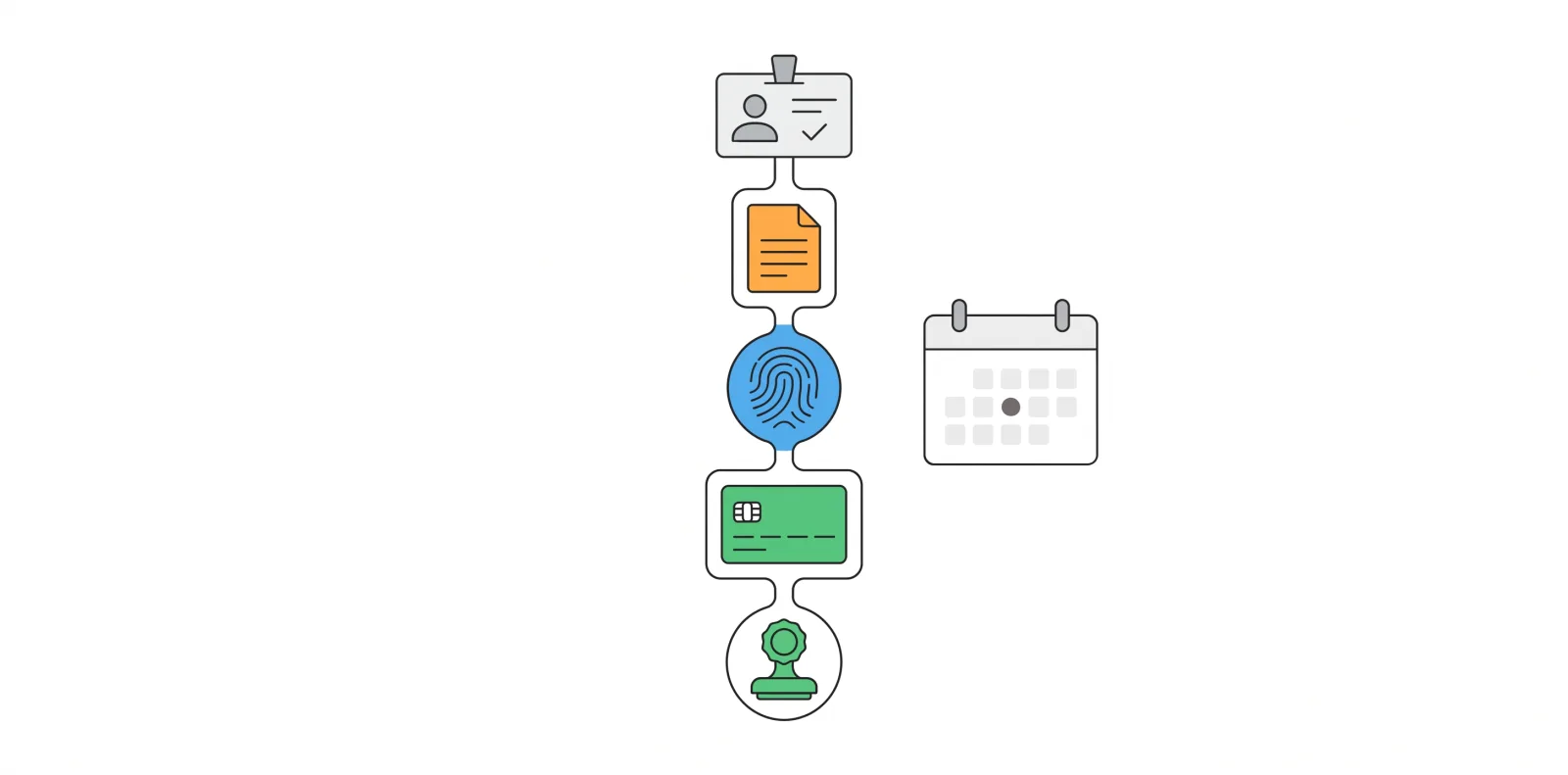
The Sequence, And Where It Breaks#
The Checklist#
Work through this in one sitting.
Before you start, gather. Aadhaar number and a mobile number linked to it for OTP verification. Bank account details, with the account in your own name. Previous year's marksheet. Income certificate in the prescribed format, issued by the competent authority. Caste or category certificate where applicable. Disability certificate where applicable. Your institution's details including its NSP institute code. A recent photograph and your signature, scanned to the specified dimensions.
Step one: complete One-Time Registration. This generates your unique identifier and involves identity verification. Do it first, because nothing else is possible without it.
Step two: confirm Aadhaar seeding of your bank account. This is the step students most often assume is done and most often is not. Seeding means your account is mapped to your Aadhaar in the NPCI system so that direct benefit transfers reach you. Check with your bank rather than assuming. An unseeded account means an approved scholarship that cannot be paid.
Step three: identify every scheme you qualify for. The portal lists schemes with their eligibility. Students routinely apply to one when they qualify for two or three, because they stopped reading after the obvious one.
Step four: complete the application carefully. Name spellings must match your Aadhaar and your institutional records exactly. Mismatches cause rejection at verification.
Step five: upload documents to specification. File formats and size limits are enforced literally.
Step six: submit, then note your application ID.
Step seven, and this is the one people skip: tell your institution. Go to the scholarship cell in person, provide your application ID, and ask them to verify it. Do not assume the portal notifies them adequately.
Step eight: check your status weekly until it shows verified, then until it shows processed.
The Errors That Cause Rejection#
Income certificate in the wrong format or from the wrong authority. Each scheme specifies who may issue it and in what form. A certificate valid for one purpose may be rejected for another.
Name mismatch across Aadhaar, bank account, marksheet and application. Including initials, expanded names and spelling variants. This is the single commonest rejection reason.
Bank account not seeded with Aadhaar, or an account in a parent's name. It must be your own account and it must be seeded.
Applying to a scheme you are not eligible for while missing the one you are. Read the eligibility for each rather than applying to the first that looks plausible.
Institution not registered on the portal. If your college does not appear, it cannot verify you. Raise this with the administration well before the deadline, since institutional registration takes time.
Leaving it to the last week. Every one of the problems above takes days to fix. Discovered on 30 October, none of them can be.
Which Schemes To Look For On The Portal#
The portal hosts schemes from several ministries, and reading the full list is the difference between one application and three.
Ministry of Social Justice and Empowerment schemes cover Scheduled Caste students and Other Backward Classes among others, at pre-matric and post-matric level, plus top-class education schemes for students at notified premier institutions.
Ministry of Tribal Affairs schemes cover Scheduled Tribe students on a parallel structure.
Ministry of Minority Affairs schemes cover students from notified minority communities, including merit-cum-means support aimed at professional and technical courses.
Department of Empowerment of Persons with Disabilities schemes cover students with benchmark disability across levels, and these are consistently under-applied relative to their allocations.
Technical education schemes administered by AICTE, including Pragati for girl students, Saksham for students with disabilities and Swanath for students from vulnerable circumstances, each paying ₹50,000 a year.
Ministry of Education schemes including central sector scholarships for college and university students awarded on merit within income limits.
Schemes for specific circumstances, including provisions for single girl children and for wards of particular categories of worker, which have small allocations and very small applicant pools.
The instruction. Filter the portal by your level of study and read every scheme's eligibility rather than stopping at the one you were told about. Most students qualify for more than they apply to, and the narrow schemes carry the best odds precisely because so few people find them.
After You Apply: Tracking, Disbursal And What To Do If Nothing Arrives#
The application is the visible part. What follows determines whether money reaches you.
Track your status weekly. The portal shows your application's stage, from submitted through institute verification to scheme authority processing. Each stage can stall and no notification is sent when it does.
Verified is the milestone that matters most. Until your institution has verified, nothing else proceeds. If your status has not moved to verified within a fortnight of submitting, go to the scholarship cell in person.
Disbursal happens through direct benefit transfer into your Aadhaar-seeded account. The timing varies by scheme and is frequently months after verification, which means silence is not necessarily failure.
If nothing arrives after a reasonable period, check three things in order. Whether your status shows processed. Whether your bank account is genuinely Aadhaar-seeded through NPCI rather than merely holding your Aadhaar on file. And whether your Aadhaar is seeded to a different, perhaps dormant, account that the transfer may have reached instead.
Raise grievances through the portal's own mechanism, keeping your application identifier to hand. Institutional scholarship cells can also escalate on your behalf.
And keep the disbursement advice. It is evidence of what you received and when, which matters for renewal declarations and for any later query.
If You Miss The Deadline#
Extensions are sometimes granted and should never be planned around, but a missed window is not always the end of the year's funding.
Check whether an extension was announced. The portal occasionally extends windows, typically by days rather than weeks, and announcements appear on scholarships.gov.in rather than being circulated.
Check your state portal. State scheme deadlines are independent of the national portal's and frequently fall later. A student who missed the central window may still have weeks for a state scheme, and state provisions are sometimes more generous.
Check institutional awards. Many colleges administer their own need-based and merit awards on their own timelines, and these are the least publicised funding in the system.
Check corporate and foundation schemes. These run on their own cycles throughout the year rather than clustering around the government calendar.
Then prepare properly for next cycle. Obtain every certificate you were missing, correct any name mismatches, get your bank account seeded, and diarise the deadline for the following year. A student who spends the intervening months fixing documentation applies from a much stronger position.
And establish why you missed it. Not knowing the deadline, missing a document, or an institution that failed to verify are three different problems with three different fixes. The third in particular is worth raising formally with your college, since it will otherwise recur for every student there next year.
Frequently Asked Questions#
When does NSP close for 2026-27?#
Post-matric schemes close on 31 October 2026, with institute verification running until 15 November 2026. Pre-matric schemes closed on 31 August 2026. The portal opened on 1 June 2026.
What is OTR and why do I need it?#
One-Time Registration, which generates a unique candidate identifier and involves identity verification. You cannot apply to any scheme on the portal without completing it first.
What does Aadhaar seeding mean?#
Linking your bank account to your Aadhaar number in the NPCI system so that direct benefit transfers can reach you. Having an Aadhaar number is not the same as having a seeded account, and an unseeded account means an approved scholarship cannot be paid.
Why do applications fail after submission?#
Most commonly because the institution did not verify them before the verification deadline. Submission is not the final step, and unverified applications lapse without any notification to the student.
Can I apply to more than one scheme?#
You can apply to schemes you are eligible for, though rules on holding multiple scholarships simultaneously vary by scheme. Read each scheme's conditions, and note that many students under-apply by stopping at the first obvious scheme.
What is the commonest rejection reason?#
Name mismatch across Aadhaar, bank account, marksheet and application, including initials and spelling variants. Check all four against each other before submitting.
My college is not listed on the portal. What do I do?#
Raise it with your administration immediately. An institution that is not registered cannot verify your application, and registration takes time that a late request will not allow.
Where do I apply and check status?#
At scholarships.gov.in, the National Scholarship Portal, which hosts the schemes, the application process and the status tracker. Check your status weekly rather than assuming submission was sufficient.