The Loan Was Approved. The Photocopy Was Not.#
Families spend weeks choosing a bank and comparing rates, and then lose two more weeks to a missing bank statement. It happens all the time, and the fix is boringly simple: know the list before you walk in.
The trouble is that no single list fits everyone. A salaried parent proves income one way, a shopkeeper another and a farmer a third. Some families file no income tax return at all and worry that this rules them out. It does not. It just changes which papers do the job.
This guide sorts the documents into layers: what every student needs, what depends on the co-applicant's income type, what collateral adds, and where the tricky small mismatches hide. I compared published checklists from Credila, Bank of Baroda and ICICI Bank, the government's PM-Vidyalaxmi guidelines, and comparison sites, and I have marked the places where lenders differ.
Background: What Banks Are Really Asking For#
A bank asks for documents to answer four questions, and every paper on the list serves one of them.
Who are you? This is KYC, short for "know your customer": identity and address proof, and a PAN card (the tax identity number) or, if there is none, Form 60, a declaration made instead of one.
Is the admission real? Admission letter, marksheets, entrance results and the fee schedule.
Can the family repay? Income proof for the co-applicant, checked against bank statements.
What is the bank's fallback? Collateral papers, when the loan is large enough to need them.
Some terms you will meet:
ITR is the income tax return, filed yearly with the tax department. Lenders ask for the acknowledgement, which is the proof that it was filed.
Form 16 is a certificate an employer issues to a salaried person showing salary paid and tax deducted.
Section 44AD is a presumptive taxation scheme for small businesses, in which income is declared as a fixed percentage of turnover without full accounts.
7/12 extract and 8A are land records used in several states: the 7/12 shows ownership and cultivation details of a plot, and the 8A lists a holder's landholdings.
Kisan Credit Card (KCC) is a bank credit facility for farmers, and its account history shows financial behaviour.
Here is the layout of the coming sections at a glance. Green dots mark papers that are usually required. Orange rings mark papers that some lenders ask for or accept as a substitute.
Layer One: The Student's File, The Same For Everyone#
These are the documents about you. They do not change with your family's income.
Identity and address proof. One or more of Aadhaar, passport, driving licence or voter ID. Credila also lists an NREGA job card. For study abroad, Bank of Baroda says a passport is mandatory.
PAN or Form 60. Banks need one or the other.
Academic records. Class 12 marksheet (waived by some lenders if you are still appearing for the exam), plus your latest semester or degree transcript. Bank of Baroda's list asks for Class 10, Class 12 and graduation results.
Entrance scores. JEE, NEET, CAT, CMAT and similar for Indian courses, and GRE, GMAT, TOEFL or IELTS for overseas study.
Admission proof. The admission or offer letter. For the USA, the I-20 form, which is the document from a US university that lets you apply for a student visa.
Cost statement. The college's fee schedule or prospectus showing every year's expenses. The bank finances what the document supports.
Photographs and old loan statements. Two passport-size photographs, and statements for any loan you held in the past year.
Layer Two: The Salaried Co-Applicant#
This is the simplest category, because salary leaves a trail.
Salary slips. The last three months, or a salary certificate. Credila says the slips should match the credits in the bank statement.
Bank statements. Six months of the salary account. Credila asks that online statements be no more than 30 days old, and passbook copies no more than 60 days old.
Form 16 and ITR. Bank of Baroda's list includes Form 16 and income tax returns acknowledged by the department. ICICI Bank lists both. Many lenders treat the ITR as an extra rather than an absolute must for salaried people, but carry it anyway.
Identity documents for the co-applicant. ID and address proof, two photographs, and statements of any existing loans.
What trips people up. Salary credited in cash, or split across accounts, or slips that show a different figure from the bank credits. Put everything into one salary account for a few months before applying if you can.
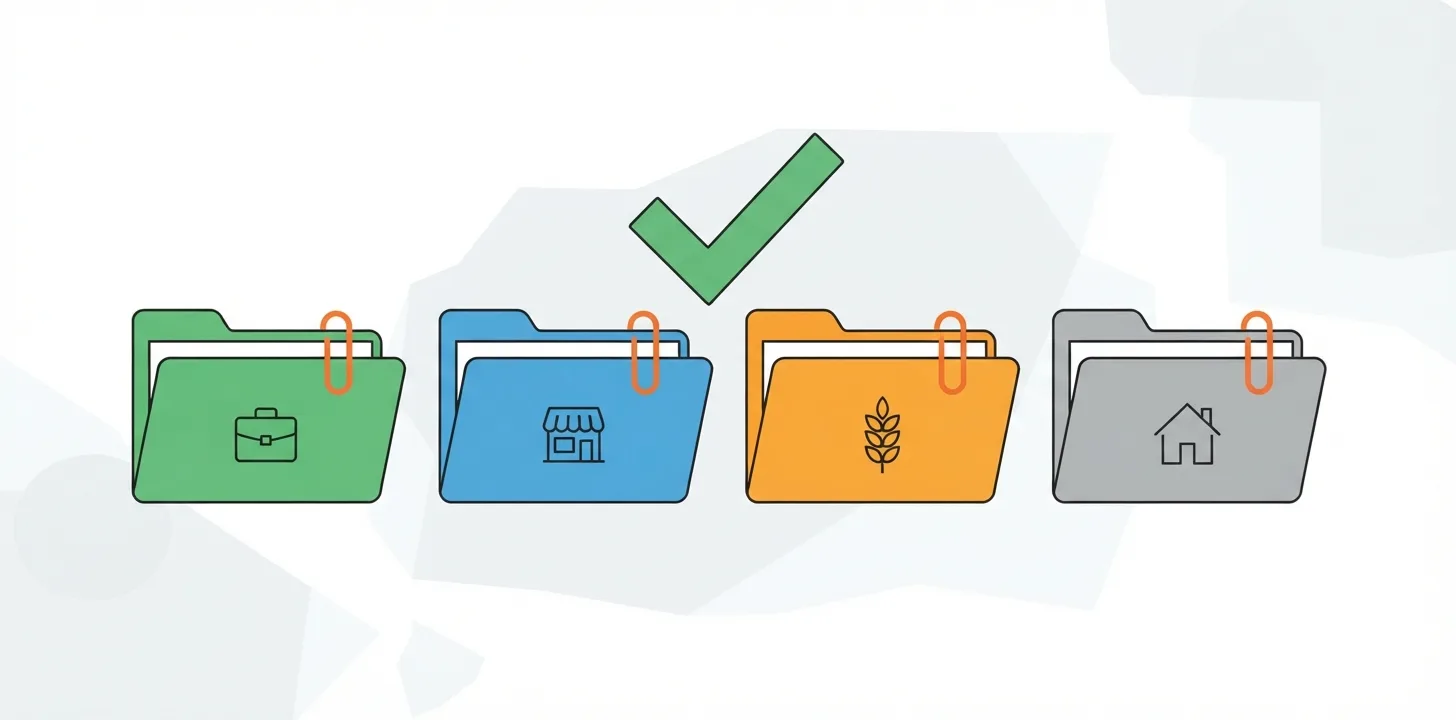
Layer Three: The Self-Employed Co-Applicant#
The bank needs to see that the business earns steadily, so it asks for more.
Bank statements. Credila lists six months of current account statements for business income and six months of savings statements.
Income tax returns. The last two years of personal ITR with the acknowledgement. Bank of Baroda adds TDS certificates where tax was deducted at source.
Section 44AD filers. Credila says such applicants need only a statement of income, since they do not keep full accounts.
CA-attested financials. If the business is subject to a tax audit, which generally starts once turnover crosses ₹1 crore, Credila asks for accounts certified by a chartered accountant. Some comparison sites also mention profit and loss statements for those without audits.
Business proof. GST registration or returns, a shop or establishment licence, and a business address proof. ICICI Bank lists GST registration and business account statements as the core papers.
What trips people up. ITRs filed late or not at all, business turnover that does not match the bank statements, and personal and business funds mixed in one account.
Layer Four: Farmers, And Families With No ITR#
Here is the reassuring part. No ITR does not mean no loan. It means the bank needs a different kind of proof.
For farmers. Comparison sites and lender checklists commonly mention land records such as the 7/12 extract and 8A, an income certificate issued by the Tahsildar, Kisan Credit Card history and savings account statements. If the family also has other income, such as a salaried member or a small business, that can be added.
For others without an ITR. Alternatives lenders often accept include fixed deposit certificates, rental agreements, pension statements and bank statements showing regular credits. Non-banking lenders tend to be more flexible than public sector banks in what they accept, according to comparison sites. Nomad Credit's guide, for example, says NBFCs may accept bank statements where banks insist on returns.
For a co-applicant with no income or a pensioner. Credila lists the last six months of savings account statements. The bank will then rely more heavily on the student's future income or on collateral.
What trips people up. Land records that show a different name or an old owner, income certificates that are out of date, and a large gap between stated income and bank credits. If your papers are informal, collect them early, because some certificates take days to issue.
A useful fallback. If one parent has no provable income, check whether another family member with cleaner records can be a co-applicant. Some private banks accept a wider range of relatives than public sector banks do.
Collateral Papers, And Small Mismatches That Cause Big Delays#
If your loan is above the collateral-free limit, add these to the pile. Credila's list for a property offered as security includes the latest registered sale deed, the property tax receipt and the approved building plan or occupancy certificate. The bank will separately value the property and check its legal title, which takes time, so start early.
Then check for the boring problems, because these cause more delays than serious ones.
- Name spellings. The same name on the passport, the marksheet, the PAN and the bank account. A missing middle name is enough to hold a file up.
- Old statements. Bank statements past their freshness date must be reissued.
- Unexplained big deposits. Be ready to explain any large credit in the co-applicant's statements.
- Education gaps. ICICI Bank mentions that gap certificates may be required if you had a break in your studies.
- Unsigned or unattested copies. Carry originals to the branch for verification.
What changes for PM-Vidyalaxmi. The application is digital and short. The guidelines list income proof from a designated public authority of the state as a basic document for the interest subvention, along with a declaration that you are not receiving another central or state scholarship, interest subvention or fee reimbursement. Some of these can be supplied through the institution.
What changes for study abroad. Add your passport, the offer or acceptance letter (or I-20 for the USA), test scores, a visa where already issued, and the cost of attendance from the university. SBI's Global Ed-Vantage also asks for six months of bank statements for the co-applicant and security documents for any collateral.
Frequently Asked Questions#
What documents are required for an education loan in India?
The student needs ID and address proof, PAN or Form 60, academic marksheets, entrance scores, an admission letter and a cost statement. The co-applicant needs ID, income proof and six months of bank statements. Collateral papers are added if the loan is above the collateral-free limit.
Can I get an education loan if my parent does not file ITR?
Often yes. Lenders can accept alternatives such as land records and a Tahsildar income certificate for farmers, bank statements, fixed deposit certificates, pension statements or rental agreements. Requirements vary, and non-banking lenders tend to be more flexible than banks.
What do self-employed co-applicants need?
Typically six months of current and savings account statements, two years of ITR with acknowledgement, and business proof such as GST papers or a shop licence. Small businesses under Section 44AD may need only a statement of income, and those with tax audits need CA-certified accounts.
Do salaried co-applicants need Form 16?
Bank of Baroda and ICICI Bank both list it among their salaried documents, along with the last three months' salary slips and six months of bank statements. Carry it even where a lender treats it as optional.
What documents are needed for a farmer as co-applicant?
Land records such as the 7/12 extract and 8A, an income certificate from the Tahsildar, Kisan Credit Card history and savings account statements are commonly asked for. Exact papers vary by state and bank, so confirm with your branch.
Are the documents different for an education loan abroad?
Yes. Add a passport, the offer letter or I-20, test scores such as GRE, GMAT, IELTS or TOEFL, the university's cost of attendance, and sometimes a visa. The co-applicant's income and collateral papers stay largely the same.
How recent must bank statements be?
Credila's checklist says online statements should be within 30 days and passbook copies within 60 days of submission. Other lenders may set different limits, so ask before you print.
Checklists were reviewed on 26 September 2026 from Credila, Bank of Baroda and ICICI Bank, the Department of Higher Education's PM-Vidyalaxmi guidelines and comparison sites. Lenders and branches differ, so treat this as a starting point and ask for your lender's own list.