
The Decision Is Made Earlier Than You Think#
Interns tend to believe the pre-placement offer is decided at the end, on the strength of the final presentation.
It is not. By the time the final presentation happens, the people who will decide have generally made up their minds weeks earlier, and the presentation confirms an impression rather than creating one.
What they decided was not whether your project was good. It was whether they want you on the team. Those are related but they are not the same question, and interns who optimise only for the first one routinely lose to interns who understood the second.
This is not cynicism about merit. Technical competence is a prerequisite and a bad project will sink you. But among interns who all did acceptable work, and most do, the differentiator is whether the team found you useful, easy to work with and already behaving like a colleague.
What follows is a twelve-week plan for being that person, which is mostly about doing ordinary things deliberately rather than doing anything clever.
Background: What A Manager Is Actually Assessing#
Ask a manager what they look for in an intern and you will get a list of technical qualities. Watch what actually drives their decision and the list is different.
Can this person work without being managed? The most expensive intern is one who needs constant direction. The most valuable is one who takes an ambiguous task, asks two good clarifying questions, and comes back with something.
Do they communicate progress? A manager with five reports cannot chase you. An intern who volunteers a short update before being asked removes a burden, and that is noticed disproportionately.
Do they ask for help at the right time? Too early looks helpless, too late wastes days. The judgement to struggle for a while and then ask clearly is one of the most reliable signals of someone who will function as a colleague.
Would the team miss them? This is the real question underneath the formal evaluation, and it is answered by dozens of small interactions rather than by the project.
And can they take feedback without deflating or arguing? An intern who receives a correction, adjusts, and gets on with it reads as someone worth investing in.
Two terms worth defining:
Pre-placement offer. A full-time offer made to an intern before ordinary campus recruitment begins, typically at or shortly after the end of the internship.
Scope creep. Quietly expanding a task beyond what was asked. Usually a problem, but in an internship a small amount of it, clearly communicated, demonstrates initiative.
The Twelve-Week Plan#
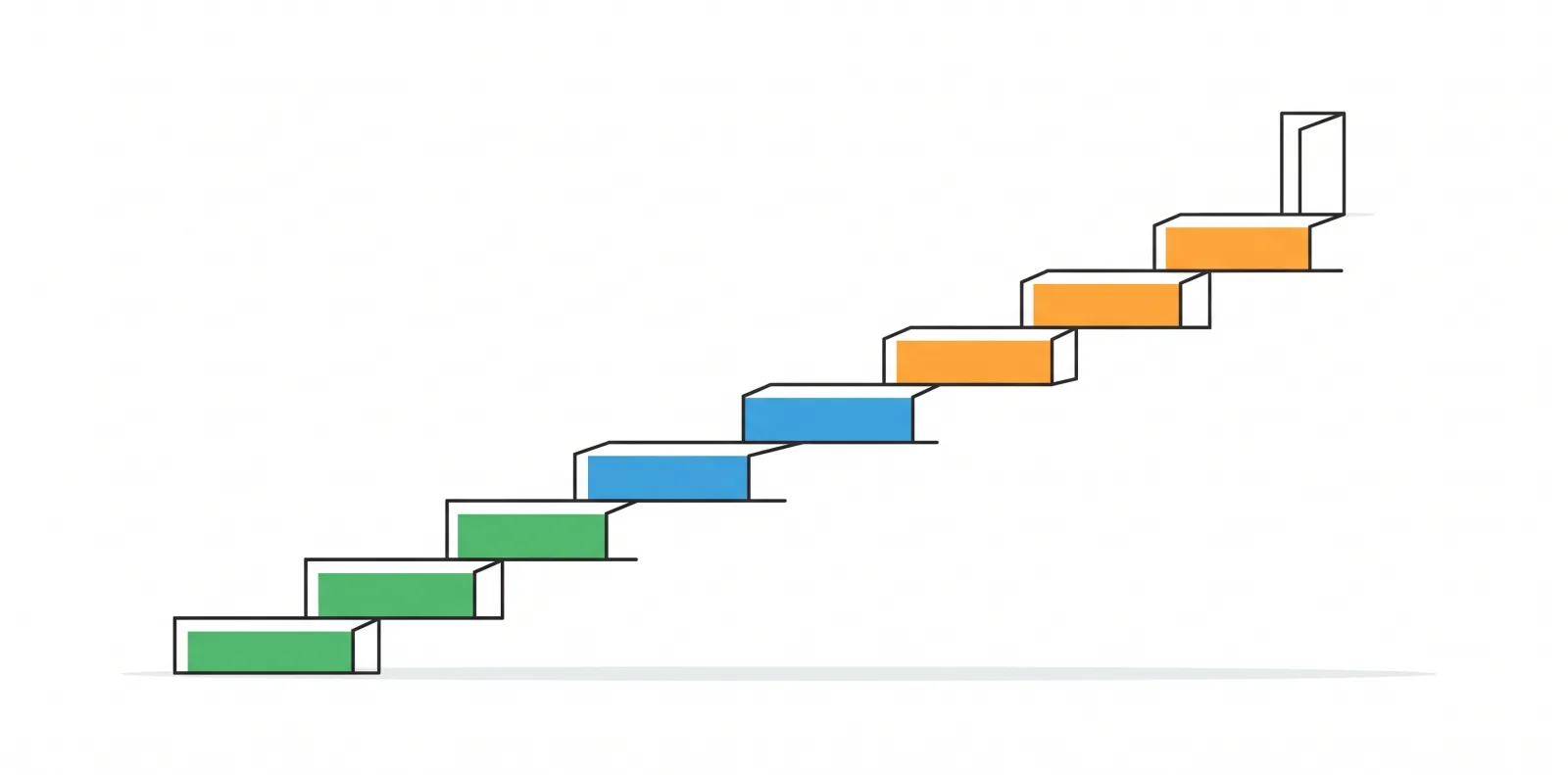
Notice where the weight sits. The establish phase looks like the least productive and is the most decisive, because it is when people form a view of you that later work only adjusts at the margins.
Notice also the week-eight line. Interns who coast through the first half intending to impress at the end have misread the process entirely.
Weeks One To Four: Establishing Yourself#
Meet everyone, by name, in the first week. Not networking. Simply introducing yourself to the people you will work near, asking what they do, and remembering it. Interns who remain anonymous to the team do not convert, regardless of their output.
Get the project scope written down. A short note to your manager confirming what you understood the project to be, what success looks like and what the deadline is. This takes ten minutes, prevents the commonest internship failure, and signals that you operate professionally.
Set up a recurring check-in. Weekly, fifteen minutes, in the calendar. Ask for it in week one when it is easy rather than in week six when something has gone wrong.
Deliver one small thing early. Find something modest within your scope and complete it ahead of schedule in the first fortnight. This is the single highest-leverage action in the whole twelve weeks, because it converts you from an unknown quantity into someone who delivers, and everything afterwards is read through that lens.
Learn how the team actually works. Which tools, which rituals, how decisions get made, who to ask about what. Interns who adopt the team's working habits are read as team members; those who work in their own way are read as visitors.
Weeks Five To Eight: Doing The Work#
Finish the core project. This should be obvious and frequently is not. An unfinished project is the one thing that cannot be recovered by good behaviour.
Send a short written update every week. Three bullets: what I did, what I am doing next, what I need. Send it before anyone asks. Managers with several reports value this more than interns can easily imagine, and it also creates a written record of your contribution that exists when the evaluation happens.
Ask for mid-point feedback explicitly, around week six. The question that works is specific: what would you want to see from me in the second half? This gives you six weeks to act on the answer, and it signals that you take the assessment seriously. Interns who wait for feedback usually receive it too late to use.
Take one thing nobody asked you to take. A small annoyance the team has been living with, a piece of documentation nobody wrote, a manual process you could automate. Clear it with your manager first, keep it small, and do it well. This is the action that most reliably turns a competent intern into a memorable one.
Help somebody else. Interns are assumed to be net consumers of the team's time. An intern who reduces someone else's workload inverts that assumption, and people remember it.
Weeks Nine To Twelve: Asking For It#
Close every loose end. Unfinished work left behind is what people remember about an intern, unfairly but reliably. Whatever you cannot finish, document clearly and hand over.
Hand over as a colleague would, with a written note covering what exists, where it is, what is incomplete and what you would do next. This document is read after you leave and it shapes the final impression more than the presentation does.
Then ask, directly and once. Around week ten, in your regular check-in, say plainly that you have enjoyed the work, that you would like to join the team full time, and ask what the process is. Interns routinely hope this will be offered and never ask, and managers routinely assume an intern who never asked was not interested. That misunderstanding costs offers every year.
Accept whatever answer you get gracefully. There may be no headcount, no process for converting interns, or a decision made elsewhere. None of those are about you, and a good reaction preserves the relationship, which is the asset that outlasts the internship.
Present the work properly. Clear, short, honest about what did not work. Managers respect an intern who says what failed far more than one who oversells.
And ask for a written reference before your last day, regardless of the outcome. It is the thing you will still be using in three years.
When The Offer Does Not Come#
Plenty of good interns do not convert, for reasons that have nothing to do with their performance, and it is worth being prepared for it.
Ask why, once, and listen properly. If there is a genuine development reason, you have just received something more valuable than the offer. If the answer is about headcount or timing, believe it.
Keep the relationship alive. Send a short note a few months later with something relevant, not a request. People hire from their network long after the internship ends, and the intern who stayed in contact is the one they think of.
Extract everything the internship gave you. A written reference, a documented outcome for your CV, a named contact who will speak for you, and a clear description of what you built. These are the durable assets and they do not depend on an offer.
Ask about future cycles. Some organisations cannot convert interns in one year and can in the next, or have a graduate programme with its own timetable. A direct question about when and how to apply is usually answered honestly.
And do not read it as a verdict. Conversion rates vary enormously between employers, and many teams with excellent interns have no mechanism to hire them at all.
Mistakes That Cost Interns The Offer#
A short list of the things that reliably go wrong, drawn from how internships tend to fail rather than from how they succeed.
Disappearing for a week. An intern who goes quiet, for whatever reason, is assumed to be stuck or disengaged. If you need time on something, say so; silence is always read as the worse explanation.
Over-promising in week one. Ambitious scope agreed enthusiastically at the start becomes an unfinished project at the end. Agree something you can complete and then exceed it.
Treating the manager as the only audience. Peers and senior colleagues are consulted when conversion is discussed. An intern who impressed one person and was invisible to everyone else has a narrower case than they think.
Arguing with feedback. Defending a choice once is fine. Defending it three times marks you as difficult to work with, which is the single most damaging label available.
Hiding a mistake. Every intern breaks something. Reporting it immediately is unremarkable; discovering it later is what does the damage.
Treating the last fortnight as a wind-down. Handover quality is disproportionately remembered because it is the last thing anyone sees of your work.
And asking for the offer in an email on the final day. Too late to be considered properly and slightly awkward for everyone. Raise it in a conversation, with time still on the clock.
Frequently Asked Questions#
When is the pre-placement offer decision actually made?#
Impressions largely form in the first six weeks and are broadly settled by week eight. The final presentation usually confirms a view rather than creating one, which is why the early phase matters most.
What do managers actually assess?#
Whether you can work with minimal direction, whether you communicate progress, whether you ask for help at the right moment, how you take feedback, and ultimately whether the team would miss you. Technical competence is a prerequisite rather than the differentiator.
Should I ask directly for a full-time role?#
Yes, once, around week ten of a twelve-week internship. Many managers assume an intern who never raised it was not interested, and that assumption costs offers every year.
What is the single most effective thing I can do early?#
Deliver one small piece of work ahead of schedule in the first fortnight. It establishes you as someone who delivers, and everything you do afterwards is interpreted through that impression.
How do I ask for feedback without seeming anxious?#
Ask a specific forward-looking question around the midpoint: what would you want to see from me in the second half? It is easy to answer, it is not a request for reassurance, and it leaves you time to act on the reply.
Is it worth taking on work outside my project?#
A small amount, cleared with your manager first. One unasked-for improvement done well is the action that most reliably distinguishes a competent intern from a memorable one. Large uncleared expansions are a different matter and usually backfire.
What should I do if I get no offer?#
Ask why once, secure a written reference, document the outcome for your CV, keep the relationship alive with an occasional note, and ask about future recruitment cycles. Conversion depends heavily on headcount and on whether the employer converts interns at all.
Does this work for remote internships too?#
The principles hold but the effort required is higher, because nothing about your work is visible incidentally. Written weekly updates, a regular scheduled call and being present with your camera on in meetings do most of the work that physical presence would otherwise do for you.