One Name On That List Does Not Belong There#
Before comparing anything, a correction that will save some readers a wasted application cycle.
IISc does not offer an undergraduate design programme. The Indian Institute of Science has a Centre for Product Design and Manufacturing, and it is excellent, but it operates at postgraduate level. Admission runs through CEED, the Common Entrance Examination for Design, which is the postgraduate equivalent of UCEED. If you are finishing Class 12, IISc is not a route available to you this year. It may be an outstanding destination after your bachelor's degree.
The undergraduate routes that genuinely exist are NID, NIFT, the IIT design programmes entered through UCEED, and private institutions such as Srishti. They are four quite different propositions, and they do not merely differ in prestige. They differ in what they think design is.
NID treats design as a broad problem-solving discipline rooted in craft and material. NIFT treats it as an industry-facing profession with fashion and lifestyle at its centre. The IIT programmes treat it as an engineering-adjacent field with strong technology and interaction components. Srishti treats it as an art and culture practice with unusually wide interdisciplinary latitude.
Pick by which of those sentences describes what you want to spend four years doing, not by which name your relatives recognise.
Background: The Examinations, With Current Dates#
NID DAT. The Design Aptitude Test, conducted by the National Institute of Design for its own campuses. It runs in two stages. Prelims for the 2027 cycle falls on 20 December 2026, with applications for B.Des and M.Des open from 10 September 2026 to 30 November 2026. Mains follows for shortlisted candidates and comprises a studio test, a personal interview and a portfolio review.
The structural point that changes everything: the final merit list is prepared solely on DAT Mains performance. Prelims marks are used to shortlist and then discarded. Whatever you score in December does not contribute to your rank.
NIFT. Conducted by the National Testing Agency for admission to the NIFT campuses. The 2027 examination is scheduled for 10 January 2027, with dates released in September 2026 and the application form expected around December 2026. Design programme candidates proceed to a Situation Test, a hands-on exercise with supplied materials and a brief, followed by an interview stage.
UCEED. The Undergraduate Common Entrance Examination for Design, for B.Des admission at IIT Bombay's IDC School of Design and other participating institutions. UCEED 2027 falls on 17 January 2027, with applications opening around the first week of October 2026. The paper runs three hours in two parts: Part A is computer-based and Part B tests drawing and design skills directly.
One rule that catches people out: you may sit UCEED a maximum of two times, in two consecutive years. Plan your first attempt accordingly rather than treating it as a trial.
CEED. The postgraduate equivalent, for M.Des admission at the IITs and IISc. Relevant after your bachelor's degree rather than now.
Srishti and other private institutions. Admission through their own entrance and aptitude processes, typically involving a written test, a studio or portfolio component and an interview. Dates and formats are institution-specific.
The Four, Compared#
| NID | NIFT | IIT design, via UCEED | Srishti and similar private institutions | |
|---|---|---|---|---|
| Entrance route | NID DAT, Prelims then Mains | NIFT entrance conducted by NTA, then Situation Test and interview for design programmes | UCEED, a single three-hour paper in two parts | Institution's own entrance and aptitude process |
| Key 2027 dates | Prelims 20 December 2026; applications 10 September to 30 November 2026 | Examination 10 January 2027; application form expected around December 2026 | Examination 17 January 2027; applications from around early October 2026 | Institution-specific, generally spanning winter and spring |
| Attempt limits | Check the current brochure | Check the current brochure | Two attempts, in two consecutive years | Institution-specific |
| What decides your rank | DAT Mains only: studio test, interview and portfolio review | Written examination plus Situation Test and interview for design programmes | UCEED score | Combination of test, portfolio and interview |
| Design philosophy | Broad problem-solving rooted in craft, material and Indian design traditions | Industry-facing, with fashion, textiles, accessories and lifestyle at the centre | Technology-adjacent, strong in product, interaction and communication design | Art and culture led, with wide interdisciplinary latitude |
| Typical disciplines | Product, communication, textile, animation, film, ceramic, furniture, exhibition | Fashion design, textile design, accessory design, fashion communication, knitwear, fashion technology | Industrial design, interaction design, visual communication, depending on the institution | Broad and cross-disciplinary, often spanning art, design, technology and humanities |
| Fee position | Public institution fee levels, substantially lower than private options | Public institution fee levels | IIT fee levels, with the usual income-linked remission schemes applying | Private fee levels, substantially higher. Verify the full four-year figure |
| Suits you if | You want breadth, making and material exploration | You want to work in fashion, textiles or the lifestyle industry with direct industry links | You want design with a technology and engineering orientation | You want interdisciplinary freedom and are comfortable with private fees |
Fee positions are indicative. Verify current figures and any available scholarship or remission schemes directly with each institution.
The Entrance Papers Test Different Things#
This matters for how you prepare, because the skills only partly overlap.
NID DAT Prelims tests observation, visualisation, design sensitivity and problem-solving through written and drawing responses. The Mains studio test is hands-on and timed, with reported formats including creative exercises such as producing a large number of meaningful visuals from a set of scribbled lines in around fifteen minutes, live sketching, and activities involving audio, visual and tactile inputs.
NIFT's written paper covers general ability and creative ability depending on the programme, and the Situation Test that follows for design candidates is genuinely distinctive: you are given physical materials and a brief, you build something within a time limit, and you write an explanation of your reasoning. That written justification carries marks and is routinely rushed.
UCEED Part A is computer-based and covers visualisation and spatial ability, observation and design sensitivity, environmental and social awareness, analytical and logical reasoning, language, and design thinking. Part B tests drawing and design directly. The two parts sit within a single three-hour window, which means time management across them is itself a skill.
Private institution processes vary but generally weight a portfolio and an interview more heavily than the public examinations do at entry.
The common ground, and where to put your hours. All four reward the same underlying capabilities: observational drawing, fluency at generating many ideas quickly, awareness of the designed world around you, and the ability to explain your reasoning aloud. Daily sketching from life and a habit of producing twenty rough thumbnails on a single prompt serve every one of these examinations. Preparation that is entirely question-bank driven serves none of them well.
Choosing By Discipline Rather Than Ranking#
Work through these in order.
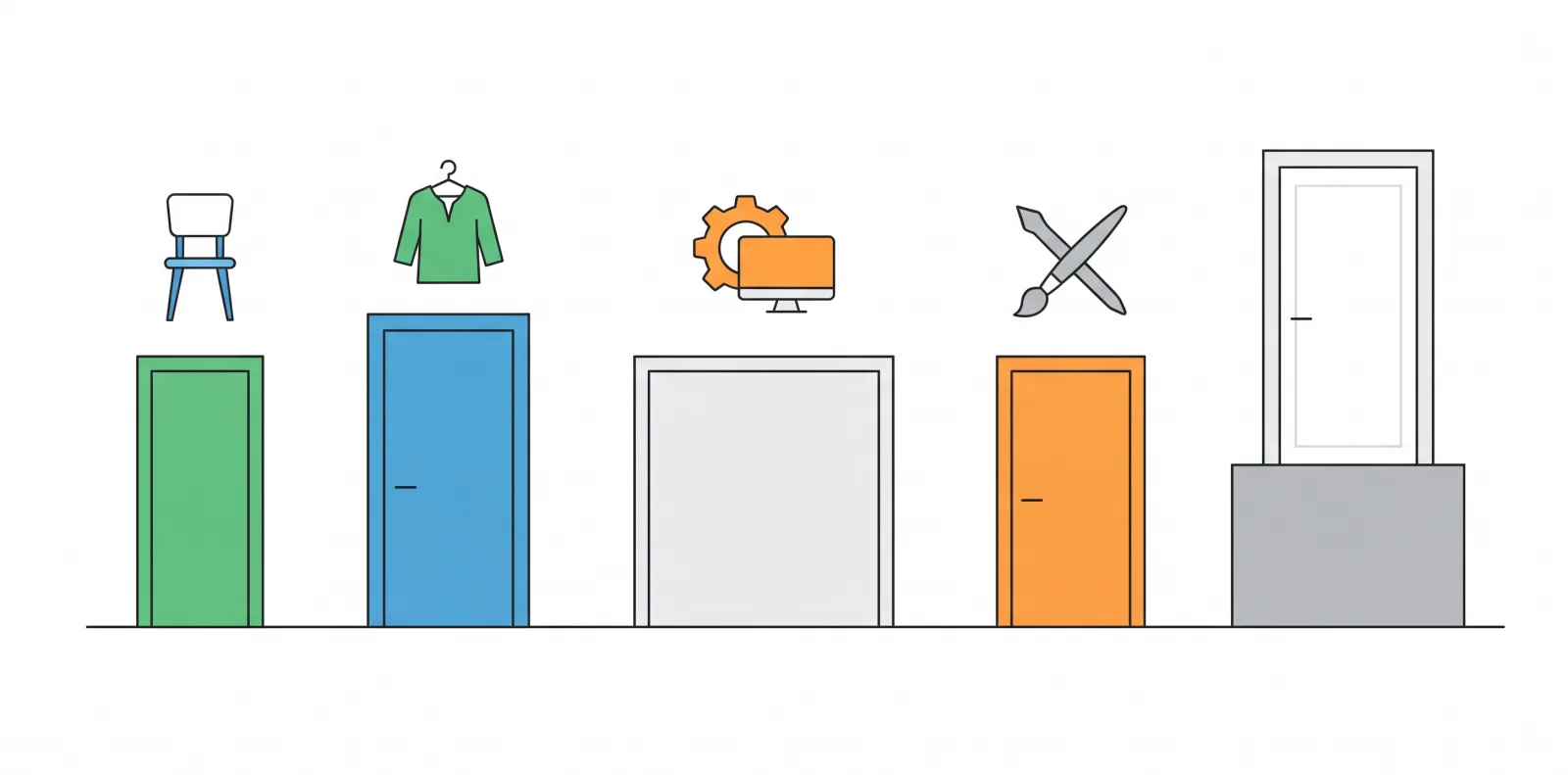
What do you actually want to make? Garments and textiles point to NIFT. Physical products, furniture, ceramics and craft-rooted work point to NID. Digital products, interfaces and technology-adjacent design point to the IIT programmes. Work that crosses art, culture and design without settling into one point to the interdisciplinary private institutions.
Do you want industry links or exploration? NIFT is explicitly industry-facing with strong links into the apparel and retail sector. NID and the IIT programmes sit further towards exploration and research. Neither is better; they produce different graduates.
What can your family afford across four years? The gap between public and private design education in India is very large, and it compounds. Work out the full figure including materials, which in design courses is a real and often underestimated ongoing cost.
Where is the campus, and what is the city? Design education benefits enormously from proximity to industry, craft clusters, galleries and studios. The city around your campus becomes part of the education in a way it does not for many other disciplines.
Check the faculty in your intended discipline. Published on every institution's site. A programme is only as strong as the people teaching your specialisation, and a famous institution with nobody working in your area is a worse outcome than a less famous one with three.
And apply to more than one. These four routes have four separate examinations with four separate timelines, spread from December through January and beyond. Sitting three of them is entirely feasible and gives you real choice rather than a single result to hope for.
Preparing Without Coaching Dependence#
Design entrance coaching exists and can help with format familiarity. It cannot substitute for the habits below, which cost nothing.
Draw from life daily. Forty-five minutes, real objects in front of you, not photographs. Line confidence improves measurably over three months.
Twenty thumbnails a day on one prompt. Small, fast, unedited. This builds ideation fluency, which is what timed studio tests actually measure.
Keep a visual diary. Note designed objects that work well and badly, and why. This builds the design sensitivity that every one of these papers tests and it is the part that cannot be crammed.
Make physical things. Cardboard, paper, clay, whatever is available. The NIFT Situation Test and the NID studio test both involve making under time pressure, and candidates who have never built anything find their hands unreliable.
Practise explaining your work aloud. Every one of these routes ends in an interview or a written justification. Articulating why you did something is a separate skill from doing it, and it is trainable.
The Cost Nobody Budgets For#
Design education carries an ongoing expense that no other discipline matches, and families are routinely caught out by it.
Materials are a recurring cost, not a one-off. Paper, boards, modelling materials, fabric, printing, prototyping, cutting supplies. Across a four-year course this accumulates into a genuinely significant figure, and it is rarely mentioned in fee discussions.
Printing and presentation costs are relentless. Design coursework is presented physically as well as digitally, and large-format printing for reviews adds up across a semester.
Equipment expectations are real. Most programmes assume access to a reasonably capable computer and, depending on discipline, a camera or drawing tablet. Ask what the institution provides and what students are expected to own.
Field trips and craft documentation. Several institutions build travel into the curriculum, visiting craft clusters, manufacturers or studios. These are valuable and they cost money.
Degree show and final project costs. Final-year projects frequently involve building something, and the exhibition that follows carries its own expense.
What to do about it. Ask current students directly what they actually spend per semester beyond fees. It is the single most useful question you can put to someone a year ahead of you, and the answer is usually larger than prospectuses imply. Then factor it into the comparison between public and private options, where it applies on top of an already substantial fee gap.
Frequently Asked Questions#
Does IISc offer an undergraduate design course?#
No. IISc's Centre for Product Design and Manufacturing operates at postgraduate level, with admission through CEED. Undergraduate design routes in India run through NID, NIFT, UCEED for the IIT programmes, and private institutions.
How many times can I sit UCEED?#
Two, in two consecutive years. This is a hard limit and it should shape when you take your first attempt rather than being discovered afterwards.
Do NID Prelims marks count towards my final rank?#
No. The final merit list is based solely on DAT Mains performance, which comprises the studio test, personal interview and portfolio review. Prelims marks are used only to shortlist candidates for Mains.
What is the NIFT Situation Test?#
A hands-on exercise for design programme candidates in which you are given physical materials and a brief, build something within a time limit, and then write an explanation of your reasoning. The written justification carries marks and is frequently rushed.
Which is better, NID or NIFT?#
They serve different disciplines. NIFT is industry-facing with fashion, textiles and lifestyle at its centre. NID is broader, rooted in craft, material and problem-solving across many design fields. Choose by what you want to make rather than by reputation.
Are the IIT design programmes engineering courses?#
No, they are design degrees, but they sit within technical institutions and tend towards product, interaction and communication design with a strong technology orientation. They suit candidates who want design with an engineering-adjacent flavour.
How much do private design colleges cost compared with NID and NIFT?#
Substantially more. Public institutions charge public fee levels while private design colleges charge private ones, and across four years the difference is large. Factor in material costs too, which in design education are an ongoing and often underestimated expense.
Where should I confirm dates and application windows?#
On the official sites: admissions.nid.edu for NID, the NTA portal for NIFT, the UCEED site run by the organising IIT, and each private institution's own admissions page. Dates and formats change between cycles, so use the current brochure.