You Are Probably About To Overpay#
An Indian student preparing for an English proficiency test is presented with a straightforward-looking proposition. The test costs somewhere between ₹6,600 and ₹19,000. Coaching for it costs a comparable amount or considerably more.
A substantial proportion of what that coaching sells is published free by the organisations that make the tests.
This is not an argument that coaching is worthless. For some candidates it is genuinely the right purchase, and the section below sets out who. It is an argument that most students buy it reflexively, before establishing whether they need it, and frequently before trying the free material at all.
The sensible sequence is cheap first. Establish where you stand with free official material, work on the specific gap it reveals, and buy something only when you have identified a weakness that free resources are not addressing. Most candidates reach their target before that point.
This article covers what exists free, where paid material genuinely adds value, and how to decide.
Background: What Preparation Actually Has To Achieve#
Three distinct things, and conflating them is why people over-buy.
Familiarity with the format. Knowing what the tasks are, how long you get, and what the screen looks like. This is the highest-return and cheapest element, and free official material covers it completely.
Diagnosis of your weakness. Establishing which skill is dragging your score. A practice test does this. Nothing else does it as well, and no amount of general study substitutes for it.
Improving the weak skill. This is the only part that may require something beyond free material, and only for some candidates. For most, the weak skill is speaking or writing, and the constraint is practice and feedback rather than content.
Note what is not on the list: learning English. These tests assess existing proficiency. A candidate whose underlying English is well below the target is facing a longer project than test preparation, and coaching marketed as test preparation will not solve it.
Two terms worth defining:
Official practice material. Resources published by the organisation that makes the test, which are scored or modelled on the real scoring. More reliable than any third-party estimate.
Diagnostic test. A full practice attempt taken under real conditions, used to find out where you stand rather than to improve.
What Exists, And What It Is Worth#
| Resource type | Cost | What it is genuinely good for | Verdict |
|---|---|---|---|
| Official practice tests from the test maker | Free or low cost, depending on test | Format familiarity and honest diagnosis. Scored on or modelled after the real system | Start here, always. Nothing else tells you where you actually stand |
| Official preparation guides and sample questions | Free | Understanding task types, timing and what each section assesses | Essential and free. Most candidates never read them |
| Free practice from the test maker for the cheaper tests | Free | For the home-based adaptive test in particular, practising the unfamiliar format is the whole game | Do this before booking, since the format is unlike anything else |
| Free video and question banks online | Free | Supplementary practice volume once you know your weakness | Useful, with caution. Much of it still describes superseded formats and scoring |
| Paid self-study platforms | Moderate | Structured practice volume, progress tracking, and written or spoken feedback | Worth it if your gap is writing or speaking and you need feedback nobody else will give |
| Paid speaking practice with a tutor | Moderate to high | Real feedback on the productive skills, which is the thing free material cannot supply | The best paid purchase for most Indian candidates, if you buy anything |
| Full classroom coaching | High | Structure, discipline and a schedule for candidates who will not self-study | Buy it for the structure, not the content, and only if you know you need imposed structure |
Read the top three rows again. They are free, they are published by the people who make the test, and they cover format familiarity and diagnosis completely. A candidate who does only these three things and practises is frequently done.
Read the bottom two rows honestly. Paid speaking practice and classroom coaching are purchases of feedback and discipline respectively. Both are real needs for some people. Neither is a purchase of secret content.
And note the caution on free online material. Both TOEFL and PTE changed materially in the last two years, and a great deal of free content still describes the old formats and scoring. Check the date on anything you rely on.
Where The Money Is Genuinely Worth Spending#
On feedback for writing and speaking. These are the sections where you cannot assess yourself. You can practise reading and listening alone and know exactly how you did; you cannot mark your own essay or judge your own speaking reliably. If you spend anything, spend it here.
On a second test attempt rather than more coaching. For a candidate close to their target, booking a retake is frequently a better use of the same money than another month of preparation. The cheaper test explicitly prices two attempts for roughly half a single traditional sitting.
On structure, if you genuinely will not study alone. This is an honest reason to pay. A candidate who has intended to prepare for three months and has not started is buying a schedule, and that is a legitimate purchase provided they know it is what they are buying.
Not on question banks. Volume of practice questions is the most abundant free resource available and the most commonly sold.
Not on guaranteed score claims. No provider controls your score, and a guarantee is a refund policy dressed up as confidence.
And not before a diagnostic test. Buying preparation before you know your weakness is buying a solution to an unidentified problem.
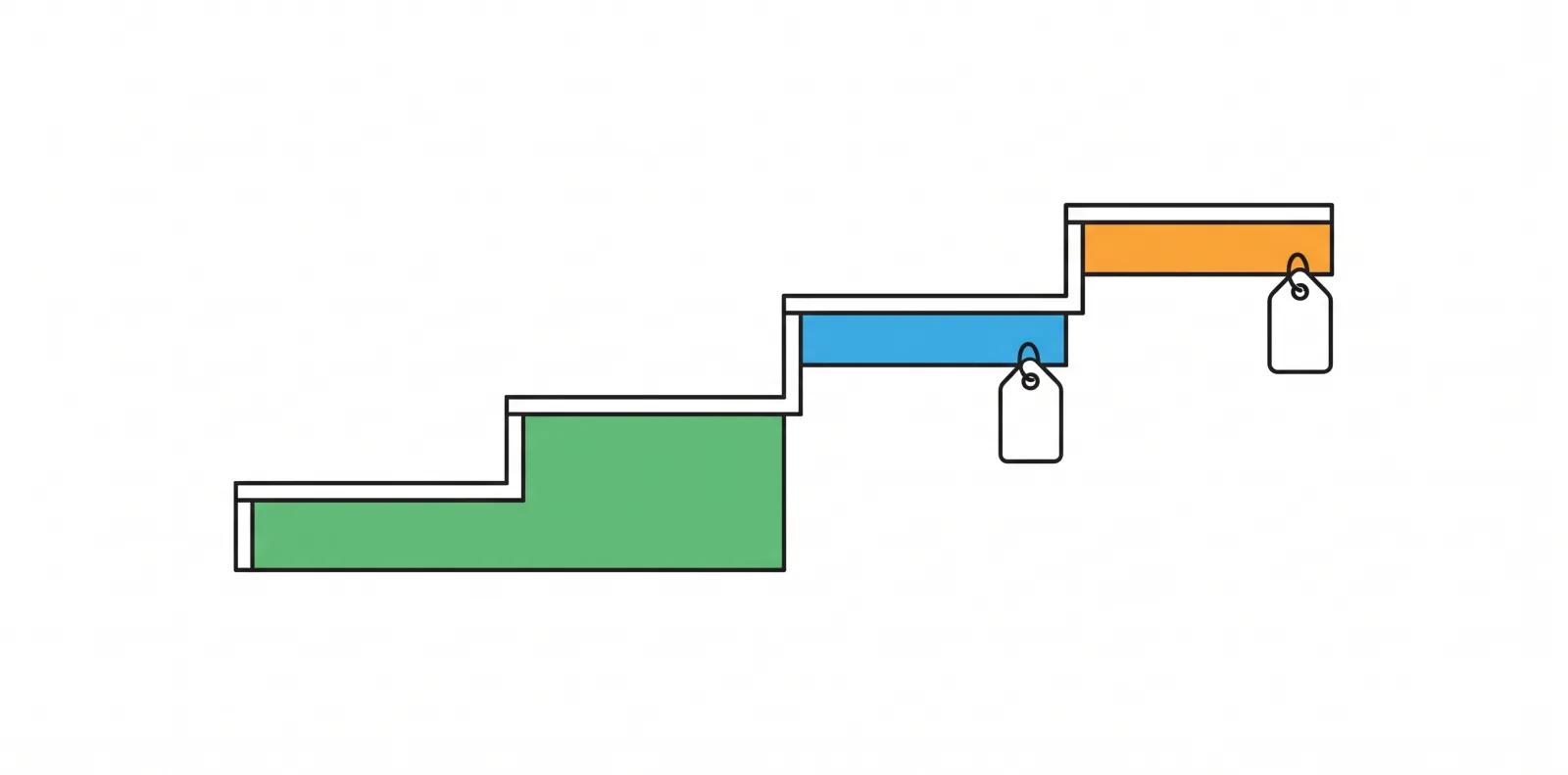
A Sequence That Works For Most People#
Week one: take a full official practice test under real conditions. Timed, uninterrupted, no pausing. This is unpleasant and it is the most valuable hour of the whole preparation.
Week one, continued: read the official guide for your test. Task types, timing, scoring. An hour that prevents a great deal of misdirected effort.
Weeks two to four: work on your weakest section only. Resist the urge to revise everything. The diagnostic told you where the problem is.
Weeks two to six, in parallel: practise speaking aloud daily. Ten minutes, recorded, listened back to. For most Indian candidates this is the highest-return daily habit, and it costs nothing.
Week five: take a second full practice test. Compare. If you are within reach, book the real test. If a specific gap persists, this is the point at which paying for feedback is justified rather than reflexive.
Week six: format rehearsal. Practise under the exact conditions of your test, including the equipment if you are testing at home.
Then book. Candidates who prepare indefinitely without booking a date generally continue preparing indefinitely. A booked date is itself a preparation tool.
How To Judge A Paid Provider#
If you do decide to buy something, a few checks separate the useful from the expensive.
Ask what is free elsewhere. If the offering is mostly practice questions and format explanation, you are paying for something the test maker publishes.
Ask specifically about feedback on speaking and writing. Who gives it, how quickly, and how detailed is it? This is the only component that genuinely cannot be obtained free, so it should be the centre of what you are buying.
Check when the material was updated. TOEFL changed its scale in January 2026 and PTE changed its scoring model in August 2025. A provider whose material still describes a 0 to 120 TOEFL total is selling something stale.
Be sceptical of score guarantees and of testimonials without verifiable detail.
Avoid anything promising predicted questions or leaked material. It is either false or it is a serious integrity violation that invalidates scores.
Ask for a trial. Any legitimate provider will let you see the material before you commit, and reluctance to do so answers the question.
And check whether you need the thing at all, which brings you back to the diagnostic test you should have taken first.
Where The Money Actually Goes#
Mapping cost against benefit makes the argument faster than any amount of advice.
The bottom right is where you should spend your first three weeks, and it costs nothing. An official practice test and ten minutes of recorded speaking a day address diagnosis and the weakest skill respectively.
The top right is the one purchase worth making, because feedback on speaking and writing is genuinely unavailable free.
The top left is where most money goes, and the honest case for it is structure rather than content. That case is real for some candidates and it should be made explicitly rather than assumed.
And the bottom left is the trap: free in abundance, sold constantly, and rarely the thing holding your score down.
Frequently Asked Questions#
Do I need coaching for IELTS or TOEFL?#
Most candidates do not. Format familiarity and diagnosis are covered completely by free official material, and the remaining gap is usually practice. Coaching is worth buying for feedback on speaking and writing, or for imposed structure if you know you will not self-study.
What should I do first?#
Take a full official practice test under real conditions, timed and uninterrupted. It tells you where you actually stand, which is the information every subsequent decision depends on.
Is free online material reliable?#
Variable, and increasingly out of date. TOEFL changed its scoring scale in January 2026 and PTE changed its scoring model in August 2025, and a great deal of free content still describes the superseded systems. Check the date on anything you rely on.
Where is paid preparation genuinely worth it?#
Feedback on writing and speaking, because those are the only sections you cannot assess yourself. After that, structure for candidates who will not study alone.
Is a retake better value than more coaching?#
Frequently, for a candidate close to their target. The cheapest test explicitly offers two attempts for roughly half the price of a single traditional sitting, which removes the pressure of one attempt entirely.
How long should I prepare?#
Six weeks of focused work is enough for most candidates whose English is already near the required level. Candidates whose underlying proficiency is well below the target are facing a longer project than test preparation.
Should I buy a question bank?#
Rarely. Practice questions are the most abundant free resource available and the most commonly sold. Volume is not the constraint for most candidates; feedback on productive skills is.
What is the single cheapest thing that improves my score?#
Recording yourself speaking for ten minutes a day and listening back. It costs nothing, it addresses the section most Indian candidates lose marks on, and almost nobody does it.