The Arithmetic Is Genuinely Striking#
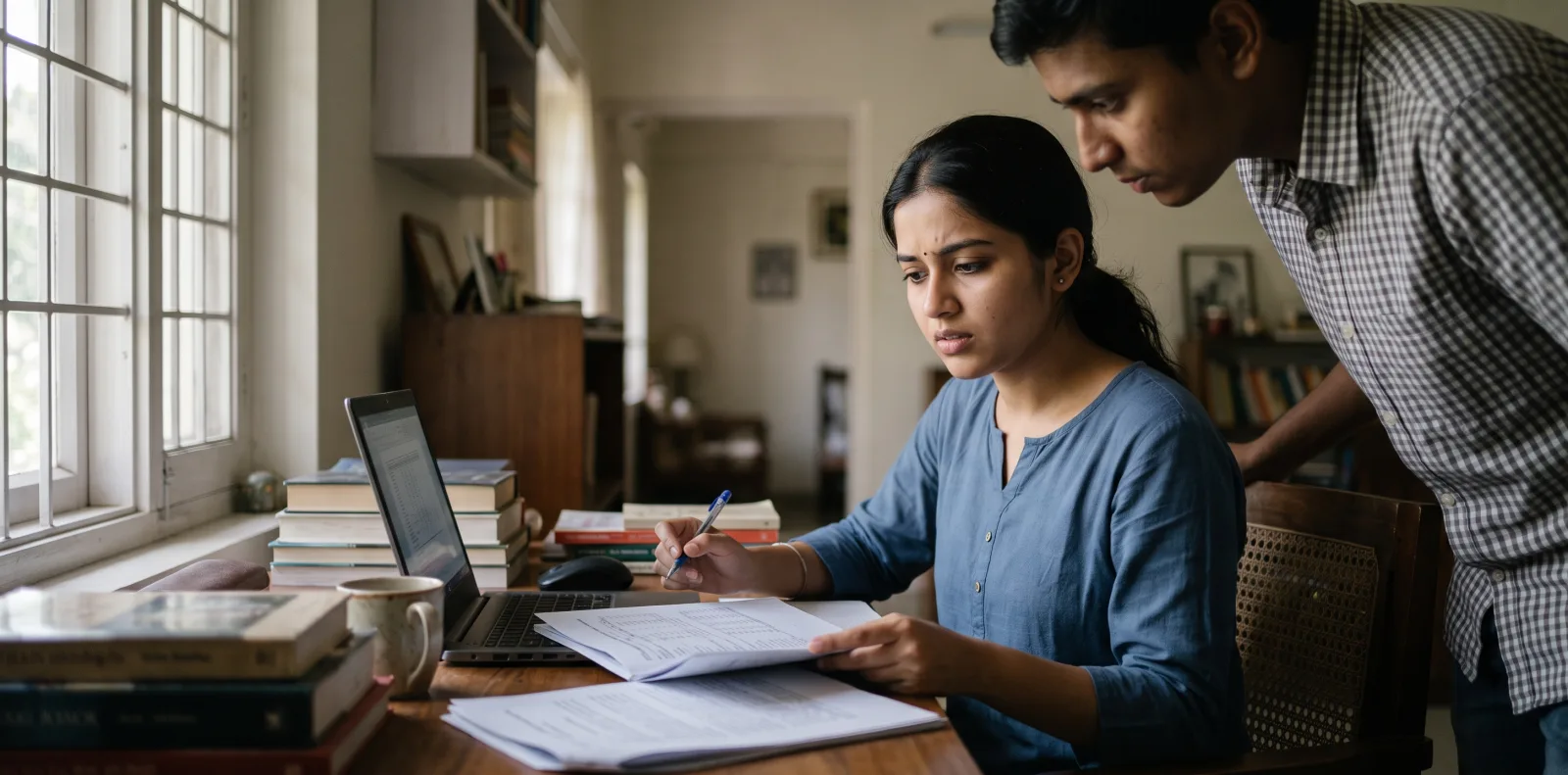
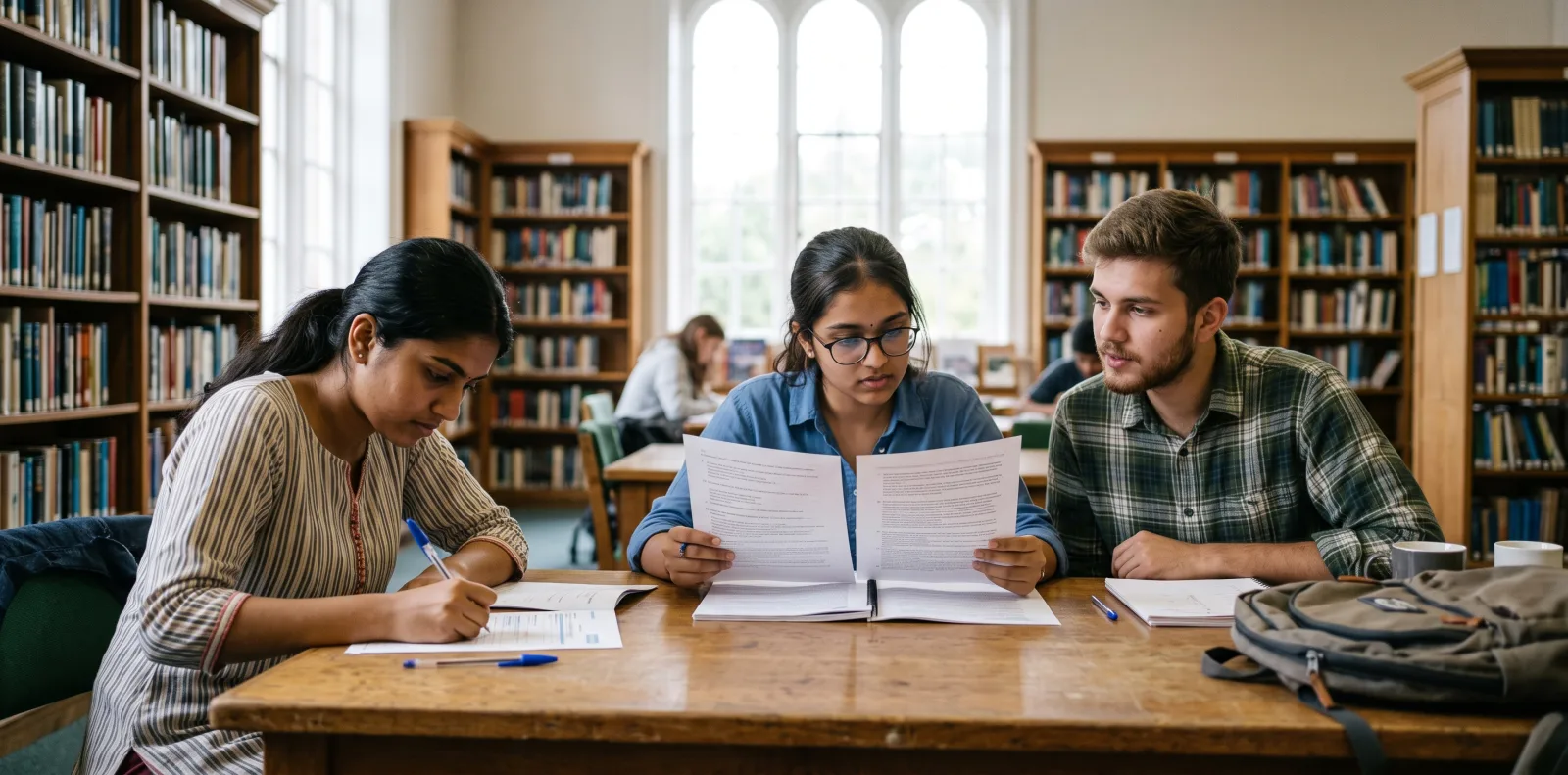
Consider a student applying to eight universities abroad.
Under the traditional route they pay somewhere between ₹18,000 and ₹19,000 for a test, travel to a centre, wait several days for a result, and then pay per-institution charges to send scores beyond whatever number is included.
Under the alternative they pay around US $59, roughly ₹6,600, take the test at home on their own laptop, receive a result within forty-eight hours, and send it to as many institutions as they like at no additional cost.
That is not a marginal difference. It is a different order of expense, and for a family funding an application cycle it is the difference between affording a retake and not.
The catch is acceptance, and it is a real catch. The Duolingo English Test reports acceptance at over six thousand institutions worldwide, which is a large and growing number and is still not every institution. A test your programme does not accept is not a saving.
This article covers what the test is, how its scoring works, how to verify acceptance properly, and who should actually take it.
Background: What The Test Is#
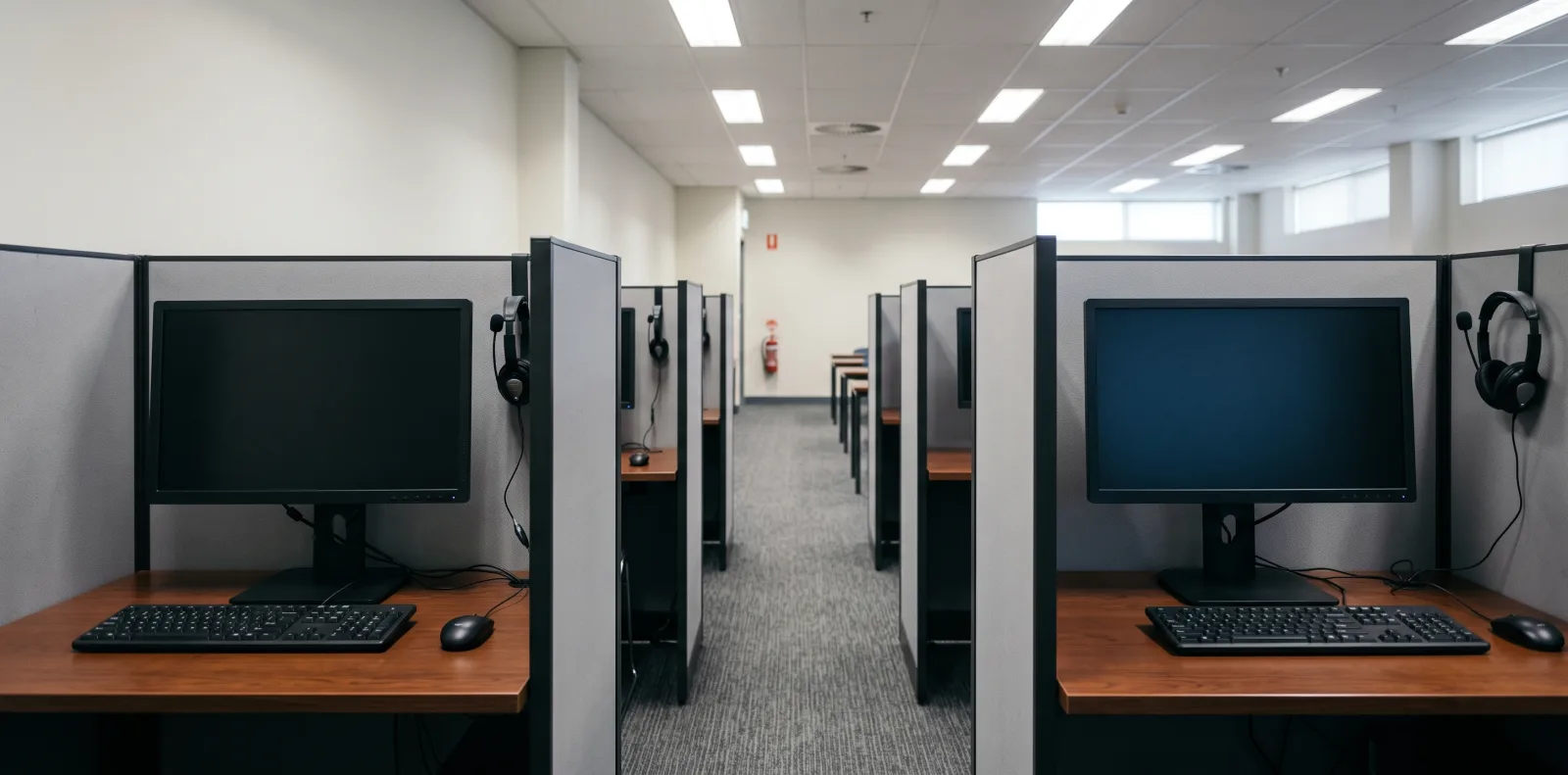
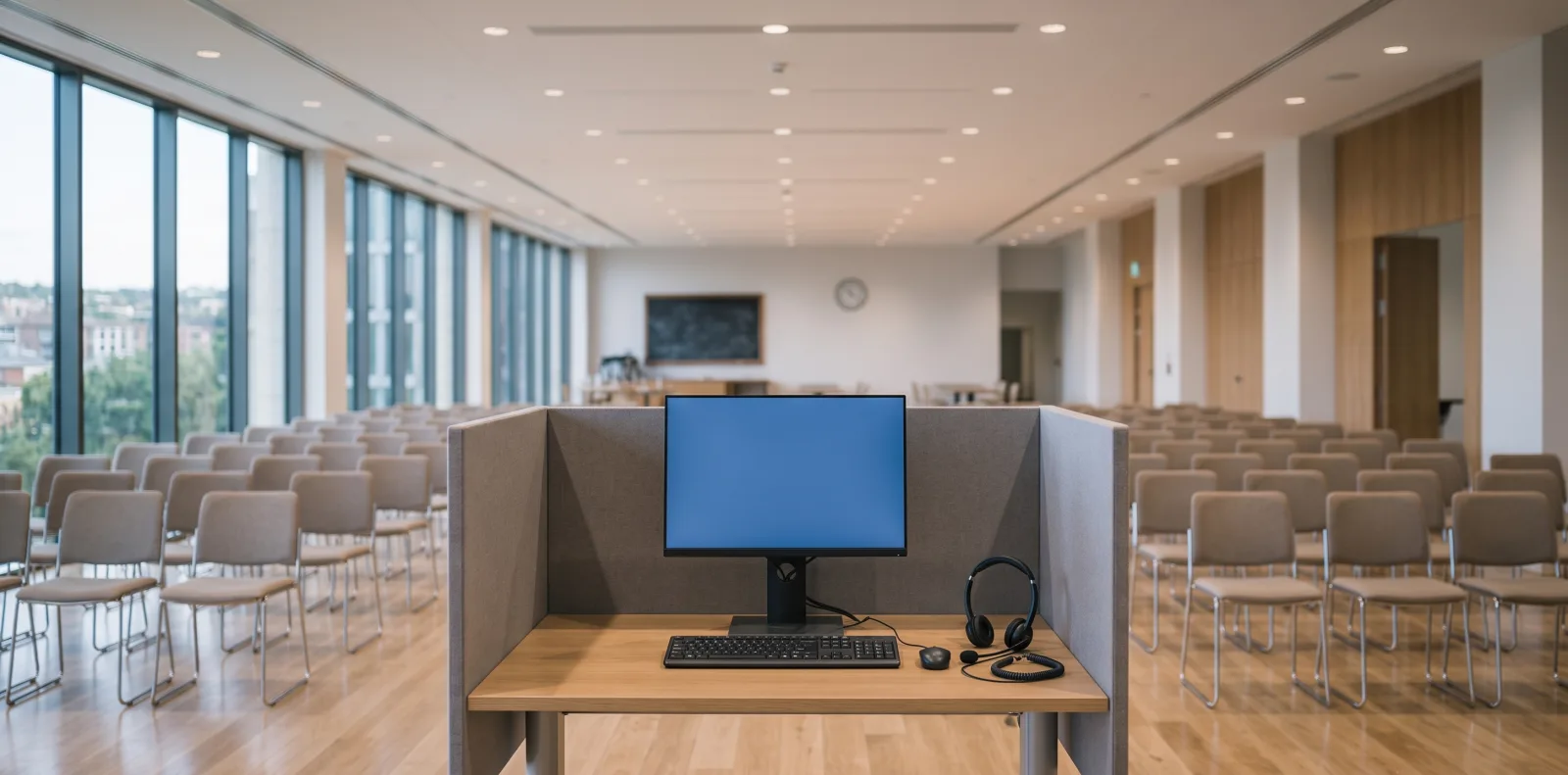
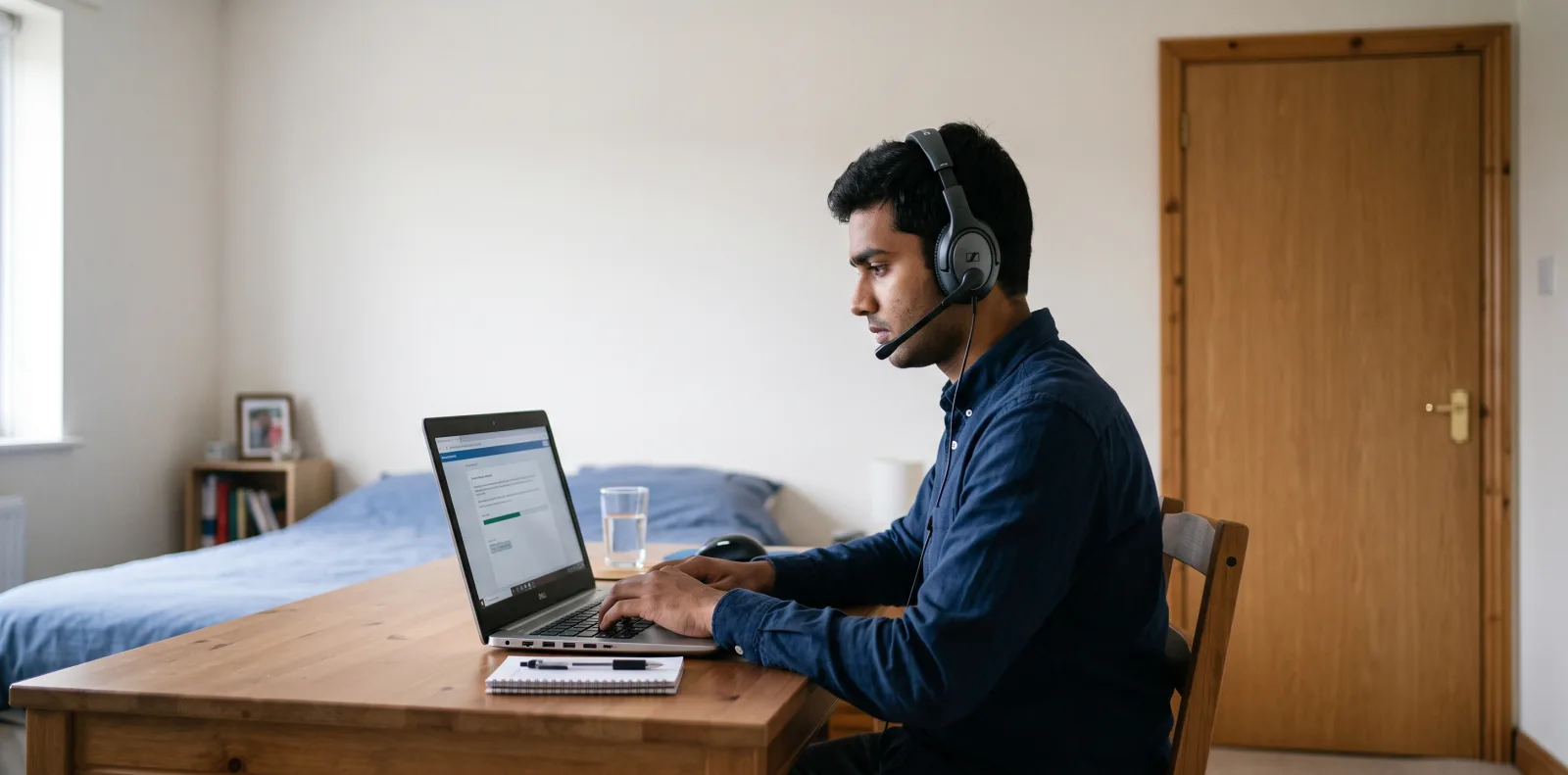
It is taken at home, on your own computer, with a webcam and microphone, rather than at a test centre. This removes travel, centre availability and slot scarcity from the equation, which for students outside major cities is a substantial practical advantage.
It is computer-adaptive, meaning question difficulty adjusts based on your answers. This is why it can estimate ability in a shorter sitting than a fixed-form test requires.
It is machine scored, which is what makes a forty-eight hour turnaround possible, and there is an option for results within about twelve hours for an additional fee of around US $40.
It is proctored remotely, which imposes real requirements on your environment: an empty room, no interruptions, no second screen, and identification checks. These are enforced, and violations invalidate results.
And the fee structure is unusual. Around US $59 for a single test, with two tests available for about US $100, and score reports sent to unlimited institutions at no cost.
Two terms worth defining:
Computer-adaptive. A test that selects each question based on your performance so far, allowing a shorter assessment to reach a reliable estimate.
Remote proctoring. Supervision through your own webcam and software rather than by an invigilator in a room. Convenient, and considerably stricter about your surroundings than students expect.
The Numbers#
| Detail | |
|---|---|
| Fee | About US $59, roughly ₹6,600. Approximately US $100 for two tests, which effectively prices a retake in advance |
| Score scale | 10 to 160 |
| Results | 48 hours as standard. Results within about 12 hours for an additional fee of around US $40 |
| Score sending | Unlimited institutions, at no additional charge. A genuine and frequently overlooked saving |
| Acceptance | Reported at over 6,000 institutions worldwide, and expanding, but not universal |
| Where taken | At home, on your own computer, under remote proctoring |
| Scoring | Machine scored, which is what enables the turnaround |
The two-test price is worth pausing on. Buying two tests for about US $100 costs roughly half of a single traditional test and removes the pressure of a single attempt entirely. For an anxious candidate, that is worth more than the money.
The unlimited score sending is the second underrated feature. An applicant sending results to a dozen institutions can find per-report charges elsewhere approach a meaningful fraction of the test fee.
And the scale is unlike any of the others, running 10 to 160 rather than in bands. Universities that accept the test publish their own minimum on that scale, which is the only figure you should plan against.
How To Verify Acceptance Properly#
This is the whole decision, so do it carefully rather than quickly.
Check the programme page, not the university page. Institutions frequently accept a test at an institutional level while individual departments or faculties do not, or set different minimums. The programme page is authoritative; the general international admissions page is a summary.
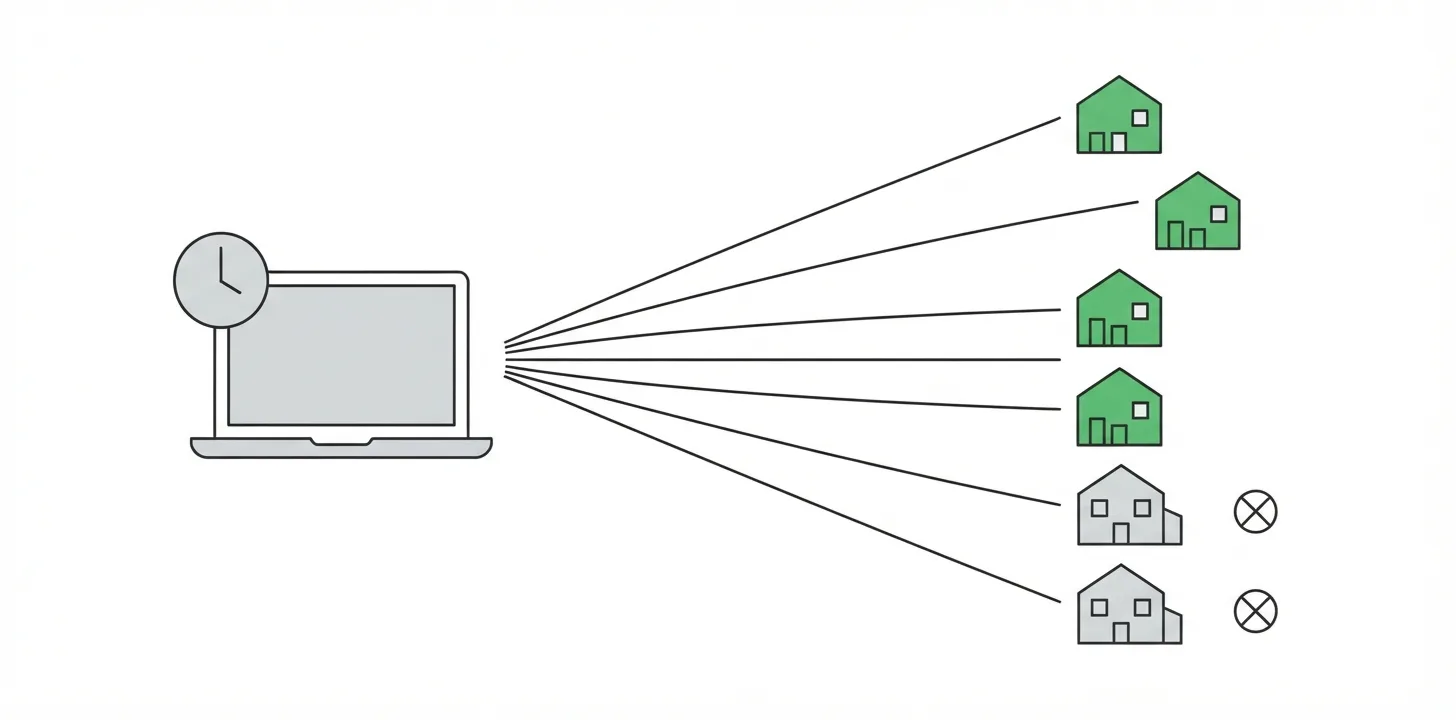
Check every institution on your list, including the safety options. A test accepted by your top five and rejected by your backup leaves you with no fallback, which is precisely the situation a backup exists to prevent.
Check whether acceptance is conditional. Some institutions accept the test for admission but require a different test for a visa route, a scholarship application or a professional registration. These conditions are rarely prominent.
Look at the current academic cycle, not a cached page. Acceptance has been expanding, and a policy from two cycles ago may understate it. It has occasionally moved the other way too.
Email the admissions office if anything is ambiguous, naming the programme and the intake. This takes ten minutes and resolves the question definitively.
And check what score they require on the 10 to 160 scale. An institution that accepts the test without publishing a minimum is one to ask directly, because you cannot prepare against an unknown target.
Who Should Take It#
Students for whom cost is a binding constraint. This is the clearest case and there is no reason to be apologetic about it. At roughly a third of the price, with a two-test option cheaper than one traditional sitting, it makes an application cycle affordable that might otherwise not be.
Students facing a near deadline. Forty-eight hours, or twelve for a supplementary fee, is a turnaround the alternatives cannot match. A student who discovers a missing requirement two weeks before a deadline has effectively one option.
Students outside major cities. Test centre availability is not uniform across India, and a home-based test removes travel, accommodation and slot scarcity from the calculation entirely.
Students applying to institutions that clearly accept it. If your whole list accepts the test, the decision is straightforward and the savings are real.
Who should not take it. Anyone with a single institution on their list that does not accept it, anyone whose visa route or professional registration requires a specific test, and anyone without a quiet room and a stable internet connection for the duration. The proctoring requirements are enforced and a disrupted session is a wasted one.
Preparing For A Format Nobody Has Practised#
Because the test is shorter and adaptive, preparation differs from the traditional tests in ways that catch candidates out.
Take the official practice test first. It is the only reliable way to understand the format, and the format is genuinely unfamiliar: short tasks, rapid transitions, and question types that do not appear on other tests.
Expect the difficulty to rise as you do well. This is how adaptive testing works and it is disconcerting the first time. Questions getting harder is a sign you are scoring well, not a sign you are failing.
Practise speaking to a microphone. Candidates accustomed to the idea of an IELTS examiner find speaking into a laptop unnatural, and the unnaturalness costs marks in the first attempt. Record yourself answering prompts until it stops feeling strange.
Prepare the room and the equipment days ahead, not on the morning. Clear desk, closed door, no second screen, identification ready, internet tested, and someone in the house told not to interrupt.
Read the rules on permitted behaviour carefully. Looking away from the screen, reading questions aloud where prohibited, or having anything on your desk can invalidate a session. These are stricter than a physical test centre in some respects, not looser.
And use the two-test option if you can afford it. Knowing that a second attempt is already paid for changes how you approach the first one, and the improvement between a first and second sitting is usually substantial.
The Objections, Answered Honestly#
The test attracts scepticism, some of it reasonable and some of it not. Both are worth addressing directly.
"It is cheaper, so it must be easier." It is not. The price reflects the delivery model, home-based and machine scored with no test centre, no invigilator and no human rater cost, rather than a lower standard. Candidates who approach it as a soft option are regularly surprised.
"Machine scoring cannot judge speaking properly." Automated assessment of speech is now widely used, including in parts of the established tests. The reasonable version of this concern is about edge cases rather than about the approach, and it applies to more than one test on the market.
"Universities do not really respect it." Several thousand institutions accept it formally, which is the only respect that affects your application. Where an institution does not accept it, that is a fact to work with rather than a judgement to argue about.
"It is easier to cheat at home." Remote proctoring is stricter than students expect, and violations invalidate results. The constraints on your room, your eye movement and your desk are enforced, and candidates lose sessions to them.
"The score will be questioned at a visa interview." Where a visa route specifies an accepted test, follow that specification. This is a genuine limitation rather than a rumour, and it is the single most important thing to check beyond university acceptance.
The fair summary. It is a legitimate test with real constraints on where it is accepted. Choose it for the cost and the speed, having checked acceptance, and not because you expect it to be easier.
Frequently Asked Questions#
How much does the Duolingo English Test cost?#
Around US $59, roughly ₹6,600, with approximately US $100 for two tests. That compares with ₹18,000 for TOEFL iBT, ₹18,900 for PTE Academic and ₹19,000 for IELTS in India.
How quickly do results arrive?#
Within 48 hours as standard, with an option for results in about 12 hours for an additional fee of around US $40.
Is it accepted by universities?#
By over 6,000 institutions and growing, which is substantial but not universal. Verify acceptance for every programme on your list, including your backup options, on the specific programme page rather than the general admissions page.
What is the score scale?#
10 to 160. Institutions that accept the test publish their own minimum on that scale, which is the figure you should plan against.
Does it cost extra to send scores?#
No. Score reports can be sent to unlimited institutions at no additional charge, which is a meaningful saving for an applicant with a long university list.
Where is the test taken?#
At home, on your own computer, under remote proctoring with a webcam and microphone. This removes test centre travel and slot availability, and imposes strict requirements about your room and equipment.
Who should not take it?#
Anyone with an institution on their list that does not accept it, anyone whose visa route or professional registration requires a specific test, and anyone without a quiet room and reliable internet for the full session.
How should I prepare?#
Start with the official practice test, because the adaptive format is genuinely unfamiliar. Practise speaking into a microphone until it feels natural, and prepare your room, equipment and identification days in advance rather than on the morning.