
The Number Everyone Recognised Has Been Retired#
For twenty years, an Indian student applying abroad knew roughly what a TOEFL score meant. A hundred was good. A hundred and ten was strong. Ninety would clear most requirements. The 0 to 120 scale had been in use since 2005 and everyone, including the universities, had internalised it.
On 21 January 2026, ETS replaced it with a scale running from 1 to 6, in half-point increments.
A student who has been preparing against a target of 100 now receives a score of 5.0 or 5.5, and has no intuitive sense of whether that is good. A university that has published a minimum of 90 for a decade has to decide what its new minimum is. Both problems are temporary and both are causing a great deal of confusion right now.
There is a transitional cushion. For a two-year period following the change, test takers also receive a comparable overall score on the old 0 to 120 scale, representing the midpoint of the corresponding range. After 2028, only the 1 to 6 band remains.
This article covers what the new score actually is, the official mapping between the two systems, and what applicants should do depending on which score they are holding.
Background: Why ETS Changed It#
The stated reason is alignment, and it is a reasonable one.
The new scale maps onto the Common European Framework of Reference for Languages, the international standard that describes language ability in levels from A1 through to C2. Universities, employers and immigration authorities across Europe and increasingly elsewhere already think in CEFR terms.
A 0 to 120 total was precise without being meaningful. It aggregated four sections into a number whose granularity implied more accuracy than the underlying assessment supports. The difference between a 97 and a 99 was never a real difference in ability, but applicants and institutions treated it as one.
A band scale communicates a level rather than a rank. Six bands in half-point steps is closer to how IELTS has always worked, and closer to how admissions decisions are actually made.
Whether you find the reasoning persuasive is beside the point. The change has happened, and the practical question is how to work with it.
Two terms worth defining:
CEFR. The Common European Framework of Reference for Languages, which describes ability in six levels: A1, A2, B1, B2, C1 and C2. C1 and C2 are the levels relevant to most university admission.
Half-band increment. The new TOEFL scale moves in steps of 0.5, so the possible scores are 1, 1.5, 2, 2.5 and so on up to 6. There is no 5.2.
How Your New Score Is Calculated#
Each of the four sections is scored on the same 1 to 6 scale. Reading, listening, speaking and writing each receive a band.
The overall score is the average of the four section scores, rounded to the nearest half band. If your four sections average 5.25, your overall score is 5.5. If they average 5.24, the rounding takes you to 5.0.
This rounding behaviour matters more than it first appears. Because a single section can move the average across a rounding boundary, a weak section drags the total in a way that is more visible than under the old aggregate. A candidate with three strong sections and one poor one can find the overall band lands below what the strong sections suggest.
The practical implication is that raising your weakest section is usually the most efficient preparation. Under the old scale this was true but diffuse; under a half-band rounding system it can be the difference between a 4.5 and a 5.0, which is the difference between B2 and C1 in CEFR terms.
And section scores are reported individually, which many universities look at separately, frequently with a minimum for speaking or writing in addition to the overall requirement.
The Official Mapping#
| New TOEFL band | Old 0 to 120 total | CEFR level | Approximate IELTS band |
|---|---|---|---|
| 6 | 114 and above | C2 | 9 |
| 5.5 | 107 and above | C1 | Between 7 and 9 |
| 5 | 95 and above, through about 106 | C1 | 7 |
| 4.5 | 86 and above | B2 | 6.5 |
| 4 | 72 and above | B2 | 6 |
Source note. These correspondences are published by ETS as part of the score scale update, including the CEFR alignment and the IELTS comparison. Always confirm against the current official documentation before relying on them for an application, since transitional guidance is being updated.
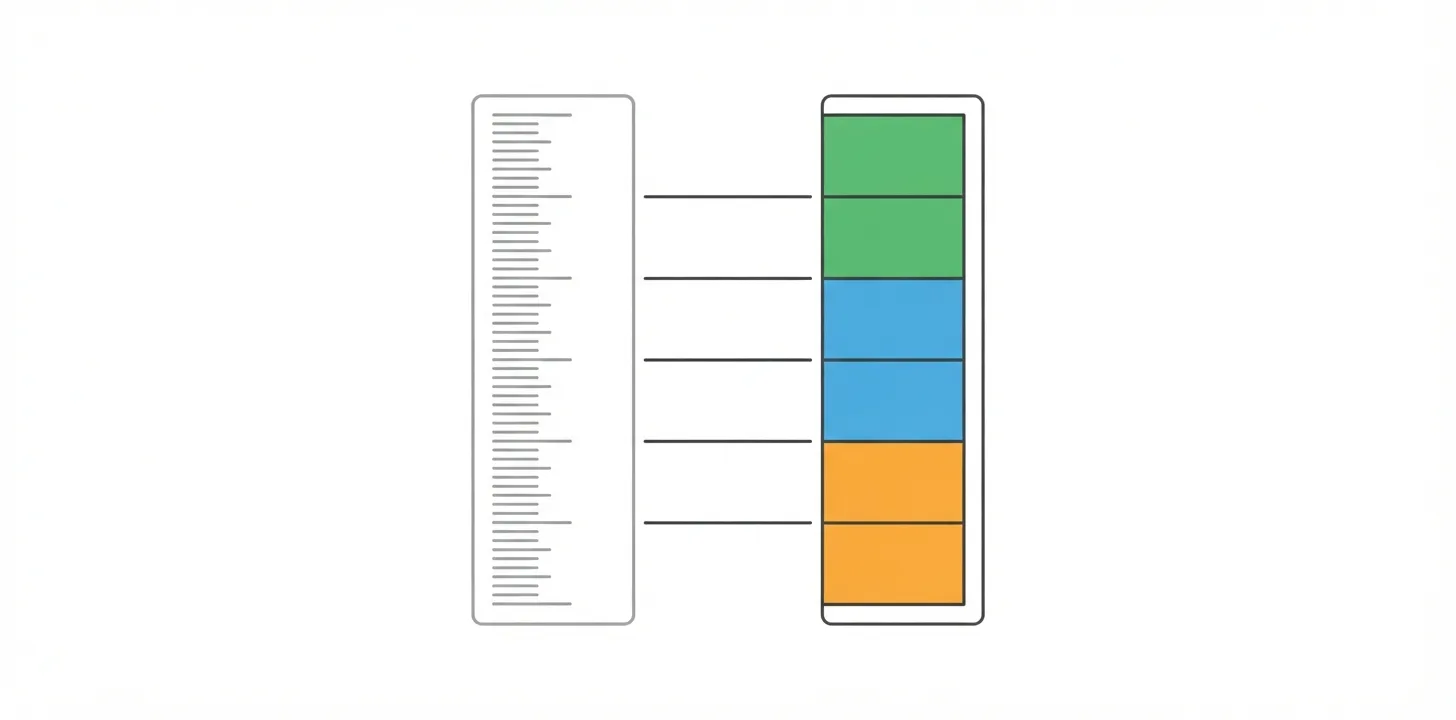
Read the 5.0 row carefully, because it is the one most applicants need. A 5.0 corresponds to the old 95 and up, which lands at C1 and at roughly an IELTS 7. That single row answers most questions students are currently asking.
Note how wide the bands are. A 5.0 covers roughly 95 through 106 on the old scale, which is a range students previously treated as meaningfully different. Under the new system they are the same score, which is arguably more honest about what the test can distinguish.
And note the IELTS column, which is approximate by nature. Different institutions publish their own equivalence tables and they do not all agree, which is why the section on university policy below matters.
What This Means For Your Application#
If you tested before 21 January 2026, you hold a 0 to 120 score and it remains valid for the normal validity period. Universities continue to accept it. You do not need to retake.
If you tested after, you hold a band score and, during the two-year transition, a comparable 0 to 120 figure alongside it. Report whichever the university asks for, and where both are shown on your score report, send the report rather than transcribing a number.
If a university still publishes a 0 to 120 minimum, which many do, use the mapping to work out the equivalent band and, if you are close to a boundary, contact the admissions office directly. During a transition, admissions offices expect these questions and answer them.
If you are choosing a target now, aim at the band rather than the old number. Deciding to target 100 and then discovering it is not a value the test produces is a needless confusion.
And build in a margin. Because the new scale rounds to half bands, a target of exactly 5.0 with no cushion is risky. Preparing to land comfortably inside a band rather than at its lower edge is the sensible approach under any rounding system.
Preparing Against A Band Scale#
The change alters how you should prepare, not merely how you read the result.
Diagnose by section, not by total. Since the overall is an average rounded to a half band, your weakest section is the highest-leverage target. Take a practice test, identify the lowest section, and direct most of your effort there.
Stop chasing small gains in your strongest section. Under the old scale, adding three points anywhere added three points. Under the new one, moving a strong section from 5.5 to 6 shifts the average by 0.125, which will usually round to nothing.
Speaking and writing deserve disproportionate attention for most Indian candidates, because reading and listening scores tend to be stronger and the productive skills tend to be the drag on the average. They are also the sections with separate university minimums most often.
Practise against official material. ETS publishes preparation resources, and during a scale transition official material is more reliable than third-party guides, several of which still describe the old system.
And take a full timed test before the real one. The format has not changed as dramatically as the scoring, but pacing is still what separates a prepared candidate from an unprepared one.
Checking What Your Universities Actually Require#
This is the step that resolves most anxiety and almost nobody takes it.
Read the specific programme's requirement, not the university's general one. Departments frequently set higher minimums than the institution, particularly for programmes involving teaching or client contact.
Check whether section minimums apply. A programme requiring an overall 5.0 with a minimum of 5.0 in speaking is a different target from one requiring only an overall 5.0, and candidates routinely discover this after testing.
Ask directly if the requirement is stated in old-scale terms. Send a short email to the admissions office naming the programme and asking what the equivalent band requirement is. This is a completely ordinary question during a transition period and it will be answered.
Check the validity period. Scores have a defined validity, and an older score may expire before your intake even if it is currently valid.
Confirm how scores must be sent, officially from the testing organisation in most cases rather than as a copy of your report.
And do this before you book the test, not after. Knowing the exact target, including any section minimums, changes how you prepare and occasionally changes which test you take at all.
Frequently Asked Questions#
When did the TOEFL scale change?#
On 21 January 2026, when ETS replaced the 0 to 120 total that had been in use since 2005 with a scale running from 1 to 6 in half-point increments, aligned to the CEFR framework.
What is a 5.0 on the new TOEFL scale?#
It corresponds to roughly 95 and above on the old 0 to 120 scale, sits at CEFR level C1, and is approximately equivalent to an IELTS band 7.
Is my old 0 to 120 score still valid?#
Yes. Scores obtained before the change remain valid for their normal validity period and universities continue to accept them. There is no need to retake because of the scale change alone.
Will I still receive a 0 to 120 score?#
During a two-year transition after January 2026, test takers also receive a comparable overall score on the old scale, representing the midpoint of the corresponding range. After 2028, only the 1 to 6 band is reported.
How is the overall band calculated?#
It is the average of the four section scores, rounded to the nearest half band. An average of 5.25 becomes 5.5, and an average of 5.24 becomes 5.0.
What does the new scale mean for how I prepare?#
Concentrate on your weakest section. Because the overall is an average rounded to half bands, raising a low section moves the total far more efficiently than improving an already strong one.
How does the new scale compare with IELTS?#
Approximately: a band 6 corresponds to IELTS 9, a 5 to IELTS 7, a 4.5 to IELTS 6.5 and a 4 to IELTS 6. Individual universities publish their own equivalence tables and these do not always agree.
What should I do if my university lists an old-scale minimum?#
Use the official mapping to identify the equivalent band, and if you are near a boundary, email the admissions office naming the programme. Transitional queries of this kind are routine and admissions offices answer them.