Clearing CTET Does Not Get You A Teaching Job#
This is the most consequential misunderstanding in the entire government teaching landscape, and it costs people years.
CTET is an eligibility test. Passing it establishes that you meet the minimum standard to be considered for a teaching post. It does not place you anywhere, it does not generate a vacancy, and no authority contacts you afterwards.
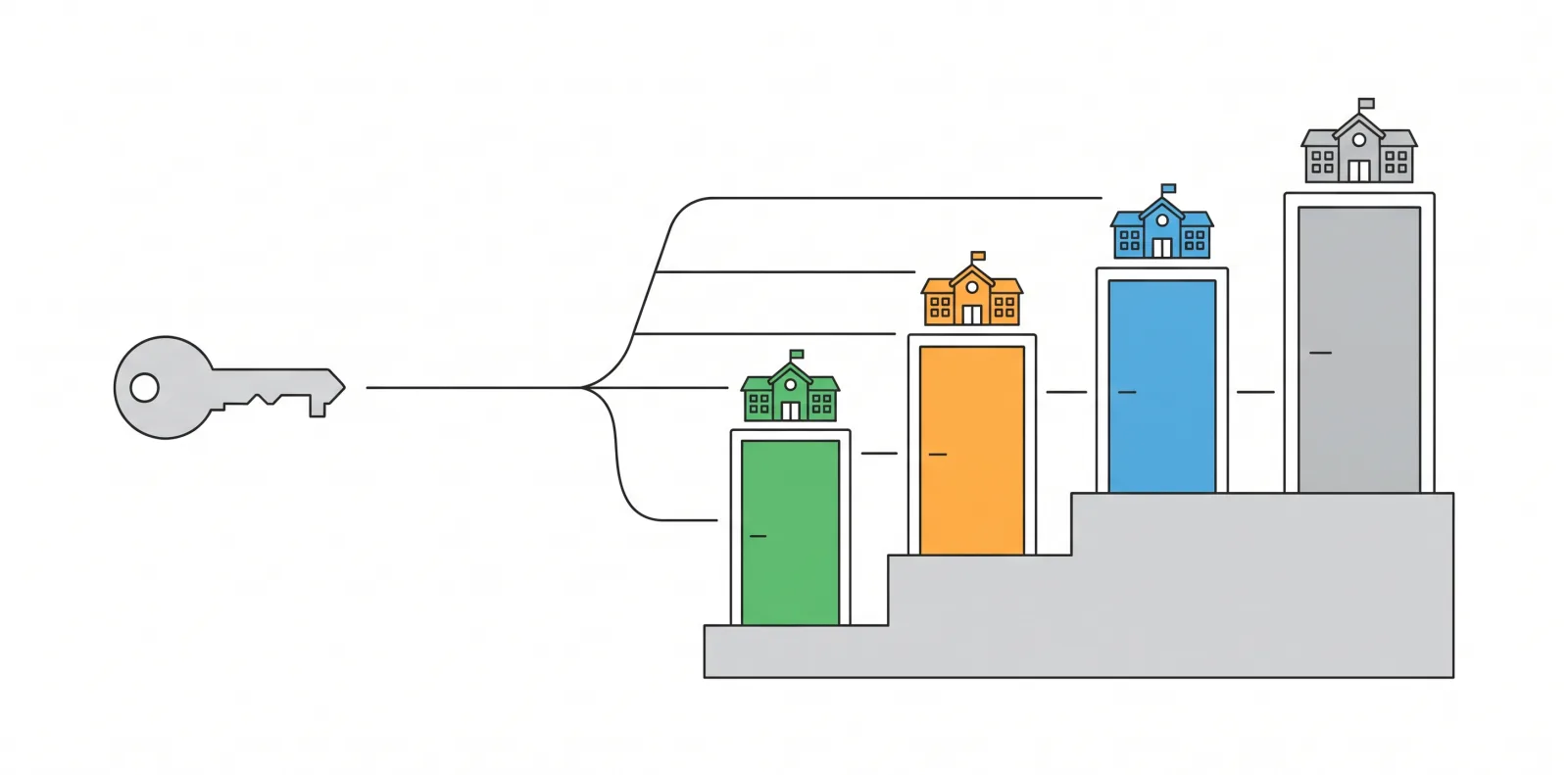
The job comes from a separate recruitment. Kendriya Vidyalaya Sangathan, Navodaya Vidyalaya Samiti, the Delhi Subordinate Services Selection Board, state education departments and individual schools each run their own recruitment processes. You apply to those, with your CTET certificate as an eligibility document.
Every year, candidates clear CTET, celebrate, and then wait for something to happen. Nothing happens. Meanwhile the KVS or DSSSB notification they should have been tracking opened and closed.
The good news is that CTET certificates are now valid for lifetime, which means the qualification you earn once stays with you. Here is how the whole system actually fits together.
Background: Eligibility Tests Versus Recruitment Examinations#
The eligibility layer.
CTET, the Central Teacher Eligibility Test, is conducted by CBSE and establishes eligibility for teaching Classes I to VIII in central government schools including Kendriya Vidyalayas and Navodaya Vidyalayas, Army Public Schools, DSSSB schools in Delhi, municipal schools, and CBSE-affiliated private schools. Paper I covers Classes I to V and Paper II covers Classes VI to VIII. You may sit one or both.
The 2026 cycle has run twice. The September examination fell on 6 September 2026, with applications having opened on 11 May 2026 and a reopened window from 25 August to 1 September 2026. The December examination is scheduled for 12 and 13 December 2026.
State TETs are conducted by individual states and establish eligibility for that state's own schools. A state TET generally does not transfer to another state or to central schools.
The recruitment layer.
KVS recruits for Kendriya Vidyalayas, the central government school network.
NVS recruits for Jawahar Navodaya Vidyalayas, the residential schools serving rural talent.
DSSSB recruits teachers for Delhi government schools.
State education departments and boards recruit for state schools, usually through their own examination or merit process.
Three terms that define the ladder:
PRT, Primary Teacher, teaching roughly Classes I to V. Requires Class 12 plus a diploma or degree in elementary education, and CTET Paper I.
TGT, Trained Graduate Teacher, teaching roughly Classes VI to X. Requires a bachelor's degree in the relevant subject plus a B.Ed, and CTET Paper II.
PGT, Post Graduate Teacher, teaching Classes XI and XII. Requires a master's degree in the subject plus a B.Ed. Note that CTET covers Classes I to VIII only, so PGT recruitment does not use it.
How The Pieces Connect#
Pay, And Where The Differences Actually Sit#
Reported pay levels for central school teaching posts cluster closely together. KVS Primary Teacher sits at Pay Level 7 with a basic of around ₹44,900, and NVS, DSSSB and Eklavya Model Residential School Trained Graduate Teacher posts commonly sit at a comparable basic. In-hand pay for a regular government primary or upper primary teaching post typically falls somewhere between ₹40,000 and ₹70,000 a month once dearness allowance, house rent allowance, travel allowance and medical benefits are included, varying with the state or central authority and the posting city.
So pay is not the main differentiator. These are the things that are.
Posting and transfer liability. KVS is an all-India service in practice, with transfers across the country. A Kendriya Vidyalaya teacher may be posted anywhere, and that is a defining feature of the career. DSSSB posts are within Delhi. State recruitment keeps you within that state. For a candidate with family commitments this difference outweighs everything else on the list.
Residential versus day schools. Navodaya Vidyalayas are residential schools, largely in rural locations, and teaching posts there frequently involve living on campus with pastoral responsibilities outside teaching hours. Some teachers find this deeply rewarding and others find it unsustainable. It is not a detail.
Recruitment frequency. Central recruitments appear irregularly. KVS and NVS notifications have historically come at intervals rather than annually, which means the window you need may not open in the year you become eligible. State recruitment cadence varies enormously by state.
Subject demand. TGT and PGT vacancies are subject-specific. Mathematics, science and English posts typically carry more vacancies than some other subjects, and your subject determines how often an opportunity appears.
A Realistic Sequence From Qualification To Appointment#
Step one: get the base qualification right. For PRT, a diploma or degree in elementary education alongside Class 12. For TGT, a subject degree plus B.Ed. For PGT, a subject master's plus B.Ed. Candidates frequently discover a mismatch between their degree subject and the subject they want to teach, and that is difficult to fix afterwards.
Step two: clear CTET, and both papers if you can. Paper I opens primary posts and Paper II opens upper primary. Sitting both widens the range of recruitments you can apply to, and since validity is now lifetime, the certificate keeps working.
Step three: clear your state TET as well if you might work in your home state. Central and state eligibility do not substitute for each other.
Step four: track recruitment notifications actively. This is the step people miss. Build a list of the recruiting bodies relevant to you, check their sites fortnightly, and treat notification windows as immovable. A KVS or DSSSB notification that closes while you are waiting for someone to inform you is a cycle lost.
Step five: prepare for the recruitment examination separately. These are not CTET repeats. KVS and DSSSB recruitment papers typically test subject knowledge at a higher level, pedagogy, general awareness, reasoning and language. Some processes include an interview or skill test.
And apply widely within your eligibility. Central recruitments are infrequent and competitive. A candidate eligible for KVS, NVS, DSSSB and their state process should be watching all four rather than betting on one.
Preparing For The Recruitment Examination, Not Just The Eligibility Test#
CTET and the recruitment papers test different things, and candidates who prepare only for the first are surprised by the second.
CTET tests child development and pedagogy heavily, alongside subject content pitched at the level you will teach. Its purpose is to establish that you understand how children learn.
Recruitment papers test subject knowledge at a considerably higher level. A KVS or DSSSB Trained Graduate Teacher paper will examine your subject at graduate depth, not at the Class VIII level you would be teaching. A candidate comfortable with CTET mathematics may find the recruitment paper's mathematics substantially harder.
They also test general awareness and reasoning. Most recruitment papers carry a general knowledge, current affairs and reasoning component alongside the subject and pedagogy sections.
Some include an interview or demonstration. Several recruitments include an interview stage, and some a teaching demonstration in which you present a lesson segment to a panel. Preparing a well-structured fifteen-minute lesson in your subject is worth doing in advance.
The practical plan. Clear CTET first, since it is the gate. Then, while waiting for notifications, revise your subject at degree level rather than at school level, maintain a daily current affairs habit, and practise previous year recruitment papers from KVS, NVS and DSSSB, which are freely available and reveal the depth expected.
Eligibility Mistakes That Waste Years#
Five that recur, all discovered too late.
Degree subject and teaching subject mismatch. A TGT or PGT post requires the relevant subject at degree or master's level with specified coverage. A candidate whose degree combination does not match the recruiting body's definition is ineligible, however well they know the subject.
Assuming B.Ed is optional. It is required for TGT and PGT posts. Candidates with strong subject qualifications and no B.Ed are frequently ineligible for the posts they want.
Sitting only one CTET paper. Paper I opens primary posts and Paper II opens upper primary. Clearing only one halves the recruitments you can apply to.
Assuming a state TET covers central schools. It does not. Central school eligibility requires CTET.
Missing the percentage requirement. Several recruitments specify a minimum aggregate in the qualifying degree, with relaxation for reserved categories. A candidate below that threshold is ineligible regardless of their CTET score.
Check all five against yourself before investing preparation time, and read the specific recruiting body's eligibility table rather than a general summary.
What The Career Looks Like Beyond The First Posting#
Entry pay is easy to find. The shape of the career afterwards is harder, and it is what you are actually choosing.
Progression is structured and time-bound. Government teaching posts move through defined pay levels with periodic increments and promotion opportunities tied to service length and departmental examinations or selection processes. A Primary Teacher can progress towards Trained Graduate Teacher and, with the requisite qualifications, towards Post Graduate Teacher and eventually administrative roles such as Vice Principal and Principal.
Qualifications you add later open the next rung. A Primary Teacher who completes a subject degree and a B.Ed becomes eligible for Trained Graduate Teacher posts. One who adds a master's becomes eligible for Post Graduate Teacher recruitment. Teachers who study while serving progress considerably faster than those who do not, and several employers support this.
The non-salary benefits are substantial and frequently overlooked. Pension provisions under the applicable scheme, medical coverage, leave entitlements including vacation periods that most professions do not offer, housing where provided, and in residential school settings accommodation and meals.
Job security is the feature people actually choose this for, and it is real. Against that, transfer liability in the central school systems is also real, and for many teachers it is the defining constraint of the career.
And the work itself deserves weighing. Class sizes in government schools can be large, resources vary, and administrative duties including examination work, census duties and election duties are part of the job in many states. Teachers who thrive tend to be those who find the classroom genuinely rewarding rather than those who chose the post for its terms alone.
Frequently Asked Questions#
Does clearing CTET give me a teaching job?#
No. CTET is an eligibility test. It qualifies you to apply for teaching posts, but appointment comes through separate recruitment processes run by KVS, NVS, DSSSB, state education departments or individual schools.
How long is a CTET certificate valid?#
Lifetime. The certificate can be used for future teacher recruitment notifications conducted by various organisations without needing to requalify.
When is CTET 2026?#
The cycle ran twice. The September examination fell on 6 September 2026, and the December examination is scheduled for 12 and 13 December 2026. Confirm current dates on the CBSE CTET portal.
What is the difference between PRT, TGT and PGT?#
PRT teaches roughly Classes I to V and needs Class 12 plus an elementary education qualification. TGT teaches roughly Classes VI to X and needs a subject degree plus B.Ed. PGT teaches Classes XI and XII and needs a subject master's plus B.Ed. CTET covers Classes I to VIII, so it does not apply to PGT recruitment.
Does a state TET work for central schools?#
No. A state TET establishes eligibility for that state's schools. CTET establishes eligibility for central schools and several other categories. Candidates who might work in either should clear both.
What do government teaching posts pay?#
Central school posts such as KVS Primary Teacher sit at Pay Level 7 with a basic around ₹44,900, and in-hand pay for regular government primary and upper primary posts commonly falls between ₹40,000 and ₹70,000 a month depending on allowances and posting.
Which recruitment has the most predictable posting?#
DSSSB posts are within Delhi and state recruitment keeps you within that state. KVS operates as an all-India service with transfers across the country, and Navodaya posts are largely residential and rural. Choose according to what your life can accommodate.
Where should I track notifications?#
On the recruiting bodies' own sites: ctet.nic.in for CTET, kvsangathan.nic.in for KVS, navodaya.gov.in for NVS, dsssb.delhi.gov.in for Delhi, and your state education department's portal. Notifications appear irregularly, so check fortnightly rather than waiting to be told.