
There Are Two Systems, And Most Students Use One#
Ask a student where they applied for a scholarship and they will say the National Scholarship Portal. That is correct, and it is half the answer.
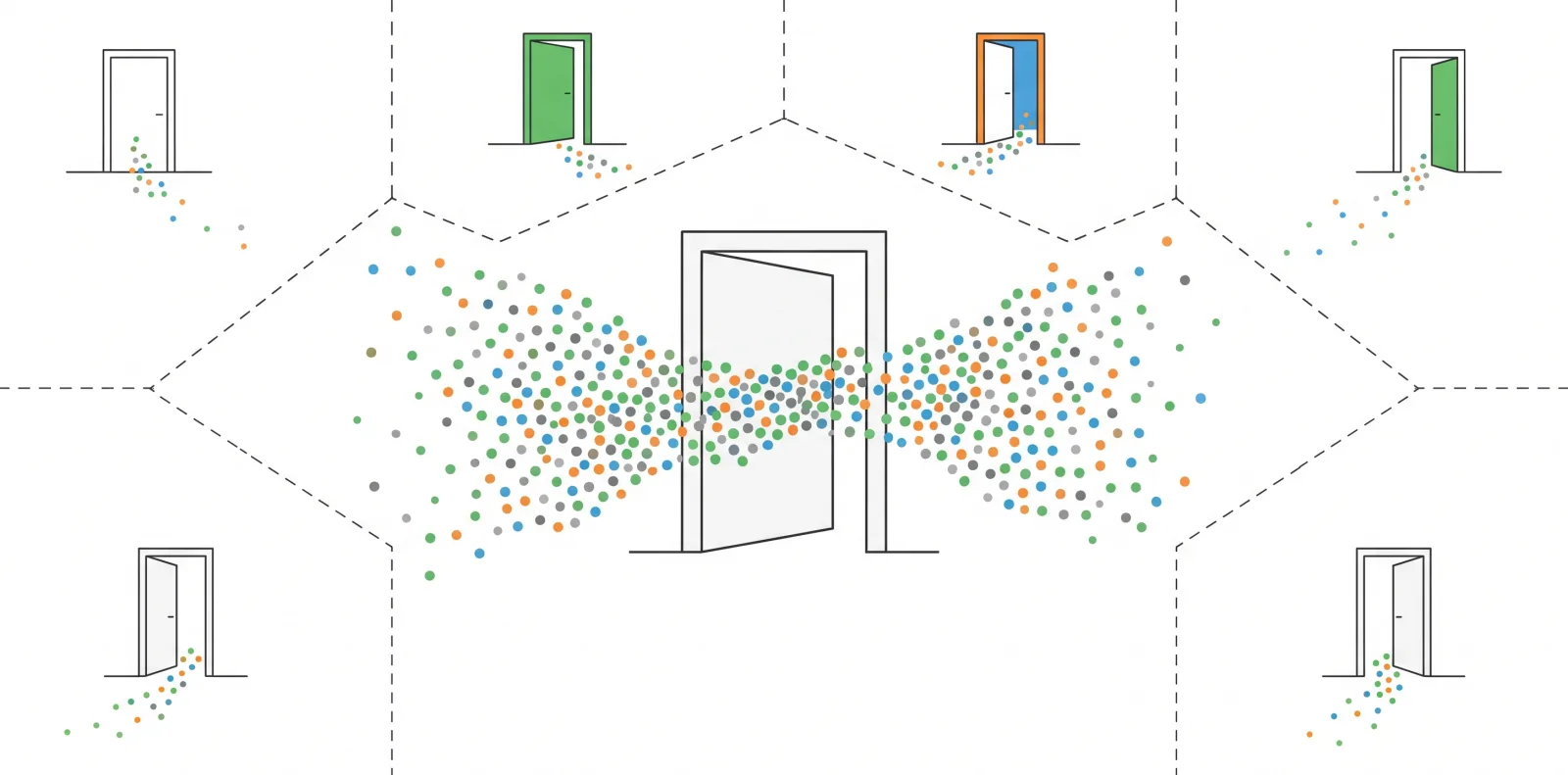
Every state also runs its own scholarship system. Separate portal, separate schemes, separate deadlines, separate documentation requirements, and frequently more generous terms for students domiciled in that state than anything available centrally.
Maharashtra runs MahaDBT. Karnataka runs its State Scholarship Portal. Uttar Pradesh, Rajasthan, Madhya Pradesh, Tamil Nadu and the rest each operate their own. These are not duplicates of the central schemes. They are additional schemes, funded by the state, aimed at students from that state.
A student who applies only through the national portal has looked at one of two available pools. And because state schemes are less visible nationally, they frequently attract a smaller ratio of applicants to available funding than their central equivalents.
Checking your state's portal costs an evening. Here is what you are looking for.
Background: How State And Central Schemes Relate#
They are separately funded. Central schemes come from Union ministries. State schemes come from state budgets, administered by state departments of social welfare, minority affairs, higher education and their equivalents.
Some schemes are jointly funded. Several post-matric schemes operate on a shared funding pattern between the centre and states, which is why the same scheme name sometimes appears in both places with different administration.
Some appear on both portals. Depending on the state, certain schemes are hosted on the National Scholarship Portal while others sit only on the state portal. This inconsistency is exactly why students miss things.
Domicile is the gateway. State schemes are generally restricted to students domiciled in that state, which is both the restriction and the advantage: a smaller eligible population competing for state-funded money.
Two terms worth defining:
Domicile. Established through residence, schooling within the state, or a parent's employment there, evidenced by a domicile or residence certificate from the competent authority. Requirements differ by state and are specific.
Direct benefit transfer. The mechanism by which scholarship money reaches you, requiring a bank account in your own name seeded with Aadhaar. This applies on state portals as it does centrally.
The Major State Portals#
| State | Portal | What to look for |
|---|---|---|
| Maharashtra | MahaDBT, the state's direct benefit transfer portal | Hosts a very wide range of state schemes across departments, including post-matric schemes, professional course support and category-specific awards. One login covers many schemes |
| Karnataka | State Scholarship Portal | Consolidated state schemes with a single application, including support for professional and technical courses |
| Uttar Pradesh | The state scholarship portal | Large volume of pre-matric and post-matric schemes, with separate windows and a substantial applicant base |
| Rajasthan | The social justice and empowerment department's portal | State schemes alongside centrally sponsored ones, including specific provisions for students from the state studying outside it |
| Madhya Pradesh | The state scholarship portal | Consolidated state schemes with institution-level verification similar to the national model |
| Tamil Nadu | State scholarship and e-service portals | State schemes covering higher education, with department-specific provisions |
Portal names, addresses and scheme lists change. Search for your state's official scholarship portal through the state government's own website rather than following a forwarded link, since fraudulent lookalike sites exist in this space.
What State Schemes Frequently Offer That Central Ones Do Not#
Higher amounts for professional courses. Several states provide substantially more support for engineering, medical and other professional programmes than the central post-matric schemes, recognising the higher fee burden.
Fee reimbursement rather than a fixed grant. Some state schemes reimburse actual tuition paid, which for a student at a high-fee institution can be worth considerably more than a fixed award.
Support for studying outside the state. Several states fund their domiciled students studying elsewhere in India, which students frequently do not realise applies to them.
Hostel and maintenance allowances paid separately from tuition support, which central schemes do not always include.
Schemes for narrower groups. State-specific provisions for particular communities, occupations, or circumstances that have no central equivalent.
And in some states, merit scholarships without an income ceiling, which matters for students whose family income places them above the thresholds that govern most central schemes.
How To Check Properly In One Evening#
Step one: find your state's official portal. Through the state government website, not through a search result or a forwarded message.
Step two: read the full scheme list, not just the familiar names. State portals typically host schemes from several departments. Students stop at the one they have heard of.
Step three: check the eligibility of every scheme against yourself. Income, category, course type, institution type, year of study, and whether you are studying inside or outside the state. Most students qualify for more than they expect.
Step four: note the deadlines. State deadlines are independent of the national portal's and frequently differ. A student who applies centrally on 31 October may find the state deadline was in September or falls in December.
Step five: check whether concurrent awards are permitted. Rules on holding a state and a central scholarship simultaneously vary by scheme, so read both sets of terms.
Step six: sort the domicile documentation early. Domicile or residence certificates are issued by revenue authorities on their own timescale, and requirements differ by state. This is the document most likely to delay a state application.
And check your institution is registered on the state portal. As with the national system, your college must verify your application. If it does not appear on the state portal, raise it with the administration well ahead of the deadline.
How Much More State Schemes Can Be Worth#
For a student at a high-fee professional institution, the difference between a fixed grant and a reimbursement scheme can be several times the amount. This is the single strongest argument for checking your state portal, and it applies most to exactly the students facing the largest fee burden.
Domicile Documentation, Which Governs Everything Here#
State schemes are gated on domicile, and the certificate is the item most likely to delay your application.
What domicile means varies by state. Common bases include continuous residence for a stated period, schooling completed within the state, birth within the state, or a parent's government employment there. Several states accept more than one route.
Who issues it. A revenue authority, commonly at tehsil or district level, though the designated office differs by state.
How long it takes. Typically two to six weeks and longer in some districts, which is why it must be started well before the scheme deadline rather than when you discover you need it.
What causes rejection. Applying to the wrong office, submitting supporting documents that do not establish the basis claimed, and name inconsistencies against Aadhaar and school records.
A specific trap for students studying outside their state. You are frequently still eligible for your home state's schemes, but obtaining the certificate requires attendance at an office in your home district. Plan this around a vacation rather than attempting it remotely at short notice.
And keep it. Domicile certificates are generally not annual, so one obtained now serves for subsequent years and for other purposes including state entrance examinations and employment applications.
Applying On A State Portal: What Differs#
The mechanics resemble the national portal but differ in ways worth knowing before you start.
Registration is separate. Your National Scholarship Portal One-Time Registration does not carry across. State portals have their own registration, their own identifiers and their own login.
Document requirements overlap but are not identical. Expect the same core set plus a domicile or residence certificate, and in some states additional state-specific documentation.
Institution verification works the same way. Your college must verify your application on the state portal, which means it must be registered there separately from the national portal. Colleges in states with active portals generally are; colleges in other states enrolling out-of-state students sometimes are not.
Deadlines and windows differ, sometimes substantially, and extensions on one portal do not apply to the other.
Disbursal uses the same direct benefit transfer infrastructure, so the same Aadhaar seeding requirement applies. An account seeded for a central scheme is seeded for a state one.
Grievance mechanisms are state-specific, usually routed through the administering state department rather than centrally.
The practical sequence. Register on the state portal well before the deadline, since registration itself involves verification steps. Then apply, then confirm your institution can and will verify, then track weekly. The same discipline that works centrally works here.
Why These Schemes Exist At All#
A brief word on the reasoning, because it explains where the money concentrates and helps you predict what your own state is likely to fund.
States fund what they need. A state with a large technical education sector funds engineering and pharmacy students more generously. A state concerned about retaining talent funds students studying within its borders. A state with significant out-migration for higher study funds its domiciled students studying elsewhere.
Political commitments shape schemes. Fee reimbursement schemes in particular tend to originate as policy commitments and are frequently more generous than the central equivalents, because they were designed to address a specific local concern about access to professional education.
Which means your state's schemes reflect your state's priorities, and reading them tells you something about where the money is. A student in a state with a large private engineering sector should expect fee-related support. A student in a state with historic under-representation in higher education should expect category-focused provision.
The practical consequence. Do not assume your state's offering resembles a neighbouring state's. The schemes, amounts and eligibility differ genuinely rather than cosmetically, which is exactly why a summary of one state is no guide to another and why reading your own portal in full is the only reliable approach.
Frequently Asked Questions#
Are state scholarships different from the ones on the National Scholarship Portal?#
Largely yes. States fund and administer their own schemes from state budgets, alongside centrally sponsored ones. Some schemes appear on both portals and others only on the state portal, which is why checking both matters.
Can I hold a state and a central scholarship together?#
It depends on the terms of each scheme. Some permit it and some do not. Read the conditions on both sides before accepting, since holding two where the terms forbid it can result in recovery.
What is the main advantage of state schemes?#
A smaller eligible population, since they are generally restricted to domiciled students, and frequently more generous terms for professional courses, including fee reimbursement rather than fixed grants and separate maintenance allowances.
What documents do state schemes require?#
Broadly the same set as central schemes, plus a domicile or residence certificate. Requirements differ by state and the domicile certificate is usually the one that takes longest to obtain.
Do state deadlines match the national portal's?#
No. They are independent and frequently fall at different times. A student who meets the national deadline may already have missed the state one, or may have weeks longer.
Can I get a state scholarship if I study outside my state?#
In several states, yes. Provisions funding domiciled students studying elsewhere in India exist and are commonly overlooked by exactly the students they are designed for.
How do I avoid fraudulent portals?#
Reach the portal through the state government's own website rather than through a search result or forwarded link. Lookalike sites exist in this space, and no legitimate scholarship portal asks for payment.
Where do I start?#
Your state government's official website, then its scholarship portal, then the full scheme list read in its entirety. Also check your institution's scholarship cell, which frequently knows about state schemes that are poorly publicised online.