The Examination With Better Odds That Aspirants Treat As A Consolation Prize#
There is a hierarchy in the civil services conversation, and it is mostly unexamined. UPSC sits at the top. State commissions sit below it, spoken about as what you attempt if the national examination does not work out.
Look at what a state commission actually recruits for and that framing starts to look odd. Deputy Collector. Deputy Superintendent of Police. Block Development Officer. Assistant Commissioner. These are substantive administrative and police positions with real authority, decent pay and a career ladder, and the person holding them is running things in a district.
Now look at the numbers. UPSC notified 933 vacancies for its 2026 cycle against several lakh registrations. UPPSC notified 2,158 posts in its 2026 recruitment. The competition pool for a state commission is drawn substantially from that state rather than from the whole country.
The arithmetic is simply better, and the job is genuinely good. What makes state commissions harder than they look is not the competition. It is that each one has its own pattern, its own state-specific syllabus, and its own quirks, and an aspirant who applies to five of them prepares properly for none.
This guide is about picking one.
Background: How State Commissions Are Built#
The template. Nearly all state commissions follow the UPSC structure: an objective Preliminary examination for screening, a descriptive Mains examination, and an interview. Where they diverge is in the detail, and the detail is where marks are won.
The state paper is the whole point. Every commission examines the history, geography, polity, economy, culture and current affairs of its own state, usually with substantial weight. This is the component that national-level preparation does not cover, it is the component local candidates find easier, and it is where an outsider must invest deliberately.
Language requirements vary. Several commissions include a qualifying regional language paper, and some permit or expect answers in the regional language. This is a serious consideration for candidates from outside the state.
Domicile does not usually restrict entry, but reservation does. Most state commissions permit candidates from anywhere to sit, while restricting state-category reservation benefits to domiciled candidates. Read the specific rules, because the practical effect on your odds is large.
Two terms worth defining:
Combined competitive examination. The format most commissions use, recruiting for many different services through one examination, with post allotment by rank and preference.
Optional subject. Some commissions retain one, some have removed it in favour of additional general studies papers. This has changed in several states over recent cycles, so check the current notification rather than older guidance.
The Five, Compared On What Matters#
Figures below are from recent notifications and vary every cycle. Confirm against each commission's own advertisement.
UPPSC, Uttar Pradesh. The 2026 recruitment covers 2,158 administrative, technical and specialist vacancies, with applications closing on 22 January 2026. The largest state by population produces the largest applicant pool, so raw competition is high, but so is the vacancy count. UPPSC has revised its pattern more than once in recent years, which makes checking the current notification particularly important here.
BPSC, Bihar. Runs a combined competitive examination on the standard model. Historically notable for large recruitment cycles and for a high-volume applicant base. Bihar-specific history, geography and polity carry meaningful weight.
MPSC, Maharashtra. Conducts multiple recruitments across service groups. The 2026 Group C notification alone covered 2,619 vacancies. Maharashtra's commission has moved its state services pattern closer to the descriptive UPSC model in recent cycles, which changed preparation requirements substantially for candidates who had trained on the older objective format.
MPPSC, Madhya Pradesh. The 2026 State Service Examination was notified on 31 December 2025 with 155 vacancies across Group A and Group B posts including Deputy Collector and Deputy Superintendent of Police. Prelims fell on 26 April 2026 with Mains in September.
The MPPSC change worth knowing. The 2026 prelims introduced a revised marking scheme: each question now carries three marks, with one mark deducted for each incorrect answer. Negative marking in a prelims paper that previously had none changes attempting strategy completely. Candidates who trained on the old scheme and attempted freely would have been punished for it.
RPSC RAS, Rajasthan. The 2026 Rajasthan State and Subordinate Services Combined Competitive Examination was notified on 27 May 2026 with 607 vacancies. Rajasthan-specific art, culture and history carry notable weight in this examination, more than in several other states.
How Much Overlaps With UPSC Preparation#
This is the question that determines whether a dual strategy is realistic, and the honest answer is: most of it, but not the part that decides outcomes.
What transfers almost entirely. Indian polity and constitution. Modern Indian history and the freedom struggle. Indian and world geography fundamentals. Economy basics. Environment and ecology. General science. National and international current affairs. This is a large majority of the general studies content.
What transfers partially. Answer-writing skill transfers well where the state commission uses a descriptive Mains, which most now do. Essay writing transfers. The discipline of structuring an argument within a word limit transfers completely.
What does not transfer at all. The state-specific paper. State history, state geography, state polity and administrative structure, state economy and schemes, state art and culture, and state current affairs. Depending on the commission this can be a substantial share of the total, and it is the component where local candidates have a structural advantage.
The practical consequence. A UPSC aspirant can add a state commission for a manageable additional investment, provided they take the state paper seriously rather than treating it as something to skim in the final month. That paper is frequently where the ranks separate, precisely because outsiders neglect it and locals do not.
A caution on the reverse. Preparing only for a state commission and expecting to convert that into UPSC readiness works less well, because UPSC's depth in general studies and its optional subject requirement exceed most state syllabuses.
Choosing One Commission And Committing#
Work through these in order.
Where do you have domicile? This is usually the decisive factor. Domicile typically unlocks state-category reservation, and for reserved-category candidates the effect on realistic cut-offs is substantial. It also means you already possess much of the state-specific knowledge the paper tests.
What language will you write in? If the commission permits or expects the regional language and you are not fluent in it academically, that is a genuine obstacle rather than a detail. Conversational fluency and the ability to write a structured answer on polity are different capabilities.
What is the current pattern? Several commissions have changed format recently, including MPPSC's new prelims marking and Maharashtra's shift towards a descriptive model. Preparation built on an older pattern is wasted preparation. Read this cycle's notification.
What is the recruitment cadence? Some commissions notify annually and reliably. Others have had irregular cycles, with gaps and litigation delaying results. A commission that has not completed a cycle in years is a risky place to invest two years, however attractive the posts.
What is the vacancy-to-applicant ratio in practice? Not the headline vacancy count. A commission with 2,158 posts in a very large state may offer worse odds than one with 607 posts in a smaller one.
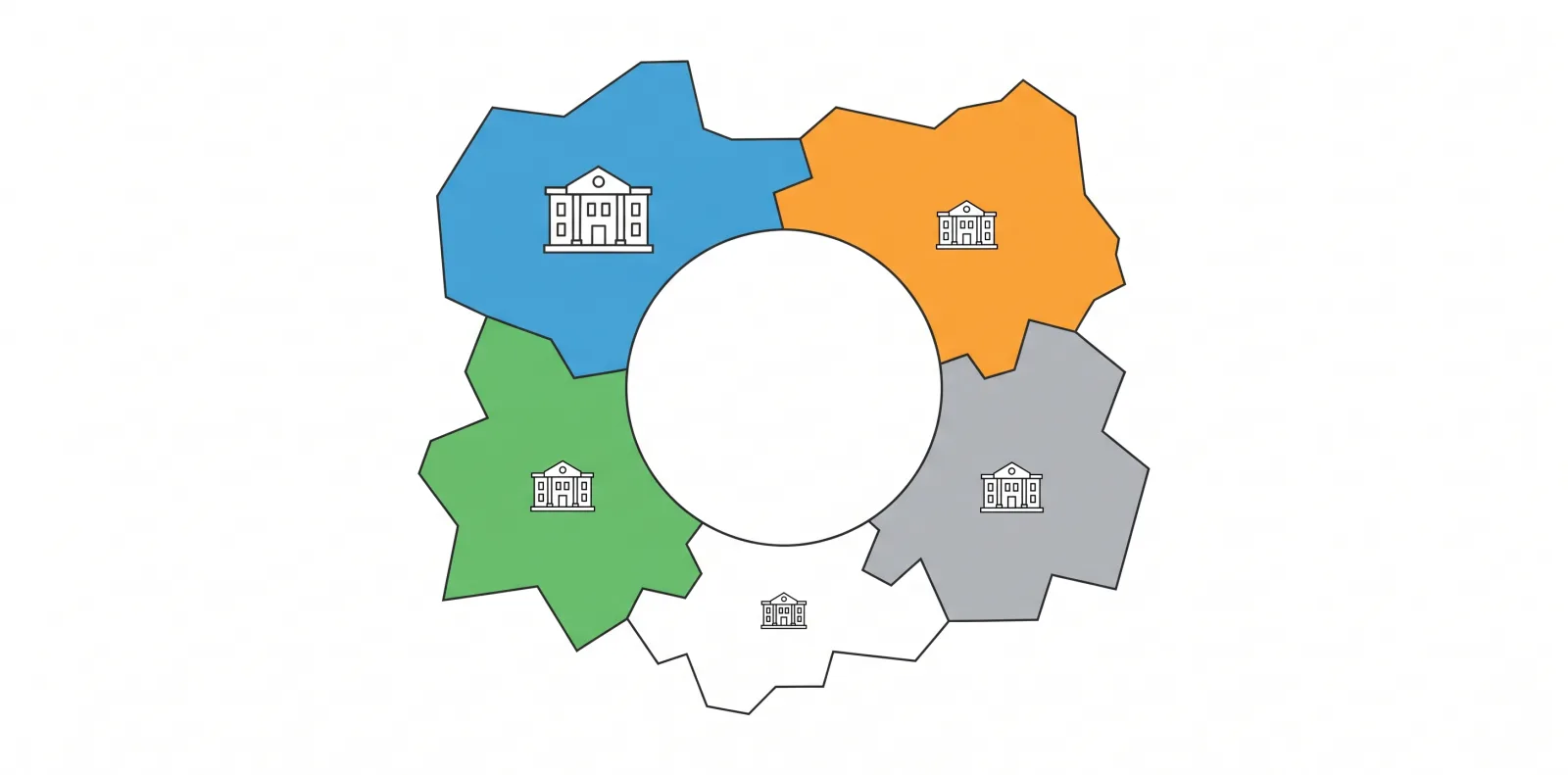
Then commit to one and add at most one more. The scattered approach, in which an aspirant applies to five commissions and half-learns five state papers, is the most reliable way to clear none of them. One commission learnt properly, with UPSC or a second commission as the overlap play, is the strategy that works.
And check the age limits and attempt caps early. These differ by commission and by category, and they should shape how many cycles you plan for before you commit to a multi-year effort.
Vacancy Scale Across Recent Notifications#
The commissions differ enormously in recruitment scale, and the headline number needs reading alongside the size of the state's applicant pool.
The comparison is imperfect because these notifications cover different service groups, and that itself is a useful lesson. MPSC's figure covers a Group C recruitment while MPPSC's covers senior Group A and B state service posts including Deputy Collector and Deputy Superintendent of Police. Comparing raw counts across commissions without checking what posts they cover produces nonsense.
The Interview Stage And State-Specific Preparation#
The final stage at most commissions carries meaningful weight and rewards a kind of preparation that national-level material does not supply.
Expect the state to feature heavily. Boards frequently open on your home district, its administration, its principal problems, its major crops or industries, and recent state government initiatives. A candidate who can discuss their own district's water situation or its literacy record with specifics stands apart immediately.
Know the state's administrative structure. Districts, divisions, the role of the collector, panchayati raj arrangements in that state, and the principal state departments. This is examinable material at Mains and near-certain interview territory.
Follow state news deliberately. A regional newspaper, read for a few minutes daily across the preparation period, builds exactly the awareness the board is testing. National dailies do not cover state administration in the depth required.
Be ready to explain why this state and this service. For a local candidate the answer is straightforward. For an outside candidate it needs a genuine response rather than an evasion, and boards do ask.
Practise in the language you will be interviewed in. Where the commission conducts interviews in the regional language, fluency in ordinary conversation is not the same as discussing governance and policy. Rehearse in that register.
And keep your application consistent. As with UPSC, what you declared about your background, education and interests is the board's starting material.
Frequently Asked Questions#
Are state PSC jobs worse than UPSC ones?#
Different rather than worse. State commissions recruit Deputy Collectors, Deputy Superintendents of Police, Block Development Officers and similar posts with genuine administrative authority. The career operates within one state rather than across the all-India services.
How much does state PSC preparation overlap with UPSC?#
Most general studies content transfers, including polity, modern history, geography, economy, environment and national current affairs. The state-specific paper does not transfer at all, and it is frequently where ranks separate.
What changed in MPPSC 2026?#
The preliminary examination introduced a revised marking scheme with each question carrying three marks and one mark deducted for each wrong answer. Negative marking where there previously was none changes attempting strategy substantially.
Can I sit a state PSC exam without domicile in that state?#
Usually yes for eligibility, but state-category reservation benefits are generally restricted to domiciled candidates, which materially affects your realistic cut-off. Read the specific commission's rules rather than assuming.
How many state commissions should I apply to?#
One, properly, with at most one more. Each has its own state paper, and an aspirant spread across five commissions learns five state syllabuses superficially and clears none.
Do state PSC exams require the regional language?#
Several include a qualifying regional language paper, and some permit or expect answers in that language. For candidates from outside the state this is a significant consideration rather than a formality.
Which state commission has the most vacancies?#
It varies every cycle. UPPSC notified 2,158 posts in its 2026 recruitment and MPSC's 2026 Group C notification covered 2,619, while MPPSC's 2026 state service examination covered 155 and RPSC RAS 607. Vacancy counts are not comparable without also considering applicant volume.
Where should I check patterns and notifications?#
On each commission's own website, since patterns have changed in several states recently and older guidance is frequently stale. Read the current cycle's advertisement in full, including the state-specific syllabus, before building a plan.