
The Gap Nobody Warns You About Until March#
A state board student finishes Class 12 with excellent marks. Their school taught the syllabus well, they worked hard, and the board results confirm it. Then they sit CUET and find questions on topics they have never met, phrased in a style their textbooks never used, on a computer screen, against a clock.
The problem is not ability and it is not effort. It is that CUET's domain subject papers are built around NCERT content, and NCERT is CBSE's curriculum base. A CBSE student preparing for CUET is revising material they have already studied twice. A state board student is meeting a partly unfamiliar syllabus for the first time, often with only weeks to spare.
This is a real structural disadvantage, and it is worth naming plainly rather than pretending the playing field is level. It is also entirely closable, because the gap is smaller than it feels, it is knowable in advance, and the parts of CUET where state board students can gain ground are precisely the parts that everybody else neglects.
Here is the plan.
Background: What CUET Actually Tests#
CUET UG is the Common University Entrance Test for undergraduate admission, conducted by the National Testing Agency, and accepted by well over two hundred and eighty universities including all central universities.
A candidate's paper is built from components:
Domain subjects. Subject papers corresponding to what you studied in Class 12, such as Physics, Accountancy, History or Business Studies. These are content papers, and their syllabi are published by NTA. They follow NCERT content closely.
Language papers. Testing reading comprehension, vocabulary, and basic language skills. A wide range of languages is available, and many universities require one language paper.
General Aptitude Test. Covering general knowledge and current affairs, general mental ability, numerical ability, quantitative reasoning and logical reasoning. Several courses accept or require it, and some admit substantially on the basis of it.
Normalisation. Because the examination runs across multiple days and shifts with different question papers, raw scores are statistically adjusted using a percentile-based method so that candidates who sat a harder shift are not penalised. The adjusted score is what universities use.
One fact that changes things for many state board students: CUET is conducted in multiple languages, with the medium available in a range including Assamese, Bengali, English, Gujarati, Hindi, Kannada, Malayalam, Marathi, Odia, Punjabi, Tamil, Telugu and Urdu. If you have studied in your regional language, you may be able to take the examination in it. Confirm the current list and the medium available for your specific papers in the official information bulletin, since provisions can change.
Step One: Map Your Syllabus Against The CUET Syllabus#
Do this in Class 11, or at the latest in the first month of Class 12. It takes an afternoon and it is the highest-value hour in this entire process.
Download the official CUET domain syllabus for each subject you intend to take, from the NTA website. It is published as a formal document listing units and topics.
Open your state board syllabus for the same subject.
Go through unit by unit and mark each topic in one of three ways. Topics in both, which is most of them. Topics in the CUET syllabus that your board does not cover or covers more lightly, which is your gap list. Topics your board covers that CUET does not, which you can deprioritise for CUET while still preparing for your board examination.
The gap list is your work. For most students and most subjects it runs to between five and fifteen topics, which is entirely manageable over a year and terrifying if discovered in March. This is the whole reason to do the mapping early.
Close the gap using NCERT textbooks directly. They are inexpensive, widely available, and freely downloadable from the NCERT website. Read the chapter, work the in-text and exercise questions, then solve CUET-pattern multiple-choice questions on it. Do not buy an expensive package for this. The primary source is the primary source.
Step Two: Take The General Aptitude Paper Seriously#
Here is where state board students can gain real ground, because the General Aptitude Test is the most underprepared component of CUET across all boards.
The reasoning is understandable and wrong. Students see the components, recognise that domain subjects are content-heavy and unfamiliar, and pour everything into them. General Aptitude looks like something you either have or do not. So it gets no preparation at all, from anybody.
That is exactly why it is efficient. When most candidates leave a paper unprepared, a modest amount of focused work produces a disproportionate percentile gain.
What it actually covers and how to prepare for each:
General knowledge and current affairs. Prepare by reading one good newspaper daily for fifteen minutes, focusing on national and international developments, government schemes, appointments, awards, sport and science. Keep a single notebook. Fifteen minutes a day for a year beats forty hours in April by an enormous margin, because this material is absorbed rather than crammed.
Numerical ability and quantitative reasoning. Arithmetic, percentages, ratios, averages, profit and loss, time and work, basic data interpretation. This is Class 8 to 10 mathematics applied quickly. Practise for speed, not difficulty. Twenty questions a day for three months is transformative.
Logical and analytical reasoning. Series, coding and decoding, blood relations, directions, syllogisms, seating arrangements. These are learnable patterns. Once you recognise the type, the solution follows mechanically. This is the single most improvable section in the whole examination.
Mental ability. Mixed reasoning of the kind that appears in aptitude tests generally.
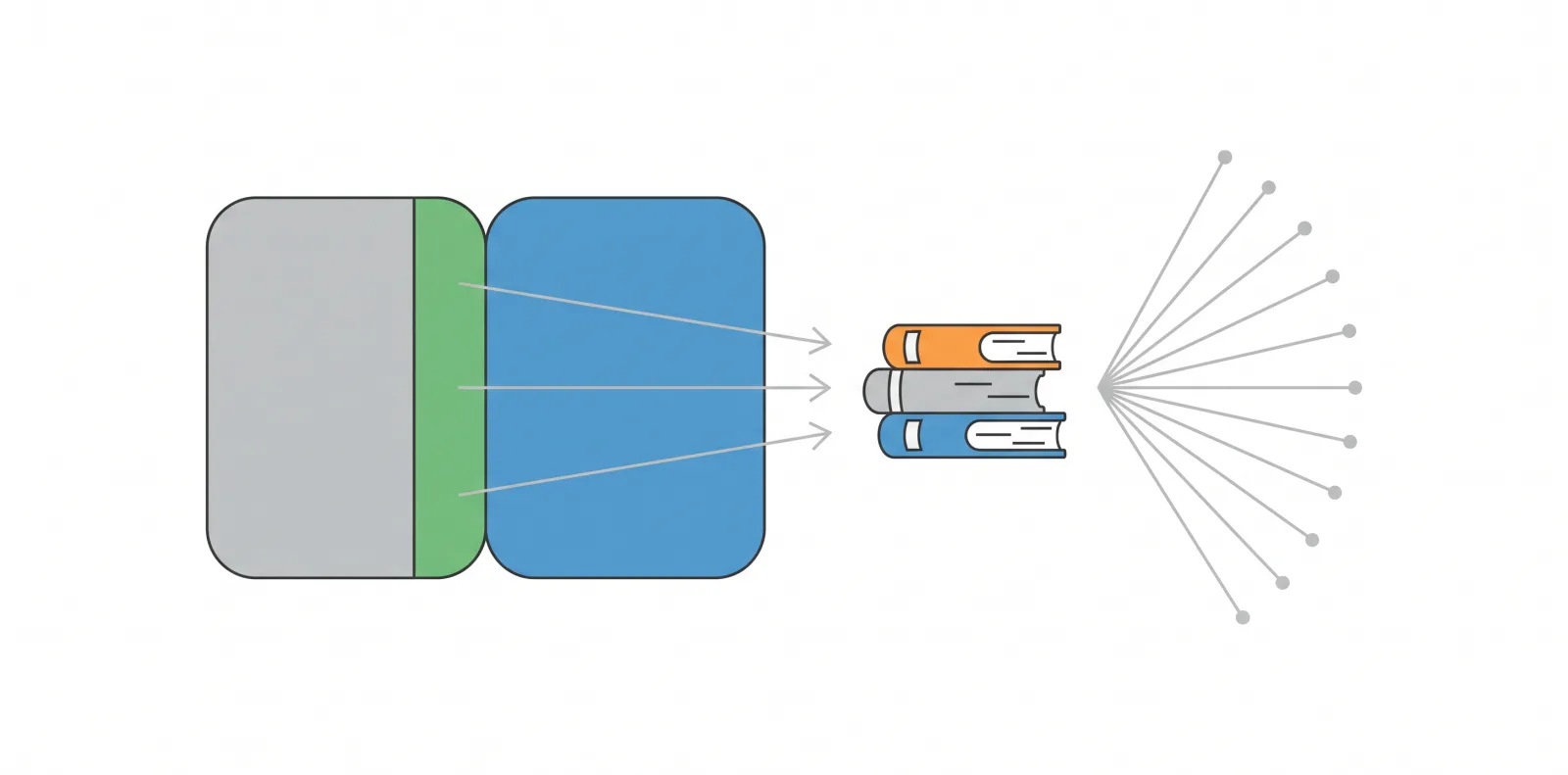
A realistic allocation of preparation effort looks like this.
Note that domain subjects take under half. That surprises people, and it is deliberate. Domain preparation overlaps heavily with your board preparation, which you are doing anyway. General Aptitude and language do not overlap with anything, which is why they need their own explicit allocation.
Step Three: Handle The Language Paper Properly#
The language paper is usually underestimated because it looks easy. It is easy to pass and genuinely difficult to score very highly in, which in a percentile-based system is what matters.
Choose your language deliberately. You may be able to take the language you are strongest in rather than defaulting to English. Check which language papers your target universities accept for your course, since some courses specify. If you read comfortably in your regional language and less comfortably in English, and the universities accept it, this is a straightforward advantage.
Prepare comprehension actively. The bulk of the paper is reading comprehension. The skill being tested is reading a passage quickly and answering accurately about what it actually says, which is different from what you think it implies. Practise by reading a passage, answering, and then going back to locate the exact line that justifies each answer. That verification habit is what raises accuracy.
Build vocabulary through reading, not lists. Words learnt in context are retained. Words learnt from a list are not.
Practise under time on a screen. Reading on a computer screen is measurably slower and less accurate for most people than reading on paper, and CUET is computer-based. Practise in the format you will face.
Step Four: Choose Subjects That Keep Universities Open#
The number of subjects a candidate may take is limited, so each choice closes some doors and opens others.
Work backwards from your target courses. List fifteen to twenty course and university combinations you would accept. Open each admission bulletin. Write down the exact subject requirement for each.
Choose the combination with maximum coverage, which is often not the combination you would pick by instinct.
Watch for mathematics. A significant number of courses, including economics at several strong universities, specify mathematics as a required domain subject. If your board combination includes it, taking it at CUET keeps options open that are otherwise closed permanently.
Check your state board subject names map onto CUET domain subject names. They do not always match. Your board's "Business Studies" and CUET's domain subject may differ in scope, and a subject your board calls one thing may correspond to a differently named CUET paper. Verify against the official syllabus document rather than assuming from the title.
Step Five: Practise In The Actual Format#
CUET is computer-based, with all questions compulsory in the current pattern and a fixed duration per paper. Three habits follow.
Take mocks on a computer, not on paper. The navigation, the on-screen reading and the absence of marginal space for rough work all change how you perform.
Practise strict time discipline. With a fixed duration and no optional questions, pacing is a scoring skill in itself. Know how many seconds per question you can afford and practise leaving a question you cannot solve within that budget.
Analyse every mock. Note not only which questions were wrong but why: unknown content, careless error, misread question, or ran out of time. Those four categories require four different responses, and treating them identically is why some students plateau despite constant practice.
Frequently Asked Questions#
Is CUET harder for state board students?#
There is a genuine structural disadvantage, since CUET domain papers follow NCERT content while state syllabi differ to varying degrees. The gap is usually five to fifteen topics per subject, which is manageable when identified early and difficult when discovered late.
Can I take CUET in my regional language?#
The examination is offered in multiple languages, including several regional ones. Confirm the current list and the medium available for your specific papers in the official NTA information bulletin, and check that your target universities accept it for your course.
Do I need coaching to prepare for CUET?#
Not necessarily. The domain syllabi are published, NCERT textbooks are freely available online, and the General Aptitude and language components respond well to consistent self-study. Coaching can help with structure and mock tests, but the core material is fully accessible on your own.
Which is more important, domain subjects or General Aptitude?#
It depends on the course. Some courses admit largely on domain scores, others weight General Aptitude heavily, and some use both. Check the requirement for every course you are targeting, since this determines where your effort should go.
How do I find the official CUET syllabus?#
On the National Testing Agency's CUET portal, which publishes the domain syllabus for each subject as a formal document. Download it and compare it directly against your own board syllabus rather than relying on summaries.
Do my board marks still matter?#
They matter for eligibility, since most universities set a minimum percentage, and some courses use them as a tie-breaker or in a small weighting. They no longer drive selection at most participating universities. Check each admission bulletin.
How early should I start?#
The syllabus mapping should happen in Class 11 or the first month of Class 12. General Aptitude preparation benefits enormously from being spread over a year. Domain gap-closing can run alongside board preparation from about the middle of Class 12.
What is the single biggest mistake state board students make?#
Discovering the syllabus gap in March. The second biggest is leaving General Aptitude entirely unprepared, which forfeits the one component where a modest, sustained effort produces a disproportionate percentile gain.