The Transfer That Should Have Happened A Year Earlier#
A family relocates in June. The child is entering Class 10. The new city has an excellent CBSE school with a place available. The parents assume this is an administrative matter, arrange a viewing, and are told, politely, that the school cannot admit the child.
The reason is not snobbery or capacity. It is that board registration for the Class 10 examination happens in Class 9. The child is already registered with one board, has already completed a year of its syllabus, and cannot be entered for another board's examination on the basis of a single year's study of a different course.
This is the most common board-transfer problem in India, and it is entirely avoidable if you know the timing rules. There are years when switching is simple, years when it is manageable with effort, and years when it is effectively closed. Knowing which is which, and understanding what actually changes in the curriculum, turns a stressful move into an ordinary one.
Background: How The Two Boards Are Structured#
CBSE follows NCERT textbooks and syllabi. At Class 10 a student typically takes five main subjects, commonly two languages, Mathematics, Science and Social Science, with an optional sixth subject often drawn from the skill subject list.
Two features matter for transfers. Science is a single subject with a single examination paper covering physics, chemistry and biology content together. Social Science is a single subject combining history, geography, political science and economics.
CISCE, which conducts the ICSE examination at Class 10 and the ISC at Class 12, organises subjects into groups. There is a compulsory group including English, a second language, and History, Civics and Geography. There is a second group from which students select subjects such as Mathematics, Science, Economics or Commercial Studies. And there is a third group of one practical or applied subject, such as Computer Applications, Art or Physical Education.
Its distinguishing features: English is examined as two separate papers, one for language and one for literature, and the literature component is substantial. Science is typically taken as three separate papers in physics, chemistry and biology rather than one combined paper. Internal assessment carries meaningful weight across subjects.
Two documents you will need:
Transfer Certificate. Issued by the school you are leaving, recording your enrolment, the class completed, and confirming you have left. When moving between boards or between states, it often requires countersignature by a designated education authority, and the receiving school will tell you which.
Migration Certificate. Issued by the board itself, permitting a student registered with one board to move to another. Required when moving between boards at stages where board registration exists.
What Actually Changes In The Curriculum#
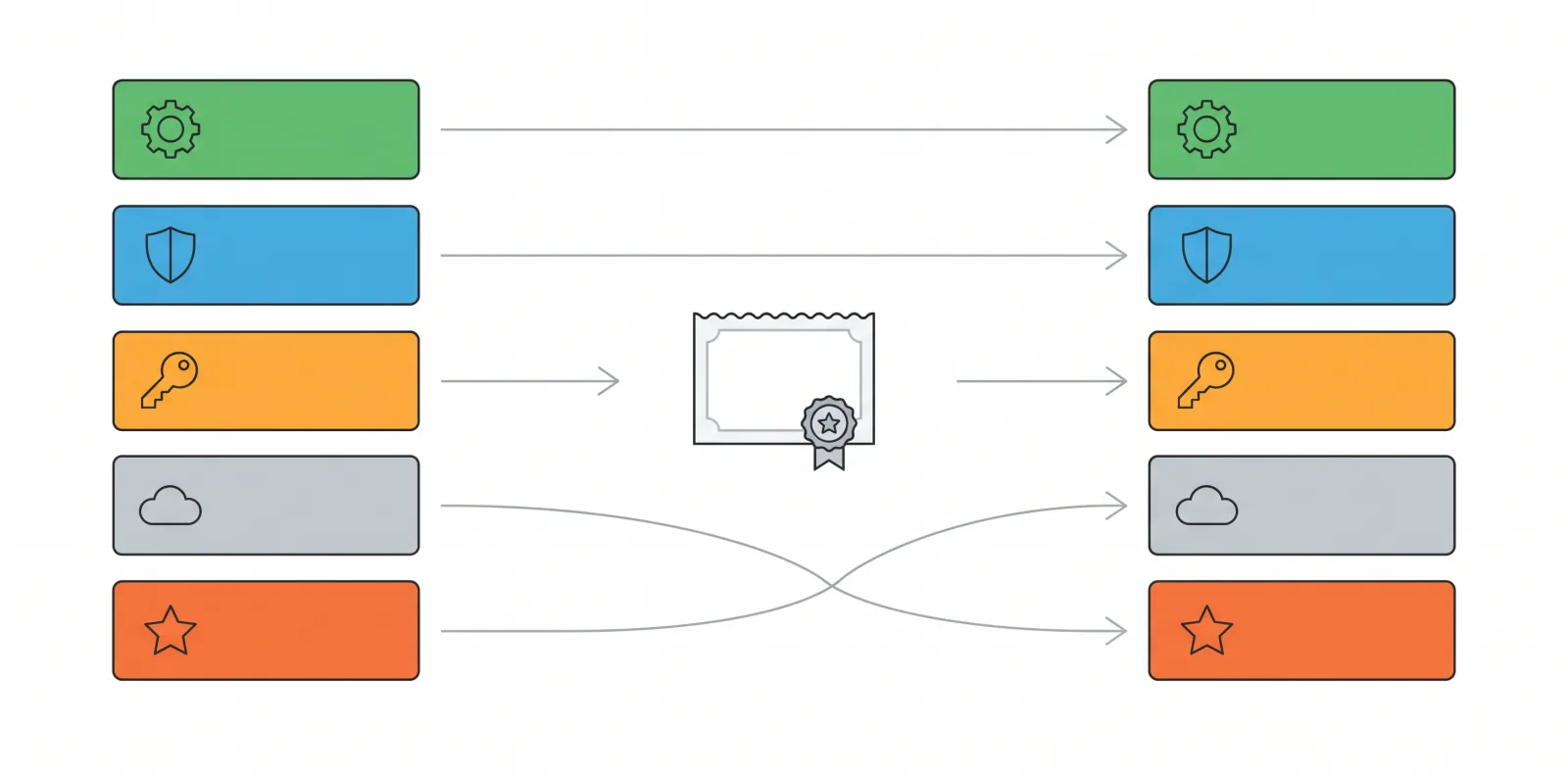
The subject mapping is where students are caught out, because the labels look similar and the contents are not.
English is the largest adjustment moving from CBSE to ICSE. The ICSE English requirement involves more extensive literature study, longer written composition and higher expectations of written expression generally. A student arriving from CBSE often finds the reading volume and the essay demands a genuine step up, and needs a term to adjust. Moving the other way is easier, and ICSE students frequently find CBSE English comfortable.
Science splits or merges. Moving from ICSE to CBSE, three separate subjects become one, which sounds like a reduction and is partly an illusion, since the combined CBSE paper still covers all three areas. Moving from CBSE to ICSE, one subject becomes three, each with its own depth and its own paper, which is a real increase in volume.
Social Science is the trickiest mapping. CBSE's Social Science includes political science and economics alongside history and geography. The ICSE compulsory group covers history, civics and geography, with economics available as a separate elective. A student moving from ICSE to CBSE may therefore meet economics content in Social Science that they have not previously studied formally, and a student moving from CBSE to ICSE may find the history and civics treatment differently organised.
Mathematics content is broadly comparable at Class 10 level, though the emphasis and question style differ. ICSE mathematics has a reputation for breadth and for more application-heavy problems.
Internal assessment weighting differs. ICSE's internal assessment component is substantial, which means projects, assignments and practical work carry real marks. A student arriving mid-stream needs to understand quickly what is being assessed internally and to catch up on any missed components, which the school will need to advise on.
The examination style differs. CBSE has moved substantially towards competency-based and case-based questions. ICSE papers have traditionally required more extended written answers. Neither is harder in absolute terms, but each rewards a different habit, and the habit takes a few months to rebuild.
When You Can Switch, And When You Cannot#
The safe windows.
Any class up to Class 8 is straightforward. There is no board registration, no examination entry, and the curriculum differences are manageable with a term of adjustment. If a switch is coming, this is when to make it.
Entry into Class 9 works well. This is the year of registration for the Class 10 board examination, so a student joining at the start of Class 9 registers with the new board normally. The two-year Class 9 and 10 cycle is then completed entirely within one board.
Entry into Class 11 is the other natural break. Class 10 is complete, the certificate is issued, and Class 11 begins a fresh two-year cycle with fresh registration. This is by some distance the most common and least disruptive transfer point, and it is also where students often change subject streams anyway.
The closed windows.
Class 10 and Class 12 are effectively closed, because registration for the terminal board examination has already occurred in the preceding year, and the syllabus is a continuous two-year block. Schools generally cannot admit into these years from another board, and the boards' own rules restrict it. There are occasional provisions for genuine hardship such as a parent's transfer, but they are limited and require board-level permission rather than a school-level decision.
Mid-year transfers at any stage are difficult and should be a last resort. Even where a school will accept a student, the curriculum sequencing, internal assessment components and examination schedules rarely align cleanly.
The Paperwork, In Order#
Do this sequentially. Skipping a step usually means repeating it.
Confirm a place at the new school first, in writing. Never resign a place before securing one. Ask specifically whether they admit into the class you need, from your current board.
Ask the new school for its exact document list. Requirements vary by school, by board and by state, particularly on countersignature. Get the list in writing so nothing is missed.
Obtain the Transfer Certificate from the current school. Check that the details are correct, especially the date of birth, the class completed and the spelling of names, because errors here propagate into every subsequent document and are tedious to correct.
Obtain countersignature if required. When the move crosses boards or states, the TC often needs endorsement by a designated education authority. The new school will tell you which authority and in what form.
Apply for a Migration Certificate from the board you are leaving, where applicable. This is a board document, not a school one, and processing takes time, so start early.
Collect supporting documents: report cards for the last two years, birth certificate, identity and address documents, category certificate if relevant, and passport-sized photographs to the school's specification.
Keep copies of everything, including receipts and correspondence. If a discrepancy arises later, this file is your position.
Helping A Child Catch Up#
The academic adjustment is usually smaller than families fear and takes about one term. A few things genuinely help.
Identify the gaps specifically, not generally. Ask the new school which topics have already been covered that the child has not met. A named list of eight topics is a solvable problem. "You are behind" is not.
Prioritise English if moving to ICSE. It is the most common source of difficulty and it improves with reading volume more than with tuition. Extra reading, and regular written work with feedback, does more than anything else.
Get the internal assessment position clear early. If the new board carries substantial internal assessment, find out exactly what has been assessed and what can be made up. Leaving this until the end of the year is how marks quietly disappear.
Let the examination style adjust naturally. Students adapt to a different question format within a couple of test cycles. Solving past papers of the new board is the fastest route, and it is more useful than additional content revision.
Expect a social adjustment too. Joining an established class group is harder than joining a new one. A term of moderate results while a child settles is normal and is not a sign that the move was wrong.
When You Are Changing State As Well As Board#
Most board transfers happen because a family is relocating, which means two changes at once. The state dimension adds requirements that catch people out.
Domicile takes time to establish. If your child will eventually apply through a state entrance examination or for state quota seats in engineering or medicine, domicile requirements typically involve a period of residence, schooling within the state, or a parent's employment there. These requirements differ by state and are specific. Find out what your new state requires in your first month, not in the year your child applies, because several states require continuous residence or schooling for a defined number of years.
Countersignature requirements are state-specific. A transfer certificate crossing state lines frequently requires endorsement by a designated education authority, and which authority varies. Ask the receiving school for the exact requirement in writing, including the office name and the format.
Language requirements differ. Many states require a particular regional language as a second or third language subject. A child arriving mid-school may face a language they have never studied, and schools handle this differently, sometimes allowing an alternative and sometimes not. Raise it explicitly at admission rather than discovering it in the timetable.
Academic calendars vary. Some states run a different academic year from others, particularly in regions with distinct climate patterns. A move can therefore mean arriving mid-session or repeating part of a year, and it is worth checking the receiving school's calendar before fixing relocation dates.
Entrance examination alignment changes too. If your child was preparing for one state's common entrance test and you move, that preparation may no longer be relevant, and the new state's test may follow a different syllabus. For a family moving during Class 11, this is a significant consideration and worth discussing with the new school early.
One practical habit. Keep a single folder with every document from both states: transfer and migration certificates, report cards, residence proof, employment letters and correspondence. Domicile applications several years later frequently require evidence of exactly when you arrived.
Frequently Asked Questions#
Can I switch boards in Class 10 or Class 12?#
Generally no. Board registration for the terminal examination occurs in the preceding year and the syllabus runs as a continuous two-year block. Limited provisions may exist for genuine hardship such as a parent's transfer, but these require board-level permission rather than a school decision.
When is the best time to change boards?#
Entry into Class 11 is the easiest, since Class 10 is complete and a fresh cycle begins. Entry into Class 9 is the next best. Any class up to Class 8 is straightforward.
What is the difference between a Transfer Certificate and a Migration Certificate?#
The Transfer Certificate is issued by the school you are leaving and records your enrolment and departure. The Migration Certificate is issued by the board and permits movement to a different board. A cross-board move generally requires both.
Is ICSE harder than CBSE?#
Different rather than uniformly harder. ICSE demands more extended writing, particularly in English, and splits science into three papers. CBSE covers comparable ground in a more consolidated structure and has moved substantially towards competency-based questions. Students often find one suits them better than the other.
What is the hardest subject to adjust to when switching?#
English when moving to ICSE, because of the literature volume and composition demands. Social Science in either direction, because the CBSE combined subject includes political science and economics content organised differently from the ICSE grouping.
Will my child fall behind academically?#
Usually for about one term, then they settle. Get a specific list of topics already covered from the new school rather than a general warning, and address those directly. Past papers of the new board are the fastest way to adjust to the examination style.
Does the Transfer Certificate need to be countersigned?#
Often, when moving between boards or between states. The requirement and the designated authority vary, so ask the receiving school for the exact requirement in writing before you start the process.
How long does the whole process take?#
Allow several weeks. School-issued documents can be quick, but board-issued migration certificates and any required countersignature take longer. Start as soon as the new place is confirmed in writing, and never resign the current place before then.