
The Ranking Exists, And It Is Less Useful Than You Think#
Let us not be coy about it. If you rank engineering branches purely by median starting salary and placement rate at Indian colleges in 2026, computing sits at the top by a wide margin, electronics follows, the core branches sit some distance below, and biotechnology sits below those.
That is the honest answer to the question everybody asks, and it is available in about five seconds. So the interesting question must be a different one.
Here it is. The spread of outcomes within any single branch is now wider than the gap between branches. Two computer science graduates from the same college in the same year can end up with offers differing by a factor of five. Two mechanical graduates can end up with one in a design role at an electric vehicle company earning well above the computing median and the other in a role paying a third of it.
What separates them is not the branch. It is what they built, what they can demonstrate, and what specialisation they layered on top. The branch gets you into the interview. Something else gets you the offer.
So this article does two things. It gives you the ranking honestly, because you asked for it and pretending otherwise would be evasive. And then it explains why the ranking is the beginning of the analysis rather than the end.
Background: What Actually Drives An Engineering Salary#
Four factors, in descending order of influence.
The institution. A branch at a top-tier institution and the same branch at a tier-three private college are different products in the recruitment market. Institution effects are large and they swamp branch effects at the extremes.
The role, not the degree. Software roles pay more than manufacturing roles in the current Indian market, largely because software output scales without proportional cost and manufacturing output does not. A computer science graduate in a non-technical role earns manufacturing-level money. A mechanical graduate writing simulation software earns software money. The role is what is being paid for.
Demonstrable skill. Recruiters increasingly hire on evidence: a repository of real code, a competitive programming record, a hardware project that works, a published analysis. This has shifted meaningfully over the last decade and it favours students who build things over students who only attend.
Specialisation. Within every branch, specific specialisations command premiums. In electronics it is chip design and embedded systems. In mechanical it is electric vehicles, robotics and automation. In computing it is machine learning and systems work.
Two terms worth defining:
Median versus average package. The median is the middle figure when all offers are lined up. The average is dragged upwards by a handful of exceptional offers. Institutions advertise the average and the highest. The median is what describes a typical graduate, and it is the number to ask for.
Cost to company. The advertised figure frequently bundles a joining bonus, relocation allowance, stock valued at today's price and employer provident fund contributions. Take-home pay can be substantially lower.
The Ranking, With Numbers Attached#
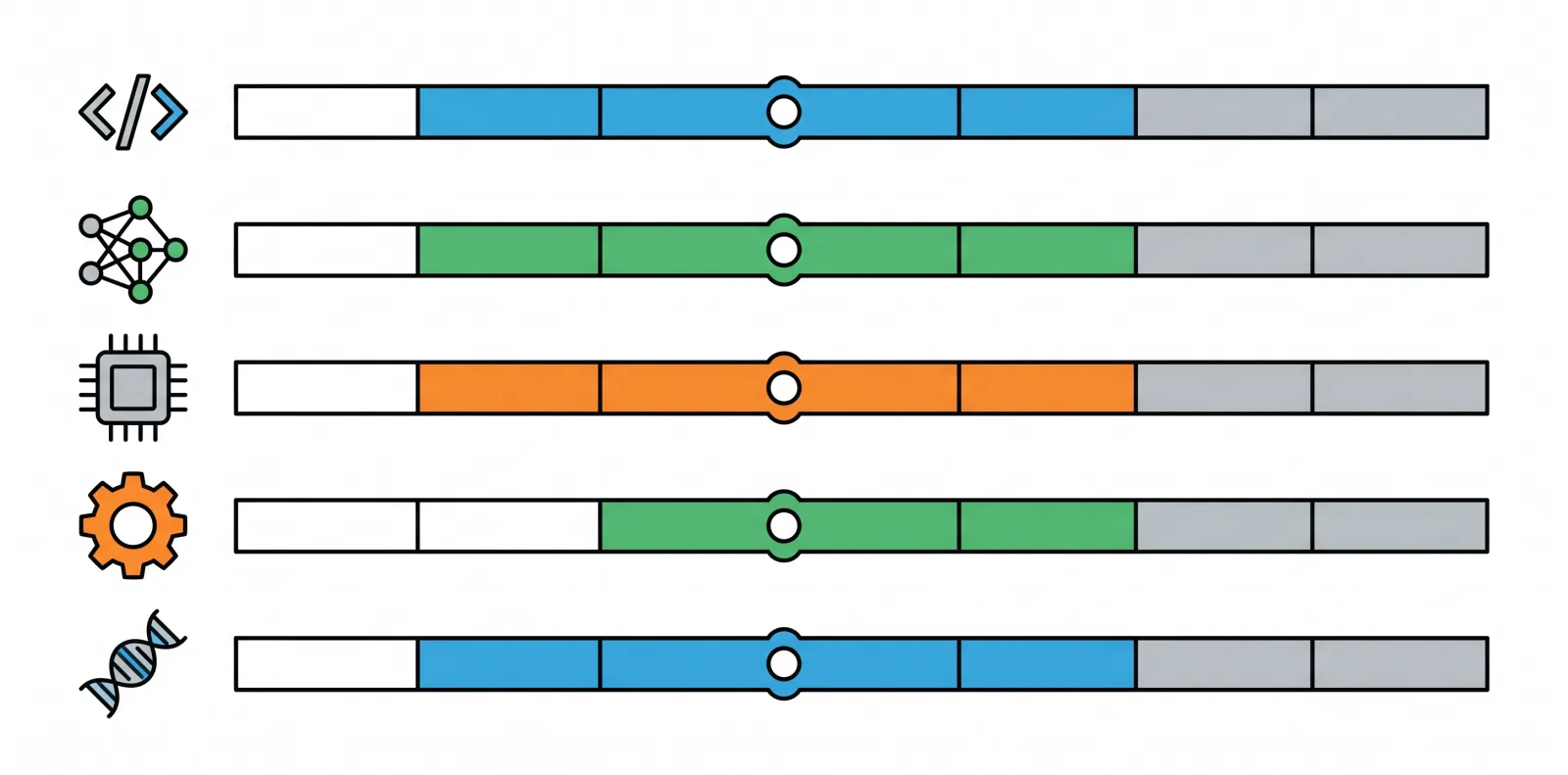
The ranges below are indicative fresher compensation, drawn from reported figures across Indian colleges in 2026. They vary enormously by institution tier, role and location, and the upper ends generally apply at top-tier institutions only. Treat them as a rough map rather than a price list, and check the branch-wise median in the published placement report of any specific college you are considering.
Look at the lengths of those bars rather than only their positions. Mechanical has one of the widest ranges on the chart. That width is the story: a mechanical graduate in a conventional manufacturing role and one in an electric vehicle or robotics role are in different markets entirely, holding the same degree.
Branch By Branch, Honestly#
Computer Science and computing branches. The strongest placement metrics and the widest range of employers. The reason is structural rather than fashionable: software is the layer through which most industries now deliver value, and the number of organisations needing software substantially exceeds the number needing any other engineering output.
The honest caveats. The field is crowded, entry-level hiring is genuinely competitive, and a degree alone distinguishes nobody. What distinguishes candidates is demonstrable work: shipped projects, a real repository, competitive programming standing, internships. A student who takes computer science because of the salary figures and does not build anything will find the figures were describing somebody else. And the field demands continuous learning at a pace that suits some people and exhausts others.
Artificial Intelligence and Machine Learning. Currently the highest-paying specialisation at fresher and early-career level. Two important cautions.
First, an undergraduate degree branded AI and ML is not automatically better than core computer science. Many of the strongest people working in machine learning studied computer science, mathematics or statistics and specialised later. What the work actually requires is mathematical depth, particularly in linear algebra, probability and optimisation, alongside strong programming. A programme that markets the branding without that foundation is selling a name.
Second, the highest salaries in this area attach to genuinely skilled roles, not to the degree title. The gap between a graduate who can build and evaluate models and one who has completed courses about them is very large, and employers test for it.
Electronics and Communication. A branch that has been quietly rewarded by policy and market shifts. India's semiconductor and electronics manufacturing push has increased demand for chip design, VLSI and embedded systems skills, and these specialisations sit well above general electronics roles on pay.
The split within the branch is stark. General core electronics roles start modestly. VLSI, semiconductor and embedded roles pay multiples of that. ECE graduates also move into software in large numbers, which is a legitimate route and one that keeps their options wide. If you take ECE, pick a specialisation deliberately rather than drifting.
Mechanical Engineering. The branch most affected by the difference between the old economy and the new one. Conventional manufacturing roles start modestly and progress steadily. Roles in electric vehicles, robotics, automation and advanced design pay dramatically more and are growing.
Mechanical also has advantages that salary tables do not capture: strong public sector opportunities, good postgraduate routes including abroad, and considerably less competition for the good positions than computing faces. The core engineering pessimism common in student conversation is overdone. What is true is that a mechanical graduate needs to be deliberate about specialisation in a way a computing graduate does not.
Biotechnology. The most honest section in this article, because students are frequently misled about it.
Biotechnology is scientifically fascinating and commercially still developing in India. Industry entry-level salaries are the lowest in this comparison. The field is heavily weighted towards research, which in practice means that the good outcomes usually require postgraduate study and often a doctorate. A biotechnology bachelor's degree on its own has a narrower direct employment market than any other branch here.
That is not an argument against it. It is an argument for entering it with clear eyes. If you are genuinely drawn to biological research and intend to pursue postgraduate study, biotechnology is a reasonable and rewarding path, and pharmaceutical, biopharmaceutical and research sectors in India are growing. If you are choosing it as an easier route into engineering with the expectation of a conventional campus placement, the expectation will not survive contact with the fourth year.
The Factors The Ranking Misses Entirely#
Branch change is hard. Most institutions permit it after the first year for students at the very top of their cohort, and the number who succeed is small. Do not accept a branch you dislike on the assumption that you will be one of them.
Your institution outranks your branch at the extremes. Computer science at a weak college and mechanical engineering at a strong one are not the comparison the salary tables imply. Recruiter access, faculty quality and peer group all attach to the institution.
Markets move over four years. You are choosing in 2026 for a market you will enter in 2030. Forecasting which field will be hot has a poor track record, and choosing purely on a current snapshot assumes the snapshot holds. Interest and aptitude are more durable predictors, because they determine how well you actually do.
Interest predicts performance. A student who finds their subject engaging works more, builds more, and performs better. A student who chose for the salary and dislikes the work underperforms, which costs them precisely the outcome they chose for.
And the transferable skills matter more than anyone tells you. Writing clearly, presenting an argument, working in a team and managing a project affect career trajectory substantially, and they are branch-independent. Engineers who can explain their work to non-engineers advance faster than those who cannot, in every branch on this list.
A Decision Method That Does Not Depend On A Snapshot#
Read the actual syllabus. Open the second and third year course lists for the branches you are considering. Read the topics, not the branch names. If one list makes you curious and another makes you tired, that is real information and it is more predictive than any salary table.
Check the department, not the branch. Permanent faculty numbers in your area, laboratory facilities, research activity. A branch is only as good as the department teaching it.
Ask for branch-wise median placement data, not the institute-wide average or the highest package. If a college will not provide it, treat the silence as information.
Pick a branch that keeps doors open if you are undecided. Computing and electronics both lead into software. Mechanical and electrical lead into a wide industrial base and into postgraduate study. Highly specialised undergraduate branches narrow your options early, which is fine if you are certain and costly if you are not.
Then plan to specialise deliberately from your second year. This is the part that actually determines your outcome. Build things. Contribute to something real. Take internships seriously. Acquire the specialisation within your branch that interests you. The branch on your degree certificate opens a door; what you did for four years decides what happens after you walk through it.
What Happens After Four Years#
Branch choice looks permanent at seventeen and is considerably less binding than students assume. Knowing the exits reduces the pressure on the entry.
Postgraduate study changes the field. GATE opens masters programmes at the IITs, IISc and NITs, and the branch you enter at postgraduate level need not be the one you studied. Engineers routinely move into adjacent specialisations, and several move some distance.
Management is a common second act. CAT and equivalent examinations lead into management programmes that admit engineers in very large numbers. Around two to four years of work experience is typically the sweet spot, and the undergraduate branch matters little.
Study abroad is branch-flexible. Masters admission overseas looks at your transcript, your projects and your letters. Students move from electronics into computing, from mechanical into robotics and from biotechnology into bioinformatics regularly.
The public sector recruits by branch. Public sector undertakings recruit through GATE scores in specified branches, and engineering services examinations offer another route. These favour the core branches, which is one of the less-discussed advantages of choosing mechanical, electrical or civil engineering.
Software absorbs everyone. A large share of graduates from every branch end up in software roles, because demand exceeds the supply of computer science graduates. This is a real and legitimate route, and it is why the branch-based salary tables compress once you look at outcomes five years out rather than at graduation.
Research remains open. Doctoral programmes in India and abroad admit on the strength of what you have done rather than the label on your degree.
And people change fields entirely. The assumption that a branch chosen at seventeen determines a life at forty is not supported by how careers actually unfold. Choose thoughtfully, because the next four years should be interesting. But choose without the belief that you are deciding everything, because you are not.
Frequently Asked Questions#
Which engineering branch has the best placements in 2026?#
Computing branches, including computer science and AI or machine learning specialisations, lead on both placement rate and salary, followed by electronics. Core branches and biotechnology sit lower on starting pay, though with considerable internal variation.
Is an AI and ML degree better than core computer science?#
Not automatically. Many strong machine learning practitioners studied computer science, mathematics or statistics and specialised afterwards. What matters is mathematical depth and programming ability rather than the branch name. Check whether the programme actually delivers that foundation.
Is mechanical engineering a bad choice now?#
No. It has a wide outcome range: conventional manufacturing roles start modestly while electric vehicle, robotics and automation roles pay well. It also offers strong public sector and postgraduate routes with less competition than computing. Specialise deliberately rather than drifting.
Should I take biotechnology?#
Only if you are genuinely interested in biological research and prepared to pursue postgraduate study. Direct industry employment for a bachelor's degree alone is more limited and lower paid than in other branches. Entered with that understanding, it is a rewarding field.
Is ECE a good branch?#
Increasingly, yes, particularly with a VLSI, semiconductor or embedded systems specialisation, where demand has grown with India's electronics manufacturing push. General core electronics roles pay considerably less, so the specialisation choice matters more than the branch choice.
Can I switch branches after the first year?#
At most institutions, in principle, but places are limited and typically reserved for students at the very top of the first-year cohort. Very few succeed. Choose a branch you would be content to complete.
Does branch matter more than college?#
Neither dominates universally. At the extremes the institution matters more, because recruiter access and faculty quality attach to it. Within a comparable tier, branch matters more. Compare branch-wise placement medians at the specific colleges you are considering.
What actually gets me a good job regardless of branch?#
Demonstrable work. Projects that function, a real repository, meaningful internships, a specialisation you can discuss in depth, and the ability to explain your work clearly. Employers increasingly hire on evidence rather than on the branch printed on a certificate.