The Rank That Fails In One State And Succeeds In Another#
Two students, identical JEE Main rank, applying in the same year. One gets computer science at a well-regarded NIT. The other gets metallurgy at a newer one and spends the summer wondering what they did wrong.
They did nothing wrong. One of them was applying to an NIT in their own state and the other was not.
Roughly half the seats at every National Institute of Technology are reserved for candidates domiciled in the state where that institute is located. This single rule produces the largest, most consistent and least discussed effect in Indian engineering admissions. It means that your home state NIT is, for you, a substantially easier institution to enter than it is for everyone else in the country. It also means that national cut-off lists circulated without specifying quota are worse than useless, because they average two completely different competitions into one misleading number.
Once you understand the quota structure, NIT admissions stop being a lottery and start being a solvable problem. Let us solve it.
Background: What The NITs Are And How Admission Works#
The National Institutes of Technology are thirty-one centrally funded engineering institutions, declared Institutions of National Importance under the NIT Act. They sit immediately below the IITs in the conventional hierarchy of Indian technical education and educate a considerably larger number of undergraduates.
The system grew in waves. A first generation was created by upgrading the older Regional Engineering Colleges in 2002, which is why institutes at Tiruchirappalli, Surathkal, Warangal, Rourkela, Calicut, Allahabad, Jaipur, Nagpur, Durgapur, Surat and several other cities have campuses, alumni networks and industry relationships stretching back decades. A second generation was established from around 2009 onwards, largely to give every state its own NIT.
Admission runs entirely through JEE Main. There is no separate NIT examination. Your JEE Main rank enters the Joint Seat Allocation Authority process, where you fill preferences covering IITs, NITs, IIITs and Government Funded Technical Institutes in a single list, and the system allocates seats across several rounds.
The vocabulary that matters:
Closing rank. The rank of the last candidate admitted to a particular branch at a particular institute in a particular category and quota in a particular round. This is the number people mean when they say "cut-off". It is a result of the process, not a threshold set in advance.
Opening rank. The rank of the first candidate admitted to that combination. The gap between opening and closing rank tells you how many seats there were and how contested they proved.
Home State quota, usually written HS. Seats reserved for candidates domiciled in the institute's state.
Other State quota, usually written OS. Seats open to candidates from anywhere else in the country, competing nationally.
All India Quota. Some institutes, particularly NIT Delhi and a few others without a conventional state relationship, allocate differently. Check the specific institute.
The Quota Structure, Drawn Out#
Here is the seat structure that decides your fate, in two layers.
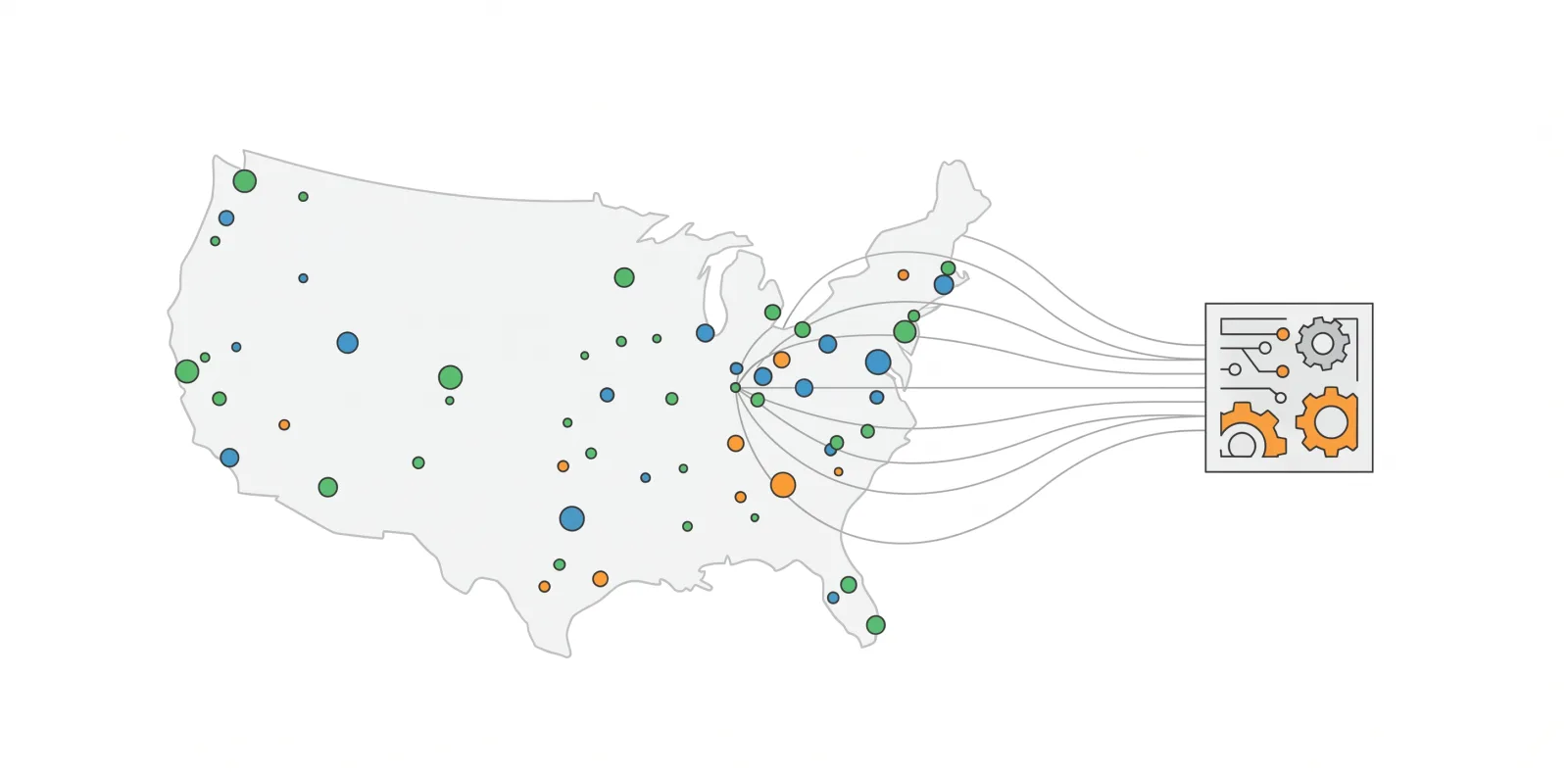
Read those two layers together and the practical implication becomes clear. You are not competing against every JEE Main candidate. You are competing against candidates who share your domicile status and your category, for the seats allocated to that intersection. That pool is far smaller than the national one, and the closing rank in your intersection can differ from the headline national figure by an enormous margin.
So the first action for any NIT aspirant is simple: find your home state NIT, look up its branch-wise closing ranks in the Home State quota for your category over the last three years, and see what your rank actually opens. Students regularly discover that a branch they had written off is comfortably within reach at home.
What An NIT BTech Actually Costs, And A Correction About Branch-Wise Fees#
Let us clear up a persistent misconception first. People frequently ask about "branch-wise fees" at NITs. At almost every NIT, tuition does not vary by branch. A computer science student and a mining engineering student at the same institute pay the same tuition. What varies is between institutes, since each NIT sets its own fee schedule within a broad national framework, and fees are revised periodically.
The realistic picture for an undergraduate BTech:
Tuition sits in the region of one and a quarter to one and a half lakh rupees per year for general category students at most NITs, though this varies by institute and is revised from time to time.
Hostel, mess and other charges typically add somewhere between sixty thousand and a lakh rupees a year, depending on the institute, the room type and whether you eat in the mess throughout.
One-time and annual charges such as admission fees, examination fees, insurance and institute development charges add a smaller amount.
Now the part that goes underclaimed. NITs operate an income-linked tuition remission scheme broadly parallel to the IIT scheme. Students from families with annual income below one lakh rupees receive a full tuition waiver. Students from families with income between one and five lakh rupees receive a substantial remission, commonly two-thirds. Scheduled Caste, Scheduled Tribe and Persons with Disability category students receive a full tuition waiver. Hostel and mess charges remain payable in all cases.
Every year, students from eligible families pay full tuition because nobody told them the scheme existed, or because the documentation felt intimidating. Gather your income certificate early, submit it at admission, and check the institute's fee page for the current slabs and the exact certificate format required.
Established NITs Versus The Newer Generation#
The honest comparison, without either snobbery or false equivalence.
What the older institutes genuinely have. Decades of accumulated faculty recruitment, which shows up as more permanent professors, more research groups and a wider elective catalogue. Established company relationships, which means more recruiters visiting and a broader mix of roles. Large alumni networks with people in senior positions. Mature campus infrastructure, since buildings, laboratories and hostels have been built and rebuilt over forty years rather than five. Location advantages, since the older institutes tend to sit in or near industrial and urban regions.
What the newer institutes genuinely have. The same statutory status under the NIT Act, awarding the same category of degree. Smaller cohorts, which for some students means better access to faculty. Newer equipment in some laboratories, because they were purchased recently. Home state quotas that are far less contested, which is the whole reason many of them exist. And, in several cases, faculty recruited recently from strong doctoral programmes who are actively building research groups.
What to check before believing either story. Look at the department, not the institute. Open the departmental faculty page and count how many permanent faculty there are and what they work on. A department with six permanent faculty cannot offer the elective range of one with thirty, and your final two years are mostly electives. Then look at the institute's published placement report for branch-wise figures rather than institute-wide averages. Then check whether the campus is permanent or transit, since a few newer institutes have operated from temporary campuses for extended periods.
Choosing Your Branch: The Decision That Outlasts The Institute#
If you take one thing from this article, take this. Branch matters more than institute for most students, and it matters more than almost anyone admits during counselling season.
You will study your branch for four years. It will shape the roles you can apply for, the postgraduate options available to you and the professional identity you build. An institute name opens an interview. A branch determines what happens inside it.
The common failure is chasing computer science at any institute, at any cost, regardless of interest. There is a defensible logic behind this, since software roles have offered the widest opportunity and the highest median salaries for over a decade. But there are real costs. Students who dislike programming and take computer science because of placement statistics frequently struggle academically, which damages exactly the record they were trying to build. And branch choice made purely on a market snapshot assumes the market stays still, which it does not.
A more durable method:
Check what you actually enjoy. Not what you are told is smart. Look at the second and third year syllabus of two or three branches you are considering, which every institute publishes. Read the actual course names and topics. If one list makes you curious and another makes you tired, that is real information.
Check the department, not the branch name. Mechanical engineering at an institute with a strong thermal and design research group is a different degree from mechanical engineering at one where the department is understaffed.
Check branch-wise placement, not institute-wide. The gap between branches within one institute is usually larger than the gap between institutes within one branch.
Consider the core branches honestly. Civil, mechanical, electrical, chemical and metallurgical engineering have narrower and lower-paying entry markets than software, and that is a real consideration. They also have far less competition for good postgraduate positions, strong public sector opportunities and, for students genuinely interested in them, more satisfying work. Neither the dismissal nor the romanticism of core branches is accurate.
Keep the branch change option in perspective. Most NITs permit branch change after the first year for students at the very top of the cohort, subject to seat availability. The number of students who succeed is small. Do not accept a branch you dislike on the assumption that you will be one of them.
What Four Years At An NIT Actually Feels Like#
Rankings and closing ranks say nothing about the experience, so here is the part the data leaves out.
Most NITs are residential and reasonably self-contained. Hostels are typically on campus, first-year students usually share rooms, and single rooms become available in later years depending on the institute's hostel stock. Mess arrangements vary between a single institute-run mess and a choice of student-run messes, which matters more than it sounds if you have dietary requirements or strong regional food preferences.
The cohort is nationally mixed, and this is one of the genuine benefits. Because roughly half the seats go to other-state candidates, you will live alongside people from across the country, speaking different languages and eating differently. Students consistently describe this as one of the most formative parts of the experience, and it is something a purely local institution cannot offer.
Student societies carry real weight. Technical societies, cultural festivals, sports and departmental clubs are substantial operations at the established NITs, often run entirely by students with genuine budgets. For many graduates, the organisational experience from running a festival proves more directly useful professionally than several of their courses.
Academic pressure is real but manageable. The grading is relative in many departments, the semester system moves quickly, and the first year is the hardest adjustment for most students. Those who struggle usually do so because of the transition from a coaching-driven school routine to an environment requiring self-direction, not because the material is beyond them.
The city matters. Some NITs sit in major urban centres with internships, industry visits and weekend options nearby. Others are in smaller towns where the campus is essentially your world for four years. Neither is worse, but they suit different people, and it is worth knowing which you are before you commit.
Ask before you accept. Find current students in your branch and ask how far the hostel is from the department, what happens when maintenance fails, how many of last semester's courses were taught by permanent faculty, and what they do at weekends. Those four answers will tell you more than any ranking.
Frequently Asked Questions#
How much easier is my home state NIT compared with an out of state one?#
Substantially, though the exact gap varies by state, branch and year. Roughly half of every NIT's seats go to home state candidates, and in states with fewer applicants relative to seats the home state closing ranks can be dramatically more favourable. Look up three years of home state closing ranks for your specific branch and category.
Do NIT fees differ between branches?#
No, at almost all NITs. Tuition is uniform across branches within an institute. Fees differ between institutes, and they are revised periodically, so check the specific institute's current fee page.
Can I get a fee waiver at an NIT?#
Yes, if you qualify. Full tuition remission applies below one lakh of annual family income, a substantial remission applies between one and five lakh, and SC, ST and PwD students receive full tuition remission. Hostel and mess charges remain payable. Prepare the income certificate before admission.
Is a newer NIT better than a good private engineering college?#
Usually yes on cost, statutory status and faculty qualification, but compare specifics. Check the departmental faculty count, branch-wise placement data, campus status and total four-year cost. Some strong private institutions outperform newer NITs in particular branches and regions.
Should I take a less preferred branch at an established NIT, or my preferred branch at a newer one?#
If you have a genuine interest in a specific branch, take the branch. If you are broadly indifferent between branches, take the established institute for its recruiter access and elective range. The worst outcome is a branch you dislike chosen for an institute name.
How reliable are the closing ranks from previous years?#
Reliable as a guide, unreliable as a promise. They shift with applicant numbers, seat matrix changes and paper difficulty. Use three years of data to see the trend rather than one year as a target, and always check the quota and category the figures refer to.
What happens if I do not get any NIT seat through JoSAA?#
Register for the CSAB special rounds, which fill seats left vacant after JoSAA concludes. Vacancies are substantial because students withdraw for other options, and students regularly secure seats there at ranks that were insufficient during JoSAA. Registration is separate and does not carry over.
Where can I verify closing ranks and fees officially?#
Closing ranks are published on the JoSAA portal for every round, branch, institute, category and quota. Fees are published on each institute's own website. Use these sources rather than aggregator tables, which frequently omit the quota column entirely and are therefore meaningless.